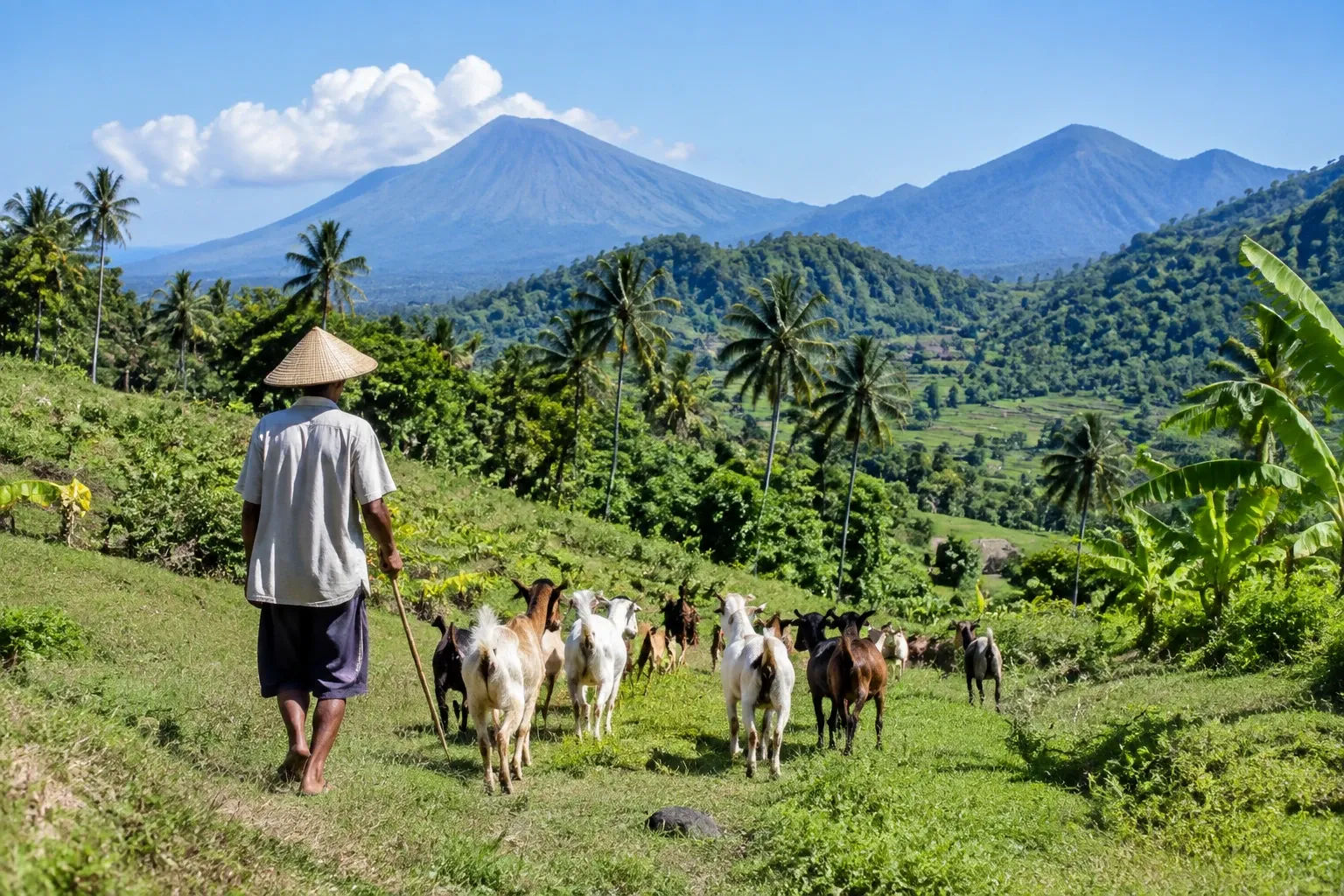
NTB Commits Rp23.92 Billion to Help 3,417 Poor Families Enter Livestock Farming
West Nusa Tenggara has earmarked Rp23.92 billion to help 3,417 extremely poor families build livestock businesses under the Desa Berdaya NTB programme.
West Nusa Tenggara's provincial government has put a firm number on its latest push against extreme poverty: Rp23.92 billion allocated to help thousands of families build livestock businesses. It is a modest sum against a large ambition, and it says something about how the province is choosing to grow.
A province betting on livestock to fight extreme poverty
The West Nusa Tenggara (NTB) provincial government has made the livestock sector one of its strategic tools for tackling extreme poverty, according to reporting by Radar Lombok. Through the Desa Berdaya NTB programme, the administration is encouraging thousands of extremely poor families to build productive small businesses, strengthen food security, and, notably, support what the source describes as "quality tourism" in the province.
This is a rural livelihoods programme rather than a real estate or tourism-infrastructure initiative, but the stated link to tourism quality is worth noting for anyone tracking how NTB's two growth stories, agriculture and hospitality, are being framed together at the policy level.
The numbers behind Desa Berdaya NTB
According to 2026 data from the Desa Berdaya NTB programme cited by Radar Lombok:
3,417 families, equivalent to 66.20% of a total of 5,162 families in the programme, have expressed interest in raising livestock.
The province has budgeted Rp23.92 billion for this livestock component. The original report was truncated before further operational detail, such as a breakdown by regency, livestock type, or disbursement timeline, was available, and HubLombok has not been able to verify those specifics independently. We will treat any additional detail from official NTB provincial sources as it becomes available, rather than speculate on figures not yet published.
Where tourism and rural livelihoods intersect
What makes this programme relevant to readers tracking Lombok's investment story is the framing itself: a provincial government explicitly linking rural poverty alleviation to the quality of its tourism offer. NTB, the province that includes Lombok, has in recent years been the backdrop for a broader tourism expansion. Foreign arrivals to the region have been growing at roughly 40-50% year-on-year, and villa rates in tourism hubs such as Kuta and the Mandalika zone have risen by around 38% year-on-year, reflecting a wave of demand that has drawn international attention to South Lombok in particular.
A livestock and food-security programme aimed at extremely poor families is, on its face, a separate policy track from that tourism-led investment story. But provincial administrations frequently present rural development and tourism growth as complementary: stronger local food systems and household incomes in surrounding villages are often positioned as part of what keeps a destination liveable and attractive as it scales. Radar Lombok's own framing, that the programme is meant to support "pariwisata berkualitas" (quality tourism), suggests NTB's government sees the two as connected, even if the mechanics of that connection were not detailed in the available reporting.
What this means for investors
For foreign investors focused on South Lombok property and hospitality, a programme like this is not, by itself, a market signal, it does not move land prices, rental yields, or legal structures for foreign ownership. What it does offer is a useful data point on provincial priorities: NTB's government is actively allocating budget to broaden the base of the local economy beyond tourism alone, in villages where the pariwisata berkualitas framing has already been made public.
- Not a direct property catalyst. This is a social welfare and agriculture programme, not an infrastructure or zoning announcement.
- A signal of provincial intent. It shows continued public spending directed at the communities surrounding Lombok's tourism zones, which is worth tracking alongside the province's better-documented growth in foreign arrivals and villa demand.
- Limited visibility for now. Beyond the headline figures reported, operational details of the programme were not available in the source material, and we have not added any beyond what is confirmed.
HubLombok will continue to monitor NTB provincial announcements for any developments that carry a more direct bearing on South Lombok's property and tourism market, and will report figures only once they are officially confirmed.
Stay informed, subscribe to the free Lombok Briefing for analysis like this, published twice a month.
What is the Desa Berdaya NTB programme?
It is a West Nusa Tenggara provincial initiative that encourages extremely poor families to build productive small businesses, including livestock farming, as a way to strengthen food security and household income while supporting the province's tourism sector.
How much has NTB budgeted for the livestock component?
The province has allocated Rp23.92 billion to help families who have expressed interest in raising livestock. According to 2026 programme data, 3,417 families, or 66.20% of the 5,162 families in the programme, want to enter livestock farming.
Does this programme affect South Lombok property or tourism investment?
Not directly. It is a rural poverty-alleviation and food-security initiative rather than a property or infrastructure programme. It is worth tracking as a sign of provincial investment in communities near Lombok's tourism zones, but it does not change land prices, yields, or ownership rules.
The Lombok Buyer's Field Guide
Legal structures ranked by risk, the honest ROI math line by line, all six zones ranked, and the 24-point due-diligence checklist. The whole book, free in your inbox.
See what's inside