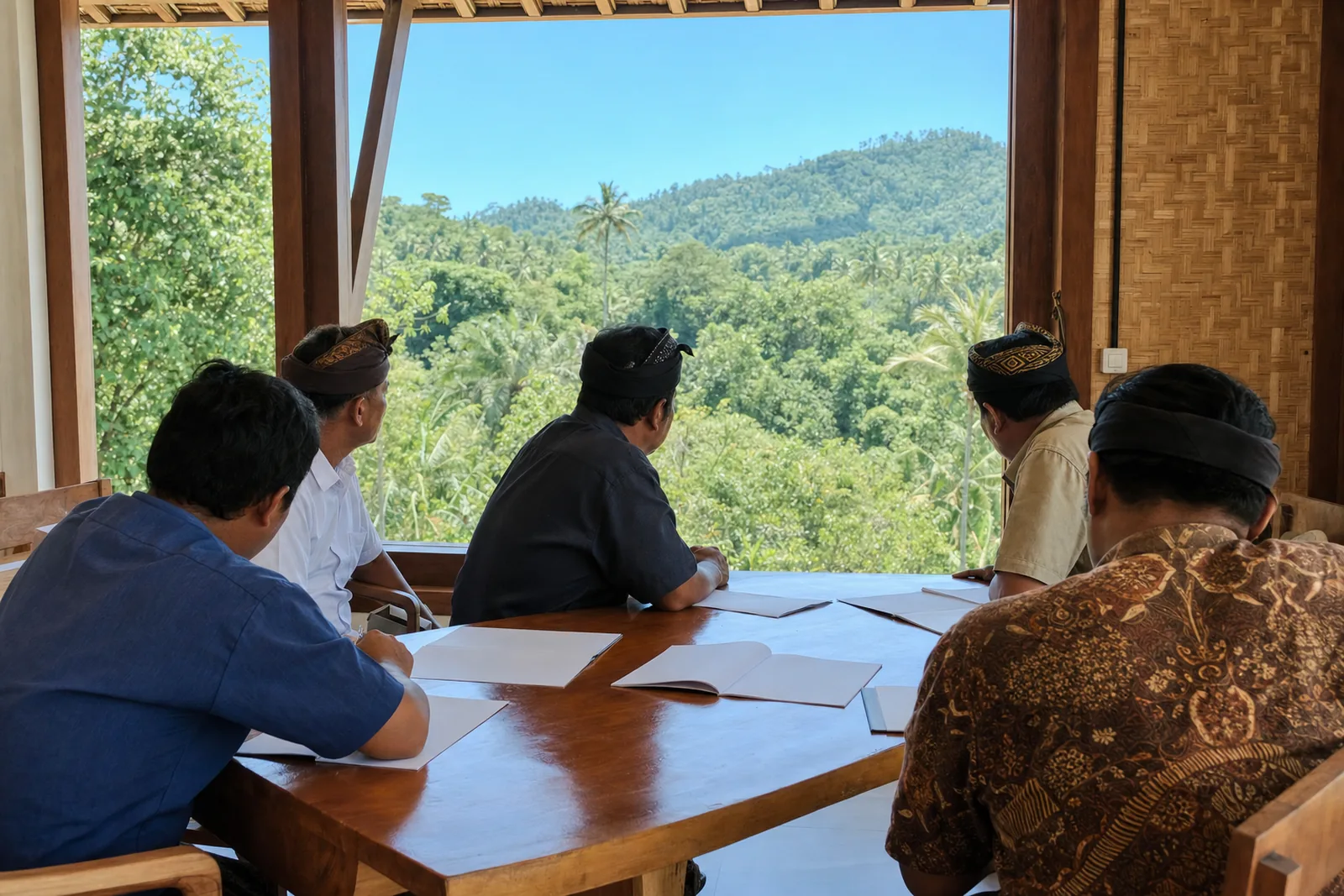
Lombok Notebook: Why NTB’s Fisheries Governance Matters to Investors
NTB’s fisheries committee meeting puts data, partnerships and aquaculture at the centre of sustainable marine-sector governance.
Quick answer: NTB’s annual fisheries-management meeting signals that provincial leaders are prioritising data-led governance, integrated business partnerships and aquaculture alongside capture fisheries. For Lombok investors, it is not an investment case by itself, but it clarifies the policy direction shaping a strategically important part of the regional economy.
For an island economy, the sea is never simply scenery. It is a working asset, a food system, a source of livelihoods and a test of whether growth can be made durable rather than merely visible. That is why a provincial meeting about fisheries administration deserves attention beyond the sector’s immediate participants.
In an official post, DPMPTSP Provinsi NTB described the 2026 Annual Meeting of the Joint Fisheries Management Committee in Mataram as a forum bringing together fisheries businesses, vertical agencies, provincial government bodies and other stakeholders. The language was administrative; the implications are more consequential. The discussion centred on the conditions required for a marine economy that can be managed, financed and developed without losing sight of the resource on which it depends.
The Context
The meeting, according to DPMPTSP Provinsi NTB, took place against a policy framework that officials regard as important to sustainable management of marine and fisheries resources in NTB: Government Regulation Number 27 of 2021 on marine and fisheries administration, and Government Regulation Number 11 of 2023 on measured fishing.
This is an important distinction. Regulation is often treated as background noise by investors, particularly where the immediate interest lies in hospitality, property or consumer-facing services. Yet in resource-based economies, the quality of governance affects the confidence with which every connected business can plan. Fisheries touch logistics, processing, ports, food supply, finance and local employment. Their resilience matters well beyond the boats that catch fish.
The official account also reported that Muslim, Head of NTB’s Marine and Fisheries Department, highlighted the international certification obtained by tuna fisheries management in Fisheries Management Area 713. DPMPTSP attributed to him the view that the committee provides a strategic forum for producing recommendations for central and regional government, while aligning policy with local wisdom to preserve fisheries resources.
That formulation deserves careful reading. It does not promise a commercial outcome, nor does it establish a timetable for policy changes. It does, however, identify the institutional ambition: recommendations should connect different levels of government, while formal management should remain attentive to local context. For investors assessing Lombok and the wider NTB province, that is a more useful signal than promotional rhetoric. It points to a recognition that resource governance is both technical and social.
DPMPTSP Provinsi NTB presented the committee as a forum for aligning fisheries policy, local wisdom and sustainable resource management.
The terminology of sustainability can be overused in investment materials. Here, it should be understood narrowly and pragmatically. The source links it to maintaining fisheries resources through appropriate policy, reliable data, measured fishing and a broader business ecosystem. It does not claim that those objectives have already been achieved. The distinction matters: investors should assess stated direction separately from execution.
From Fisheries Management to Economic Architecture
DPMPTSP’s account placed accurate data at the centre of the discussion. Governor Dr. H. Lalu Muhammad Iqbal, M.Hub.Int., stressed that fisheries governance should be based on accurate data as the foundation for policy-making. The governor characterised management of Fisheries Management Areas 713 and 573 as a substantial responsibility, to be carried out through well-targeted policies that safeguard fish resources.
For capital allocators, data-led management is less glamorous than a new destination campaign or a high-profile development announcement. It is nevertheless foundational. A business can model demand, build partnerships and secure facilities; it cannot sensibly model a resource-dependent supply chain if the underlying resource is governed without dependable information.
The source does not provide operational metrics, stock assessments or financial projections. It would therefore be wrong to infer a change in production, revenue, supply or investor returns. What it does provide is a policy hierarchy. Accurate data comes first; targeted measures follow; sustainability is the intended result. That hierarchy is relevant because it makes the government’s stated logic legible.
The governor also encouraged an integrated fisheries business ecosystem, extending from fishers and processors to ports and financial institutions, through partnership or cooperative models. This is perhaps the meeting’s clearest commercial theme. The emphasis is not solely on extraction. It is on the chain through which a catch becomes a product, reaches a market and is supported by financial arrangements.
A useful way to read that agenda is through the relationships it seeks to organise:
- Fishers are part of the operating base.
- Processors connect the resource to value-added activity.
- Ports provide a practical node in the chain.
- Financial institutions are included as potential participants in the ecosystem.
- Partnerships and cooperatives are presented as organising models.
None of this guarantees investability in any individual project. Nor should a committee meeting be mistaken for a completed industrial strategy. But it does indicate that provincial leadership is considering fisheries as an interconnected economic system rather than a collection of isolated activities.
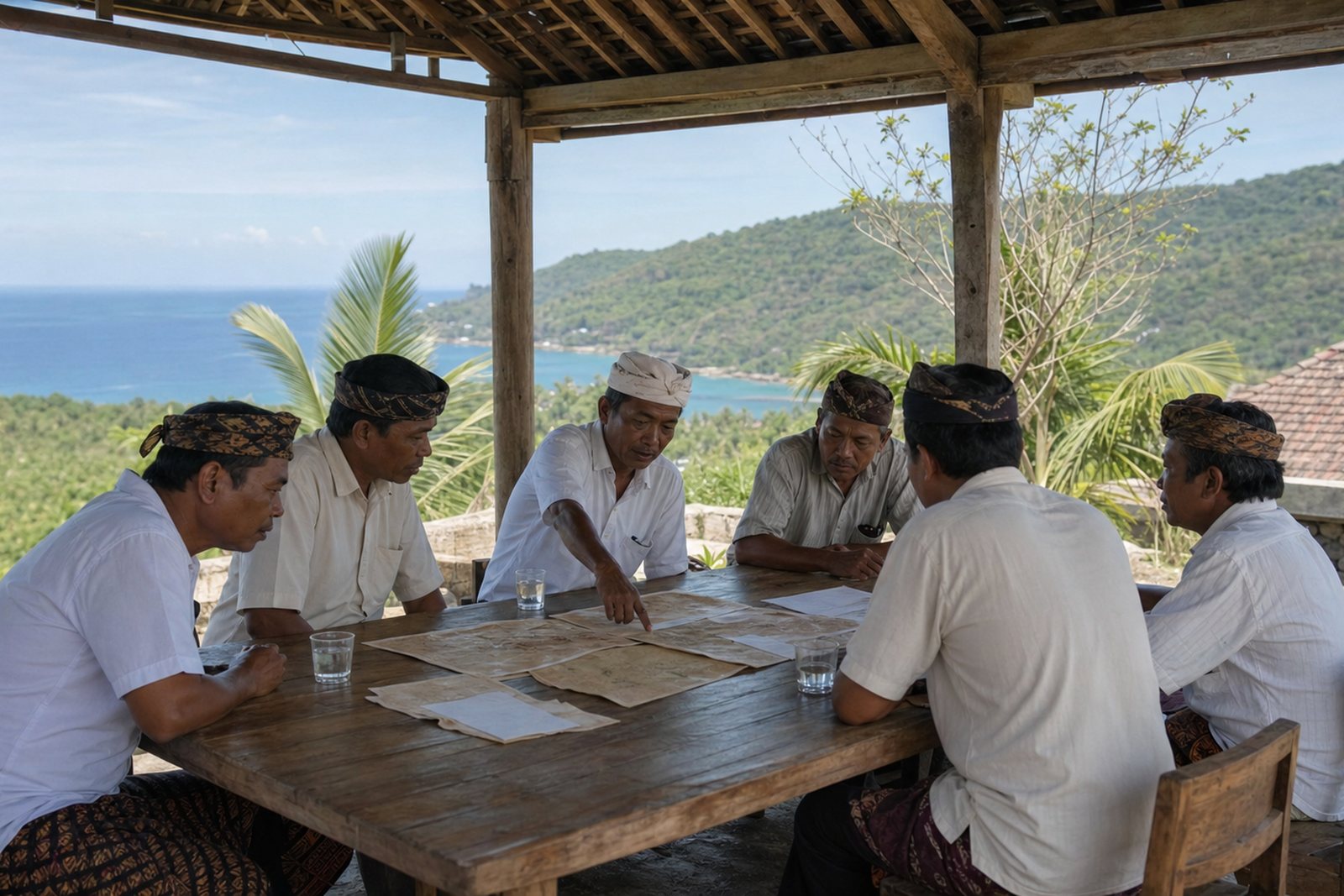 Lombok Notebook · Illustration: HubLombok (AI-generated)
Aquaculture as a Deliberate Complement
The official post gave particular attention to aquaculture. According to DPMPTSP Provinsi NTB, the governor viewed the development of aquaculture as important for reducing dependence on fishing at sea while helping to preserve fish stocks.
That is a meaningful policy choice. Capture fisheries and aquaculture are often discussed as though one must displace the other. The position described in the source is more measured: aquaculture is presented as a complementary route, capable of easing pressure on marine capture while retaining the broader goal of sustainable fisheries.
For investors, the significance lies in the type of economic activity that policymakers appear willing to encourage. An integrated ecosystem built around fishers, processors, ports and finance has one set of operating considerations. Aquaculture introduces another, with its own need for management discipline, appropriate partnerships and long-term stewardship. The source does not specify sites, species, permits, investment vehicles or commercial terms. Those omissions should remain omissions in any serious assessment.
Still, the directional message is clear. NTB’s leadership is not describing marine sustainability as a restriction imposed upon business from outside. It is describing it as a condition for a more balanced business ecosystem. That framing can matter when investors are deciding whether a market’s public institutions see environmental management and commercial development as competing priorities or as linked responsibilities.
The committee’s multi-stakeholder composition is relevant in this regard. DPMPTSP said participants included fisheries-sector businesses, government agencies and other stakeholders. Bringing these groups into one forum does not eliminate competing interests. It does, however, create a stated venue in which those interests can be confronted through recommendations and policy alignment rather than left entirely to fragmented decision-making.
For a Lombok-focused reader, this is also a reminder to distinguish the island’s visible economy from its underlying one. Tourism may attract the most immediate international attention, but the wider provincial economy includes systems that sustain communities, supply businesses and shape public policy. The marine sector is one of those systems. Its governance will influence the quality of regional development even where the effect is indirect.
What This Means for Investors
The prudent conclusion is neither exuberance nor indifference. DPMPTSP Provinsi NTB’s post should not be read as a reason to assume a particular return, regulatory outcome or project opportunity. It contains no such assurance. It is better read as an official statement of priorities: sustainable resource management, accurate data, integrated commercial relationships, partnership or cooperative models, and aquaculture development.
Investors considering exposure to Lombok or the broader NTB economy can use that statement as a framework for better questions. Where an opportunity touches the fisheries value chain, ask how it relates to the province’s stated emphasis on sustainability and data. Where it depends on processing, ports or finance, ask whether the proposed operating model reflects the integrated ecosystem officials describe. Where aquaculture is presented as an opportunity, ask for evidence of the relevant operational, legal and environmental foundations rather than relying on the broad policy narrative alone.
A disciplined review might focus on four matters:
| Question | Why it matters | |---|---| | What role does the business play in the value chain? | The official agenda spans fishers, processors, ports and finance. | | What evidence supports resource and operational assumptions? | Provincial leaders identified accurate data as the basis for policy. | | How does the model address sustainability? | The meeting framed resource preservation as central to management. | | Which partnerships are essential? | Partnership and cooperative models were specifically encouraged. |
Such questions are deliberately unglamorous. They are also where durable investment analysis begins. A well-designed project must fit not only its market but also the governing logic of the place in which it operates.
The deeper lesson from NTB’s committee meeting is that sustainable development is administrative before it is aesthetic. It depends on the quality of information, the ability of institutions to coordinate and the willingness of commercial participants to operate within a resource-conscious framework. The official post does not show the outcome of that work. It does show the direction in which NTB says it intends to travel.
For investors, that is the notebook entry worth retaining: Lombok’s economic context cannot be reduced to a single sector or a single story. Marine governance may sit outside the headline investment thesis of a particular asset, yet it remains part of the institutional fabric that determines whether regional growth is coherent, inclusive and capable of lasting.
Stay informed, subscribe to the free Lombok Briefing for market intelligence like this, published twice a month.
What did NTB’s annual fisheries committee meeting focus on?
According to DPMPTSP Provinsi NTB, the meeting focused on sustainable fisheries management, accurate data for policy-making, an integrated business ecosystem, partnership or cooperative models, and aquaculture development.
Why should Lombok investors follow fisheries governance?
Fisheries governance matters because the sector connects fishers, processors, ports and financial institutions. DPMPTSP Provinsi NTB’s post does not promise returns, but it sets out the provincial priorities relevant to resource-dependent business activity.
What role did NTB officials assign to aquaculture?
DPMPTSP Provinsi NTB reported that the governor regarded aquaculture development as important for reducing dependence on fishing at sea while helping to maintain the sustainability of fish stocks.

The Lombok Buyer's Field Guide
Legal structures ranked by risk, the honest ROI math line by line, all six zones ranked, and the 24-point due-diligence checklist. The whole book, free in your inbox.
See what's inside