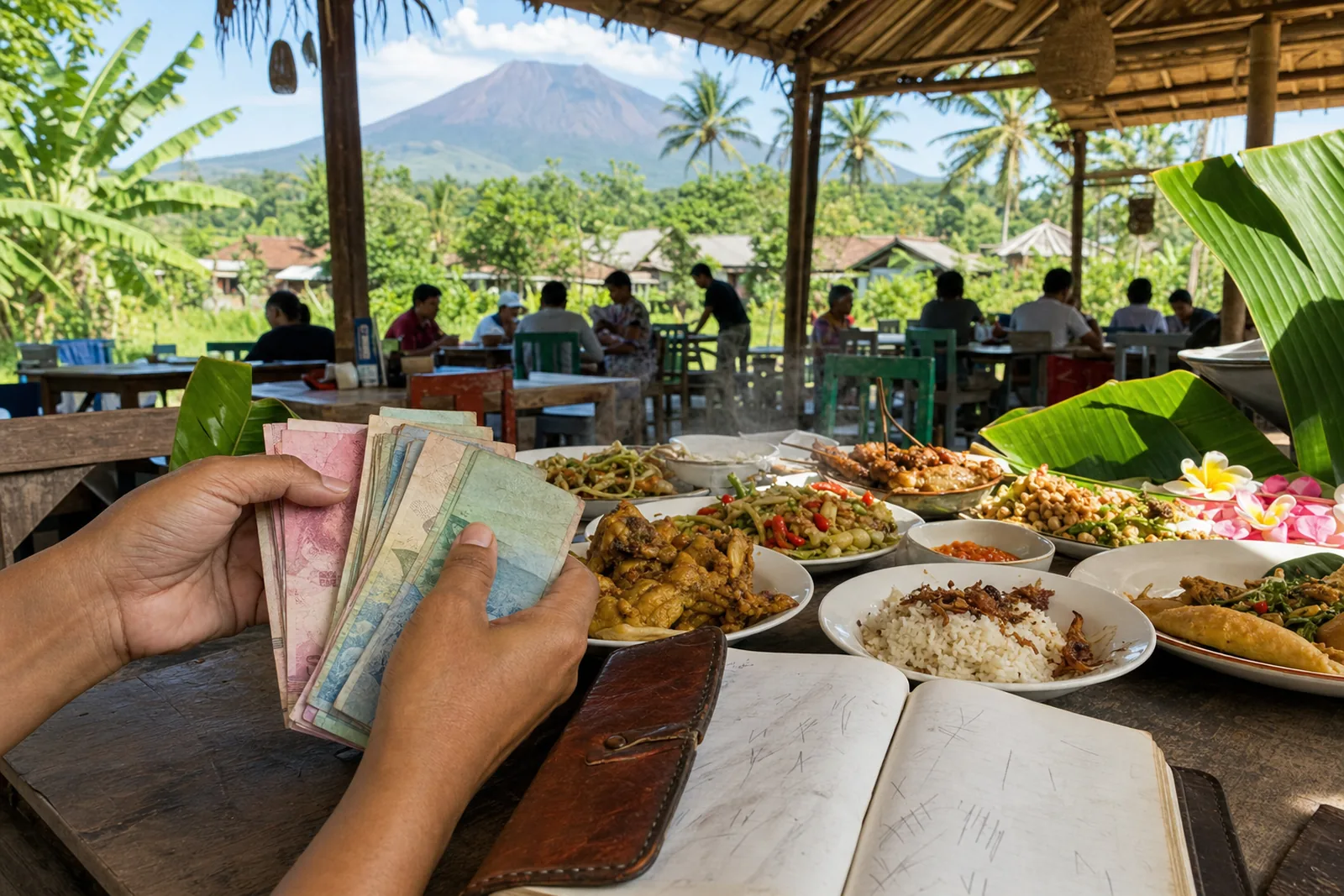
Lombok Notebook: Why NTB’s Diaspora Policy Debate Matters to Investors
NTB is framing its diaspora as investors and business connectors. The opportunity is real, but policy execution will determine its value.
Quick answer: NTB’s investment agency is positioning the Indonesian diaspora as a potential source of capital, business partnerships and investment connections across renewable energy, tourism, marine activity and food security. For Lombok investors, the significance lies less in an immediate deal flow than in whether proposed legal and administrative reforms make participation, ownership and approvals more predictable.
A regional discussion in Mataram may sound remote from an investor’s immediate concerns. Yet the questions aired by NTB’s investment agency go to the practical heart of capital formation: who can invest, how their status is recognised, and whether the route from interest to an approved project is sufficiently clear.
The official account of DPMPTSP Provinsi NTB presents the diaspora not merely as a community abroad sending money home, but as a network of potential investors, commercial partners and investment connectors. That is an appealing proposition. Its investable importance, however, rests on the unglamorous work of regulation, land-use planning and administrative integration.
The Context
On 9 July, DPMPTSP Provinsi NTB took part in a regional discussion forum on gathering input for the preparation of Indonesian diaspora policy regulation. The forum was organised in Mataram by the Coordinating Ministry for Law, Human Rights, Immigration and Corrections.
According to DPMPTSP’s official post, the agency was represented by its Secretary, Dadang Fajar, alongside M. Syafari Ikhwan and I Gusti Bagus Ngurah Weda Gama. Dadang Fajar described NTB as the country’s fourth-largest contributor of Indonesian migrant workers. The post argues that this gives the province a meaningful diaspora constituency whose economic role could extend beyond remittances.
That distinction matters. Remittances can support households and local consumption; investment requires a different architecture. It asks potential investors to assess projects, accept risk, establish legal standing, move through approvals and trust that their rights will be understood at every stage. A diaspora investor may bring valuable local knowledge and international networks, but familiarity with a place does not remove the need for a reliable investment process.
DPMPTSP identified several fields in which it sees opportunity:
- Renewable energy
- Tourism
- Marine activity
- Food security
These are broad investment themes rather than a project pipeline. The post does not specify assets, transaction values, investment commitments or timetables. That restraint is important for readers: the forum signals policy intent and a search for input, not a completed investment programme.
For Lombok in particular, tourism naturally attracts attention, but the wider list is revealing. It suggests that the province’s investment framing is not confined to hospitality property. For a long-term investor, that broader framing can be useful: economies with several plausible sources of demand may prove more resilient than those relying on a single narrative. It remains, however, a framing offered by the agency rather than proof that each sector is ready for deployment.
From Diaspora Capital to Investment Connections
The most interesting phrase in DPMPTSP’s account is the idea of the diaspora as an investment connector. Capital is only one part of an investment relationship. Investors and operating businesses also need introductions, market interpretation, trusted professional support and a credible path through institutions.
A diaspora network can potentially perform some of those functions. It may connect international investors to local counterparties, help businesses understand overseas expectations, or bring operating experience into a local venture. In policy terms, this is more ambitious than simply encouraging people abroad to transfer funds.
DPMPTSP’s stated ambition is for diaspora participation to include investors, business partners and investment connectors.
The agency says the provincial government has prepared a business-facilitation ecosystem through Perda NTB Number 6 of 2024, implementation of a policy it calls “Karpet Merah”, and a plan to establish NTB Capital. Those references indicate that officials are seeking institutional tools to support incoming investment. The source does not describe the precise benefits, eligibility conditions or operating arrangements of each measure, so investors should avoid treating the labels themselves as a substitute for due diligence.
That caveat is not pessimism. It is the natural discipline of cross-border investing. A favourable policy message can make an opportunity worth investigating; it does not by itself establish the legal position of a buyer, the status of a parcel, the availability of a licence or the economics of a project.
For foreign investors considering Indonesian property, the legal distinction is especially consequential. Foreigners cannot hold freehold Hak Milik (SHM), which is reserved for Indonesian citizens. Available routes include leasehold Hak Sewa, Hak Pakai for qualifying residents, and a foreign-owned PT PMA holding Hak Guna Bangunan (HGB). Each route has different practical implications and must be considered against the investor’s circumstances and the asset being acquired.
The diaspora question adds a further layer. DPMPTSP specifically recommends certainty over property rights for former Indonesian citizens. That does not mean such certainty has already been delivered. It means the provincial agency is identifying the issue as part of the policy work it believes is needed.
 Lombok Notebook · Illustration: HubLombok (AI-generated)
Where the Friction Still Lies
The official post is valuable because it does not present the task as complete. DPMPTSP identifies the absence of comprehensive regulation, difficulties integrating with the OSS system, and asset-ownership issues that intersect with unfinished Rencana Detail Tata Ruang (RDTR) plans in some areas.
Each point has a practical investment analogue.
First, incomplete or fragmented regulation can create uncertainty about eligibility and process. Investors are rarely deterred by paperwork alone; they are deterred when the paperwork leaves material questions unanswered. A coherent diaspora framework could help clarify how an applicant’s identity, immigration status and investment capacity interact.
Second, OSS integration matters because investment experience is shaped by the system through which permissions and registrations are handled. A policy may be well intentioned, but if the implementation path is not aligned with the relevant administrative system, the investor still faces uncertainty.
Third, detailed spatial planning is not a technical footnote. Land use, zoning and development permissions all depend on understanding what can lawfully be done with a site. Where RDTR work remains unfinished, an investor should resist any temptation to fill the gap with assumptions.
This is where a sober distinction between policy direction and transaction readiness becomes indispensable. NTB’s post suggests an administration trying to turn diaspora links into a more organised investment channel. The investment case for an individual opportunity still begins with the underlying asset, counterparties, planning position and legal structure.
For property transactions, that means checking certificates, ownership history, zoning and encumbrances before committing. Deeds are executed by a licensed PPAT notary; the deed of sale is the AJB, and the land agency is BPN. Buyer transfer duty, BPHTB, is about 5% of assessed value. Nominee structures, in which an Indonesian person holds freehold on behalf of a foreigner, are illegal and void in court.
HubLombok is the editorial arm of Samudra Villas, an active developer in Are Guling, South Lombok. Readers should therefore treat this publication’s market coverage with that relationship in mind. On legal structures and property due diligence, TerraNusa Advisory is HubLombok’s advisory partner: it describes its role as supporting certificate, zoning and encumbrance checks, PT PMA setup, taxes, deeds and title transfer at BPN. It is not Samudra Villas.
What This Means for Investors
The immediate conclusion is measured. The DPMPTSP forum is not an announcement that a new diaspora investment regime has taken effect. It is evidence that the provincial agency sees diaspora participation as strategically important and is advocating changes intended to make that participation more workable.
For an investor, that creates a useful watchlist rather than a reason to accelerate blindly:
- Follow whether recommendations on diaspora identity, visa facilities, property rights for former citizens and the proposed Global Citizen of Indonesia policy become defined rules.
- Separate provincial investment promotion from the legal status of a specific transaction.
- Treat OSS, zoning and title checks as core investment work, not as matters to resolve after commercial terms are agreed.
- Match any property structure to the investor’s actual rights and circumstances; do not rely on illegal nominee arrangements.
There is a broader lesson, too. Emerging investment narratives are often told through grand statements about demand, connectivity or opportunity. The more useful signal is sometimes a government body openly naming the operational constraints that remain. DPMPTSP’s post does precisely that: it pairs its ambition for diaspora-led investment with an acknowledgement that regulatory, administrative and spatial-planning issues need attention.
That combination is worth taking seriously. It neither proves an investment thesis nor diminishes one. It describes the terrain on which that thesis will be tested. For investors with a long horizon in Lombok and wider NTB, the policy debate is therefore not background noise. It is part of the institutional context that may shape how easily capital can enter, operate and endure.
Stay informed, subscribe to the free Lombok Briefing for market intelligence like this, published twice a month.
What did DPMPTSP NTB say about diaspora investment?
DPMPTSP Provinsi NTB said it sees the Indonesian diaspora as a potential source of remittances, investment, business partnerships and investment connections. It highlighted renewable energy, tourism, marine activity and food security as sectors with investment potential.
Has NTB announced a new diaspora investment regime?
No. DPMPTSP’s post describes a regional discussion and policy recommendations, not a completed new investment regime. The agency identified unresolved issues including comprehensive regulation, OSS integration, asset ownership and unfinished detailed spatial plans in some areas.
Can foreign investors hold Lombok freehold property through a nominee?
No. Foreigners cannot hold Hak Milik freehold, which is reserved for Indonesian citizens. Nominee structures are illegal and void in court. Foreign investors should assess lawful routes such as leasehold, Hak Pakai where eligible, or a PT PMA holding HGB.

The Lombok Buyer's Field Guide
Legal structures ranked by risk, the honest ROI math line by line, all six zones ranked, and the 24-point due-diligence checklist. The whole book, free in your inbox.
See what's inside