NTB’s Diaspora Agenda Puts Investment Rules in the Spotlight
NTB’s diaspora-policy discussion highlights both the opportunity and the unresolved rules that matter to investors assessing Lombok.
Quick answer: NTB’s investment agency sees the Indonesian diaspora as a potential source of capital, business partnerships and investment connections across renewable energy, tourism, marine industries and food security. For Lombok investors, the immediate significance is not a new investment regime, but a clearer view of the regulatory questions still requiring resolution.
For overseas investors, the most useful policy signals are often the least theatrical. An official discussion in Mataram about diaspora regulation does not announce a completed reform, a new property right or a finished investment programme. It does, however, reveal where NTB’s government sees opportunity, and where it acknowledges the system is not yet fully aligned.
The Context
According to the official Instagram post from DPMPTSP Provinsi NTB, the province’s investment and one-stop services agency took part in a regional discussion forum gathering input for proposed Indonesian diaspora-policy regulation. The forum was organised in Mataram by the Coordinating Ministry for Legal Affairs, Human Rights, Immigration and Corrections.
DPMPTSP NTB was represented by its departmental secretary, Dadang Fajar, alongside investment-governance and licensing officials. In the agency’s presentation, diaspora communities were framed as more than remittance senders. The organisation described them as prospective investors, business partners and “investment connectors”: people able to link capital, networks and commercial opportunities across borders.
That framing is material for a province such as NTB, where the investment conversation spans several sectors rather than one asset class. DPMPTSP identified opportunities in:
- renewable energy;
- tourism;
- marine industries; and
- food security.
The official post also described NTB as Indonesia’s fourth-largest contributor of Indonesian migrant workers nationally. That context helps explain why diaspora policy is being treated as an economic matter as well as an immigration or identity question. A diaspora with knowledge of overseas markets, professional networks and family links to the province may be able to play several roles at once, but only if the legal and administrative framework is legible enough for them to participate.
DPMPTSP NTB’s central proposition is that diaspora engagement can extend from remittances to investment, partnerships and cross-border commercial connections.
For investors considering Lombok, the point is not to assume that policy ambition automatically produces investable certainty. Rather, it is to recognise that the provincial administration is publicly identifying diaspora participation as part of its investment agenda. That is a useful direction of travel, even where the route remains incomplete.
From Investment Invitation to Investable Process
DPMPTSP says the provincial government has prepared an ecosystem intended to ease business activity through NTB Regional Regulation Number 6 of 2024, implementation of its “Karpet Merah” policy, and plans to establish NTB Capital. The post presents these as components of an enabling environment, not as evidence that every transaction or sector has become frictionless.
Indeed, the more revealing part of the agency’s account is its acknowledgement of outstanding constraints. DPMPTSP identified the absence of comprehensive regulation, integration difficulties involving the OSS system, and asset-ownership questions intersecting with unfinished Detailed Spatial Plans (RDTR) in some areas.
These are not minor drafting points. They sit at the practical junction between a broad investment proposition and a transaction that can be diligenced, licensed and completed.
For a foreign buyer or operating investor, property and land rights already demand care. Foreigners cannot hold freehold title, known as Hak Milik or SHM; that form of ownership is limited to Indonesian citizens. The available legal routes include leasehold, Hak Pakai for eligible residents, and a foreign-owned PT PMA holding Hak Guna Bangunan (HGB). Each route carries distinct requirements and should be assessed against the intended use of the asset.
Nor should a policy discussion about diaspora be mistaken for a substitute for those existing rules. The source specifically refers to a need for greater certainty around property rights for former Indonesian citizens, alongside proposed alignment between a Diaspora Identity Number (NID) and visa facilities, and the formulation of a Global Citizen of Indonesia (GCI) policy. Those are recommendations and policy objectives reported by DPMPTSP, rather than completed legal outcomes in the source material.
The distinction matters. Investors can reasonably take note of a government identifying bottlenecks and proposing solutions. They should not assume that a proposed identity, visa or property-rights arrangement has already changed the available legal structures.
A disciplined process therefore remains essential:
| Question | Why it matters | |---|---| | Which legal structure fits the investment? | Foreign ownership and use rights depend on the route chosen. | | Is the land use and spatial position clear? | DPMPTSP itself notes that RDTR completion remains an issue in some areas. | | Has title and ownership history been examined? | Legal certainty depends on the underlying documentation, not marketing language. | | Are licensing and tax steps properly sequenced? | Investment facilitation does not remove transaction obligations. |
For buyers navigating this process, deeds are executed by a licensed PPAT notary; the deed of sale is known as an AJB, while BPN is the land agency. TerraNusa Advisory, HubLombok’s independent licensed-notary and legal advisory partner, supports foreign buyers with due diligence, PT PMA setup, tax matters and deed and title transfer at BPN. Its role is advisory, not that of a property developer.
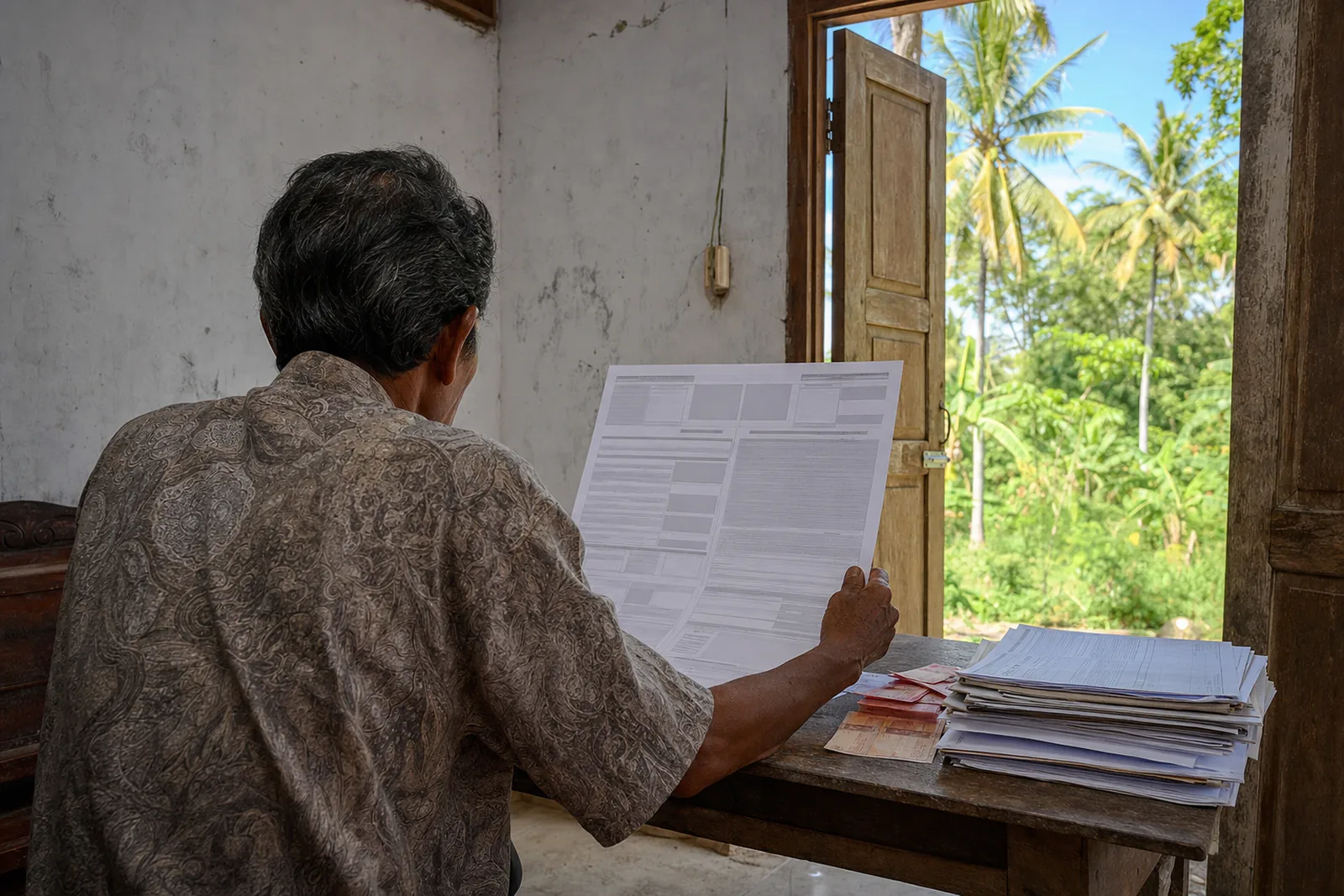
 NTB’s Diaspora Agenda Puts Investment Rules in the Spotlight · Illustration: HubLombok (AI-generated)
Why Diaspora Policy Matters Beyond Diaspora
At first glance, a discussion on diaspora regulation may appear narrowly relevant to former Indonesian citizens and Indonesian communities abroad. Yet its implications are broader because it tests the quality of the investment interface itself.
A framework that can connect identity status, visa access, asset rights, licensing and spatial planning would make it easier for a specific group to invest. It would also expose the administrative connections that matter to any investor: whether rules are consistent across institutions, whether systems communicate with one another, and whether a prospective transaction can move from interest to legal completion without ambiguity.
DPMPTSP’s official post is therefore notable for its candour. It pairs an investment invitation with a list of unresolved matters. The agency is not presenting diaspora capital as a magic solution; it is identifying the institutional work required to make that capital more usable.
For Lombok in particular, this is relevant to the wider question of how investment arrives. Tourism may draw attention, but accommodation, energy, marine activity and food-related businesses all depend on more than demand. They require rights that can be understood, planning that can be checked, permissions that can be obtained and counterparties that can be verified.
The official recommendations point towards this integrated view. DPMPTSP calls for harmonisation of the NID with visa facilities, certainty of property rights for former Indonesian citizens, and a GCI policy. It also calls for stronger regulatory synergy between central and regional government. In practical terms, that is an argument for reducing the gaps between national policy, provincial investment promotion and local implementation.
There is a caution here for investors who encounter broad language about “ease of doing business”. Such language can be meaningful as a policy objective, but it is not itself due diligence. A “red carpet” approach may signal an administrative desire to welcome capital. It does not, on its own, answer who owns a parcel, what can be built there, which structure is lawful, or whether an approval is in place.
The right reading of the DPMPTSP post is therefore balanced. NTB is seeking to broaden the sources of investment available to the province and sees diaspora networks as strategically valuable. At the same time, its own account identifies legal, digital-system and spatial-planning issues that remain part of the investment landscape.
What This Means for Investors
For investors evaluating Lombok or the wider NTB economy, the near-term takeaway is one of attention rather than anticipation. The discussion provides a useful official signal that the province wants diaspora participation to extend into investment and business partnership. It does not provide grounds to treat proposed reforms as settled law or to assume a new asset-ownership pathway already exists.
That makes process quality the central investment question. Before committing capital, investors should distinguish clearly between an official aspiration, a policy recommendation and an enforceable right. They should also test the specific asset or business opportunity against the rules that apply today.
A sensible investor checklist would include:
- confirming the applicable ownership or operating structure;
- reviewing title, ownership history, zoning and any encumbrances;
- checking the status and relevance of spatial planning;
- understanding the licensing path, including any OSS considerations; and
- obtaining independent legal and tax advice before signing or transferring funds.
This does not diminish the importance of the policy conversation. On the contrary, it is precisely because NTB is identifying renewable energy, tourism, marine industries and food security as investment opportunities that the underlying framework matters. Capital is more patient when the rules are clear, and more expensive when uncertainty must be priced in.
DPMPTSP’s intervention in Mataram should be read as a thoughtful institutional signal: the province wants to mobilise diaspora relationships more effectively, but recognises that regulation, systems and property questions must work together. For investors, that is valuable context, and a reminder that the strongest opportunity cases are built on verification as well as vision.
Stay informed, subscribe to the free Lombok Briefing for market intelligence like this, published twice a month.
Does NTB’s diaspora discussion create new property rights for investors?
No. DPMPTSP NTB’s post describes recommendations, including greater certainty for former Indonesian citizens, rather than a completed new property-rights regime. Foreign investors should assess currently available legal structures and obtain independent legal advice for the specific transaction.
Which sectors does DPMPTSP NTB identify for diaspora investment?
DPMPTSP NTB identifies renewable energy, tourism, marine industries and food security as sectors with investment potential. The agency presents diaspora communities as potential investors, business partners and investment connectors, but the post does not announce a specific investment programme or project.
What should a Lombok investor verify before committing capital?
Verify the lawful ownership or operating structure, title and ownership history, zoning, encumbrances, spatial-planning position, licensing route and relevant tax obligations. DPMPTSP NTB notes unresolved issues around comprehensive regulation, OSS integration and RDTR completion in some areas.

The Lombok Buyer's Field Guide
Legal structures ranked by risk, the honest ROI math line by line, all six zones ranked, and the 24-point due-diligence checklist. The whole book, free in your inbox.
See what's inside