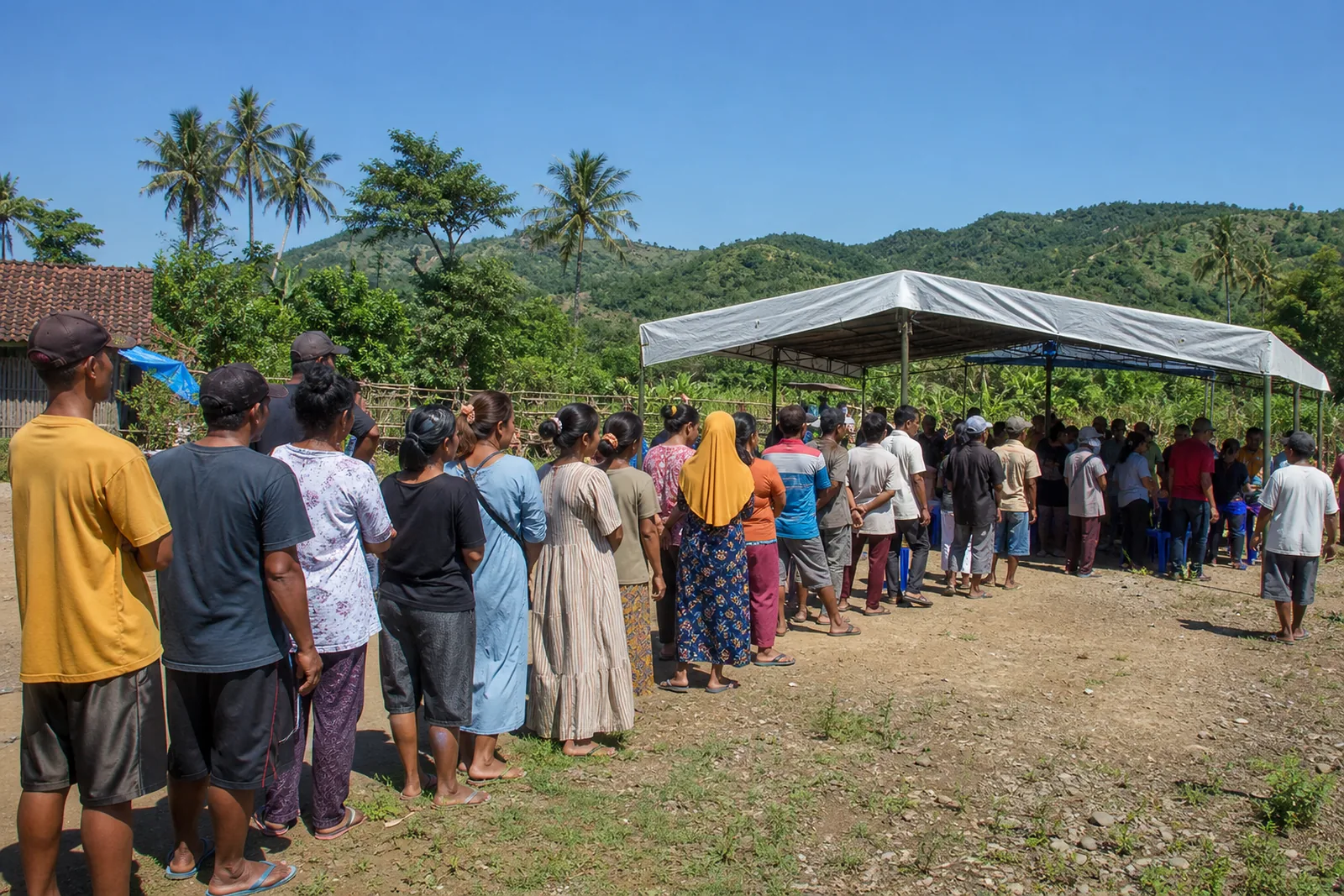
MotoGP Mandalika volunteer demand signals broad local engagement
High interest in MotoGP Mandalika 2026 volunteer roles has prompted an evaluation of applicant-queue arrangements.
MotoGP Mandalika 2026 is drawing strong interest not only from racing audiences, but also from people seeking to contribute behind the scenes. Radar Lombok reports that high demand for volunteer positions has led organisers to evaluate the applicant-queue process.
A broad pool of prospective volunteers
According to Radar Lombok, thousands of applicants from varied backgrounds are competing for volunteer opportunities connected with MotoGP Mandalika 2026. The report identifies students, young professionals and homemakers among those seeking a place at the Mandalika Circuit.
That breadth matters. Major sporting events are often discussed through visitor numbers, hotel demand or television exposure. The volunteer response offers a different, more local measure of attention: residents and prospective participants are prepared to devote time to an international event taking place in South Lombok.
The source does not state how many positions are available, how volunteers will be selected, or what responsibilities they will hold. It does, however, make clear that the level of applicant interest has been sufficiently high for the flow of queues to be reviewed.
Key development: Radar Lombok says that strong volunteer-applicant enthusiasm for MotoGP Mandalika 2026 has prompted an evaluation of queue arrangements.
Mandalika’s role in the Lombok story
Mandalika is the special economic zone surrounding the MotoGP circuit, distinct from Kuta, the neighbouring town. For investors, the distinction is worth preserving: both sit within the wider South Lombok tourism and property narrative, but they are separate locations with different land-price ranges and market characteristics.
Verified market data places land in Mandalika at Rp 100-150 million per are, approximately USD 6,100-9,100 per are. In Kuta, the leading demand-and-liquidity zone, the equivalent range is Rp 300-400 million per are, or roughly USD 18,200-24,200 per are. One are equals 100 square metres.
This spread illustrates why event-driven attention should not be treated as a single, uniform property signal. Mandalika’s relationship with the circuit is direct, while Kuta’s market is more established as a tourism and accommodation centre. Are Guling, where developments like Samudra Villas in Are Guling, South Lombok are located, is an earlier-cycle frontier with land priced at Rp 120-180 million per are, or approximately USD 7,300-10,900 per are.
South Lombok land values span roughly Rp 30-400 million per are across the principal zones tracked by HubLombok.
Event attention is not an investment case on its own
The volunteer rush is an encouraging indicator of public engagement, but it is not a substitute for asset-level underwriting. Investors should avoid converting interest around a major event into an assumption about rental income, occupancy or future capital values.
The available South Lombok data support a more disciplined distinction:
- Foreign arrivals are reported to be rising by 40-50% year on year, reflecting tourism recovery and the MotoGP effect.
- Kuta/Mandalika villa rates are about 38% higher year on year.
- Realistic stabilised occupancy in the first 1-3 years is 55-70%; Bali is tracked at 70-85%.
- Honest net rental yields after management fees and realistic occupancy are 7-12%, while top-performing assets can reach about 15% net.
- Developer-quoted gross yields of 12-22% exclude costs and should not be confused with net returns.
These are market-context figures, not outcomes guaranteed by the MotoGP event or by volunteer demand. Their value lies in framing the questions that a buyer should ask: what demand is likely outside the event calendar, what operator will manage the property, and which costs have been included in the return calculation?
Management fees of 18-22% of gross rental revenue and online travel-agent or booking commissions of 15-20% are especially relevant when assessing a rental proposition. A headline gross-yield figure may look persuasive, but the investable result is the net return after such costs and after realistic occupancy assumptions.
Due diligence remains the essential discipline
High-profile events can intensify interest in nearby real estate, but they do not alter Indonesia’s rules for foreign ownership. Foreigners cannot hold freehold, known as Hak Milik or SHM; that form of title is reserved for Indonesian citizens.
Common routes for foreign buyers include leasehold, typically 25-30 years with extensions; Hak Pakai, a personal right-to-use structure requiring KITAS or KITAP residency; and a foreign-owned PT PMA holding Hak Guna Bangunan, or HGB, for 30 years extendable. Nominee arrangements, in which an Indonesian citizen holds freehold on a foreigner’s behalf, are illegal and void in court.
The purchase process should also account for BPHTB, the buyer transfer duty of about 5% of assessed value, alongside the annual PBB land-and-building tax. Deeds are executed by a licensed PPAT notary; the deed of sale is the AJB, while BPN is the land agency.
For buyers considering property connected to South Lombok’s tourism growth, the practical starting point is title, zoning, ownership history and encumbrances, not the excitement surrounding an event. TerraNusa Advisory, HubLombok’s independent licensed-notary and legal advisory partner, supports foreign buyers with this wider due-diligence and transfer chain, including PT PMA setup and land-office processes.
What this means for investors
The immediate news is operational: organisers are reviewing how applicants queue for MotoGP Mandalika 2026 volunteer roles after strong interest. For investors, it is a useful reminder that the event has local resonance extending beyond spectatorship.
It should be read alongside, rather than ahead of, the underlying market evidence. South Lombok offers a wide range of land entry points, a tourism recovery trend and a clear Bali-overflow thesis: rising Bali prices and congestion can push demand towards a cheaper, earlier-cycle Lombok market. But location selection, legal structure, operator capability and conservative net-yield assumptions remain more important than a single event-weekend narrative.
The volunteer response reinforces Mandalika’s visibility; the more consequential investor question is how that visibility converts into durable, properly underwritten demand over time.
Stay informed, subscribe to the free Lombok Briefing for analysis like this, published twice a month.
What does the MotoGP Mandalika volunteer demand indicate?
Radar Lombok reports that thousands of people from backgrounds including students, young professionals and homemakers are applying for MotoGP Mandalika 2026 volunteer roles. The resulting review of queue arrangements indicates strong local interest, but it does not establish rental or property-return outcomes.
How should investors use this MotoGP Mandalika news?
Investors can view the volunteer response as evidence of local engagement with MotoGP Mandalika 2026, while relying on conservative underwriting for any purchase. In South Lombok, honest net rental yields are 7-12% after management fees and realistic occupancy; gross yield claims require separate scrutiny.
Can a foreign investor buy freehold property near Mandalika?
No. Foreigners cannot hold Indonesian freehold, or Hak Milik/SHM. Available routes include leasehold, typically 25-30 years with extensions, Hak Pakai for qualifying residents, or a PT PMA holding HGB for 30 years extendable. Nominee freehold arrangements are illegal and void in court.
The Lombok Buyer's Field Guide
Legal structures ranked by risk, the honest ROI math line by line, all six zones ranked, and the 24-point due-diligence checklist. The whole book, free in your inbox.
See what's inside