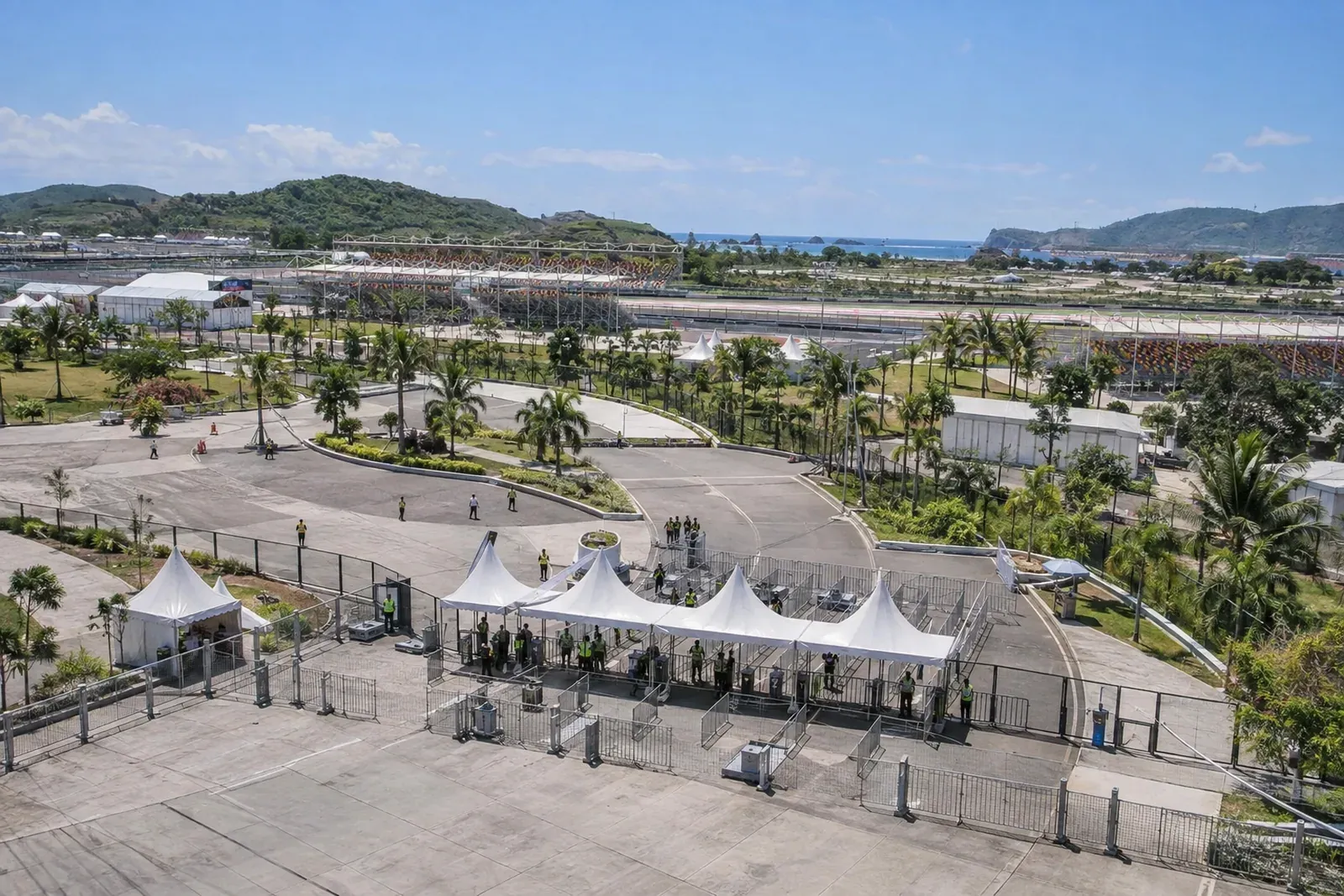
Mandalika MotoGP Security Simulation Puts Event Readiness in Focus
Ahead of the 2026 Indonesian Grand Prix, West Nusa Tenggara police held a security and contingency simulation at the Mandalika circuit.
Ahead of the 2026 Indonesian Grand Prix, West Nusa Tenggara police staged a security and contingency simulation at the Mandalika circuit. The exercise is a concrete sign of preparations under way, though the available report does not detail the scenarios practised or the measures planned for race weekend.
For Lombok, the Grand Prix is both an international sporting event and part of the wider tourism story around Mandalika. The simulation puts public security among the practical questions surrounding event readiness, alongside the tourism and investment interest that MotoGP can bring to the island.
A preparation exercise at the circuit
Radar Lombok reported that the West Nusa Tenggara Regional Police, known as Polda NTB, held the simulation on Monday, 28 September 2026. It took place in the east parking area of the Mandalika circuit and was organised as part of Ops Mandalika Rinjani 2026, in preparation for security around the Indonesian Grand Prix.
The report describes the activity as a security and contingency simulation. It does not specify which incidents were rehearsed, how many personnel took part, or what operational arrangements will be used during the event. Those distinctions matter: a simulation demonstrates that preparation is taking place, but the report alone does not establish the full scope or outcome of that preparation.
Nor does the source offer a detailed schedule for the race or information about access, transport, crowd management, emergency response, or visitor guidance. Investors and prospective visitors should therefore treat the announcement as one piece of an evolving readiness picture, rather than a complete account of how the event will be managed.
Security is part of the event proposition
A major international event depends on more than the sporting programme. Visitors need a setting in which they can travel to the venue, attend the event and move around with confidence. Security planning is one part of that experience, and the simulation signals that local authorities are preparing for the Grand Prix.
That observation should not be stretched into a claim that risks have been eliminated or that every operational question has been settled. The source confirms the exercise and its location, but provides no assessment of its results. It also contains no independent evaluation of readiness. For a careful reader, the useful conclusion is limited but relevant: authorities have publicly reported a preparatory exercise ahead of the event.
The distinction between preparation and performance is important for Lombok’s tourism narrative. Public announcements can show what authorities intend to address, while the actual visitor experience depends on how plans are carried out. Further reporting on practical arrangements would help give visitors and businesses a fuller picture as the event approaches.
MotoGP and Lombok’s tourism context
MotoGP has significance beyond the circuit. The verified market context records a foreign-arrivals trend of 40-50% year-on-year, associated with tourism recovery and the MotoGP effect. It also records villa rates in Kuta and Mandalika at about 38% year-on-year. These are market indicators, not proof that the security simulation caused changes in arrivals or accommodation pricing.
The distinction is especially relevant to investors. A prominent event can contribute to Lombok’s visibility, but tourism demand and property performance depend on more than publicity. The supplied information does not quantify the Grand Prix’s specific contribution to bookings, visitor spending or investment returns. It would be premature to infer those outcomes from a security-preparation announcement.
For the same reason, the exercise should not be read as a forecast for future property values or rental income. Market figures provide context for the island’s current tourism story; they do not establish a direct link between this simulation and a particular asset’s performance.
What this means for investors
The announcement is relevant as a signal of institutional preparation around an event with an established place in Lombok’s tourism narrative. It is not, by itself, an investment case. Investors assessing exposure to the area can separate what is confirmed from what remains unanswered:
- Confirmed: Polda NTB held a security and contingency simulation at the east parking area of the Mandalika circuit on 28 September 2026, ahead of the Indonesian Grand Prix.
- Supported market context: foreign arrivals are trending up 40-50% year-on-year, while Kuta and Mandalika villa rates are about 38% higher year-on-year.
- Not established by this report: the exercise’s results, detailed race-day arrangements, or any direct effect on visitor numbers, rental income or property values.
That separation helps keep event interest in perspective. MotoGP may support Lombok’s international profile, but investment decisions still require attention to the fundamentals of a specific location and asset. A security exercise is one element of the operating environment, not a substitute for evidence about demand or returns.
As preparations continue, further detail on visitor arrangements and the results of operational planning will help clarify how readiness translates into the experience on the ground. For now, the simulation offers a measured update: local police have reported a preparatory exercise ahead of the 2026 Grand Prix, while the wider investment implications remain dependent on evidence beyond this announcement.
Stay informed: subscribe to our free Lombok Briefing, published twice a month (the 1st and 15th), for analysis like this.
What security preparation was reported ahead of MotoGP Mandalika 2026?
Radar Lombok reported that West Nusa Tenggara police held a security and contingency simulation at the east parking area of the Mandalika circuit on 28 September 2026. The report does not describe the scenarios practised or the results.
Does the simulation show that visitor safety is assured?
No. The report confirms that a simulation took place, which indicates preparation. It does not provide an assessment of readiness or establish that all risks have been addressed. Investors and visitors would need further information about event arrangements.
What does this announcement mean for Lombok property investors?
It is a relevant update about preparations for an event connected to Lombok’s tourism profile, but it does not establish an effect on property values or rental income. Verified context includes a 40-50% year-on-year foreign-arrivals trend and roughly 38% higher villa rates in Kuta and Mandalika.

The Lombok Buyer's Field Guide
Legal structures ranked by risk, the honest ROI math line by line, all six zones ranked, and the 24-point due-diligence checklist. The whole book, free in your inbox.
See what's inside