Lombok Notebook: Mandalika’s Investment Story Has an Unresolved Human Cost
Mandalika’s MotoGP-led tourism strategy offers investors visibility, but land rights, due diligence and community impact remain central to any credible thesis.
Quick answer: Mandalika’s MotoGP project has raised Lombok’s profile and supports the island’s tourism-investment narrative, but investors should treat unresolved eviction and compensation allegations as a material due-diligence issue. The opportunity is not diminished by ignoring local rights: credible investment depends on lawful title, transparent process and a realistic view of social risk.
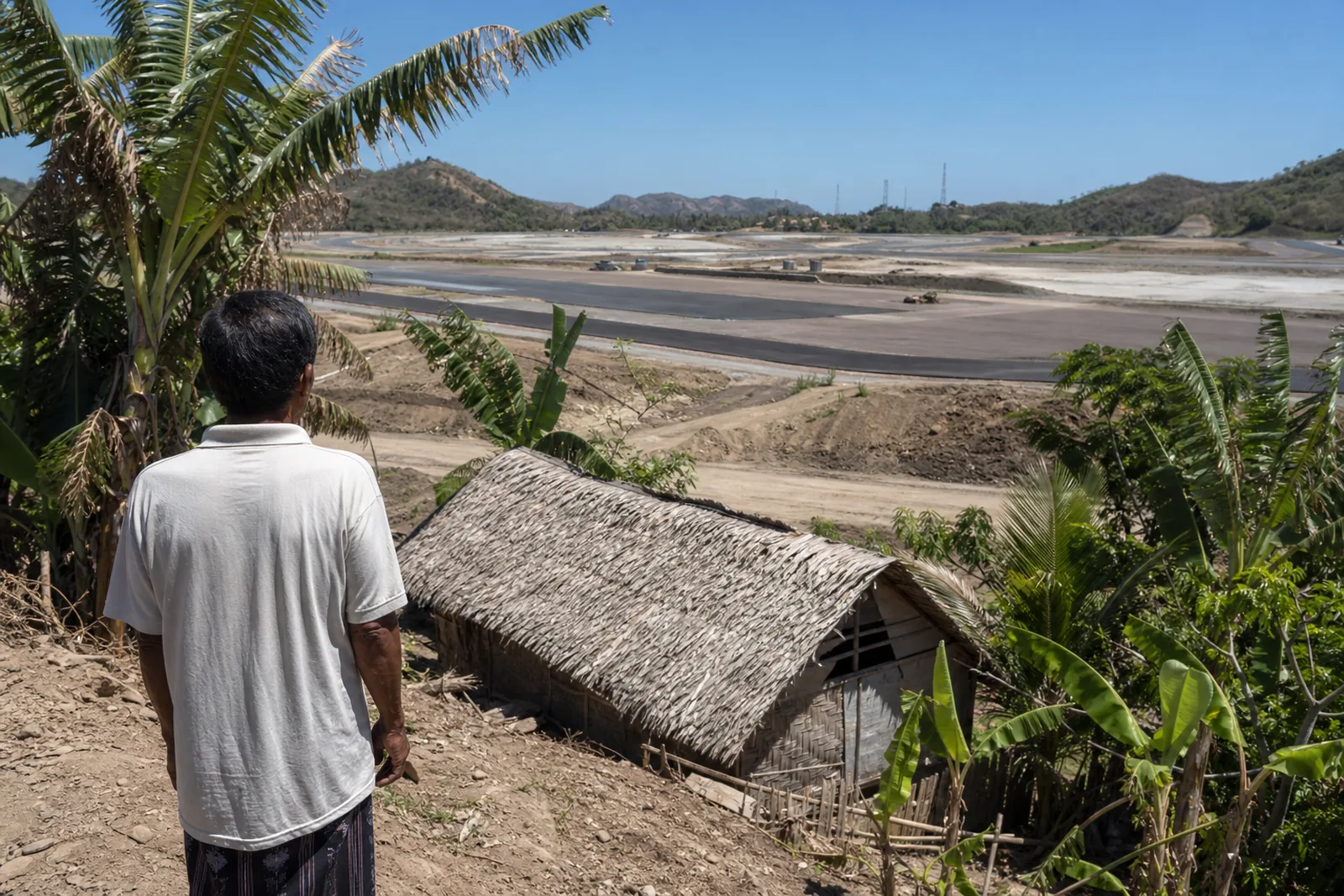
For investors, a circuit is easy to photograph: a ribbon of asphalt beside the sea, a global sporting brand and an immediately legible tourism proposition. The harder picture sits beyond the perimeter. There, according to reporting by Jakarta Post Lombok drawing on AFP interviews, Indigenous Sasak families describe years of displacement, disputed compensation and an uncertain future.
The Context
Indonesia’s return to MotoGP in Lombok was framed as more than a sporting occasion. The race returned to the country in 2022, after a 25-year hiatus, at a 4.31-kilometre track in the beach-lined Kuta resort area. The government’s stated ambition was to diversify tourism away from Bali, while the Mandalika area had been designated a special economic zone under former president Joko Widodo.
That national ambition matters to the wider Lombok thesis. South Lombok is often understood through the “Bali-overflow” lens: rising prices and congestion in Bali can direct travellers and capital towards a cheaper, earlier-cycle neighbouring market. Verified market data places turnkey investment-grade villa entry in South Lombok at EUR 95,000-350,000, compared with USD 400,000-800,000 for comparable specification in Bali. In Kuta and Mandalika, villa rates are reported at about +38% year on year.
Yet an investment narrative is not the same thing as an investable asset. Mandalika’s visibility may help establish destination awareness, but it does not automatically settle the questions beneath a particular plot: who held the rights, whether the chain of ownership is clear, what compensation was agreed and whether local residents have been treated fairly.
The source describes this distinction in human terms. Senum, a villager whose land became part of the project, said authorities arrived with heavy machinery in 2018 and that he moved twice. He said he had been promised Rp10 million ($600) for land incorporated into the track but ultimately received Rp3 million. Those are allegations and personal accounts reported by the source, not an independent valuation of the land.
The scale of the reported dispute is also consequential. Residents told AFP that most of 124 families in the area had been forced out or moved elsewhere, while 44 remained in compensation disputes. In July, UN experts said fresh evictions had left more than 2,000 people without their primary source of income; an August report expressed alarm over alleged intimidation and force, according to the source.
The core investor lesson is straightforward: destination infrastructure can create demand, but it cannot substitute for clean rights, transparent acquisition and a durable social licence.
What Mandalika Signals, and What It Does Not
Mandalika occupies a distinct place within South Lombok. It is the special economic zone around the MotoGP circuit; Kuta is the adjacent resort town. Conflating them can obscure both pricing and risk. Verified land ranges place Mandalika at Rp100-150 million per are (approximately $6,100-9,100 per are) and Kuta at Rp300-400 million per are (approximately $18,200-24,200 per are).
| Zone | Land range | Market character | |---|---:|---| | Mandalika | Rp100-150 million/are | SEZ around the MotoGP circuit | | Kuta | Rp300-400 million/are | Demand and liquidity leader | | Are Guling | Rp120-180 million/are | Early-cycle frontier |
These figures describe market positioning, not a promise of future appreciation. Nor should sporting infrastructure be converted too casually into a rental forecast. The verified figures distinguish developer-quoted gross yields of 12-22% from honest net yields of 7-12% after management fees and realistic occupancy. Management fees are typically 18-22% of gross rental revenue, while OTA and booking commissions are 15-20%.
This distinction matters especially where a destination’s profile rises faster than its operating depth. Realistic stabilised occupancy for South Lombok in years one to three is 55-70%, versus 70-85% in Bali. A MotoGP weekend may be useful evidence of attention; it is not evidence that a villa will be occupied throughout the year, or that its operating costs can be ignored.
The Jakarta Post Lombok source offers an equally important reminder: the benefits of a major project do not necessarily distribute evenly. Former president Joko Widodo hailed the project for employing 3,000 residents, the report says. But some residents interviewed said they could not benefit from the track because they were prevented from selling to visitors and, on race weekends, from leaving their new homes without permission. Another former resident, Suman, told AFP she was content after receiving Rp15 million to leave a rented home near the track.
This is not a neat morality tale with a single outcome. It is precisely why investors should resist both reflexive celebration and blanket dismissal. Infrastructure can generate economic activity; families can experience it very differently. The relevant question for capital is whether a project’s legal and community foundations are strong enough to withstand scrutiny over time.
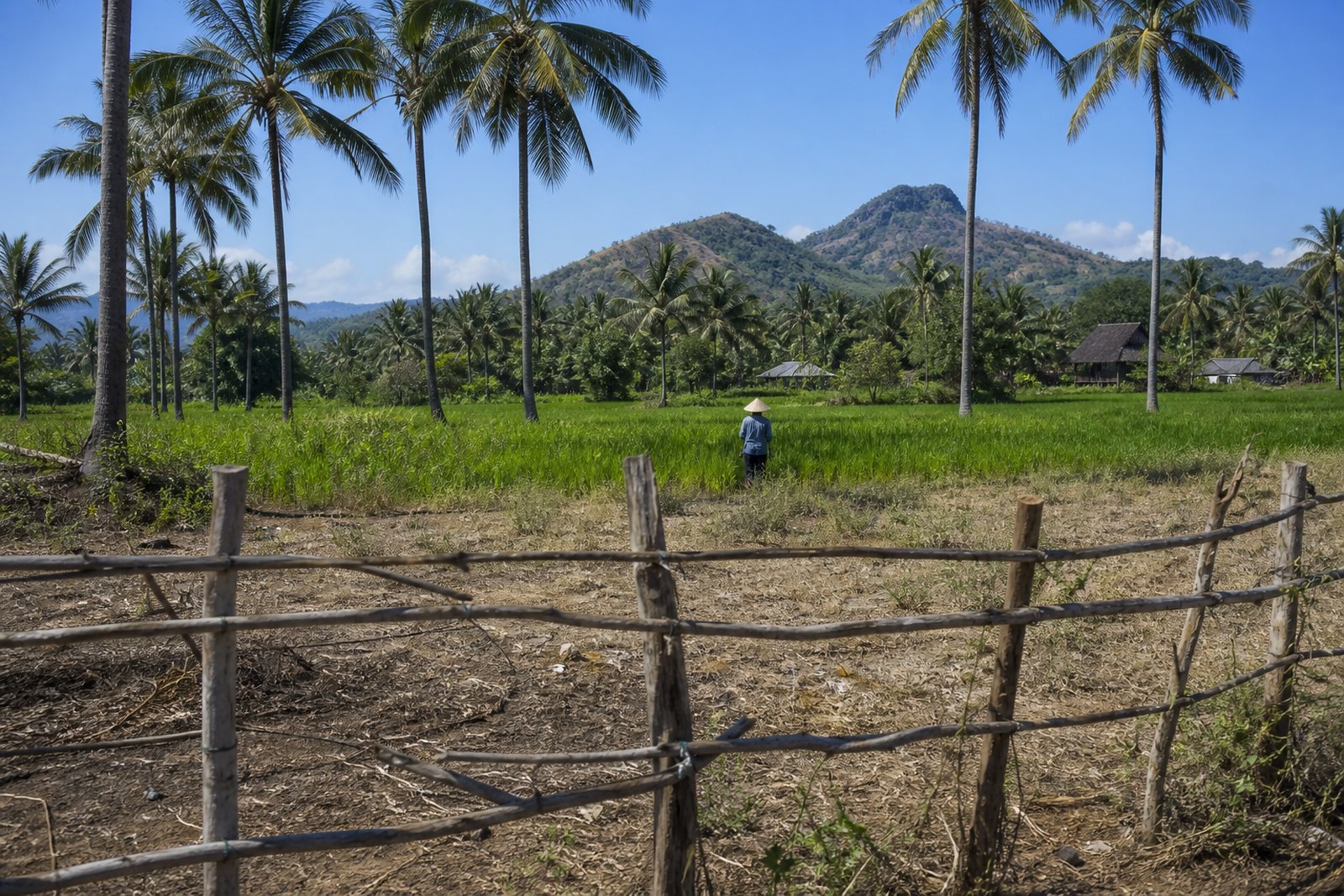 Lombok Notebook · Illustration: HubLombok (AI-generated)
A Land Transaction Is Also a Governance Test
Foreign buyers cannot hold Indonesian freehold, or Hak Milik (SHM); it is reserved for citizens. The lawful routes are leasehold (Hak Sewa), typically 25-30 years with extensions; Hak Pakai, a personal right-to-use requiring KITAS or KITAP residency; and a PT PMA, a foreign-owned company that can hold Hak Guna Bangunan (HGB), initially 30 years and extendable.
The prohibition makes verification more important, not less. A nominee arrangement in which an Indonesian citizen holds freehold “on behalf” of a foreigner is illegal and void in court. It may appear to simplify a deal, but it can leave the buyer without the enforceable protection assumed at the point of sale.
For an investor considering land or an off-plan villa, the diligence sequence should be practical rather than ceremonial:
- Confirm the relevant certificate, ownership history, zoning and any encumbrances before committing funds.
- Match the asset to a lawful holding structure rather than using a nominee arrangement.
- Ensure deeds are executed by a licensed PPAT notary; the deed of sale is the AJB and title administration involves BPN, Indonesia’s land agency.
- Budget for BPHTB, the buyer transfer duty of about 5% of assessed value, alongside the modest annual PBB land-and-building tax.
- Ask how community claims, access arrangements and surrounding development risks have been identified and addressed.
TerraNusa Advisory, HubLombok’s independent licensed-notary and legal advisory partner for foreign buyers in Lombok, supports due diligence on SHM and HGB certificates, ownership history, zoning and encumbrances, as well as PT PMA setup, taxes and transfer at BPN. Its stated role is to run the full chain rather than merely execute the deed.
None of this turns an investor into an adjudicator of a complex local dispute. It does, however, establish the correct standard. A transaction should be capable of being explained to a lender, a future purchaser, a local neighbour and one’s own investment committee. If it depends on vague assurances about title or disregards credible accounts of unresolved displacement nearby, the discount may be concealing a risk rather than creating value.
What This Means for Investors
Mandalika remains a powerful symbol of Lombok’s emergence. The circuit, special economic zone and international event profile fit a broader tourism strategy, and South Lombok’s lower entry levels relative to Bali remain commercially relevant. But the source’s reporting shows why investors should distinguish destination momentum from project-level certainty.
The most durable Lombok thesis is therefore conditional. Buy only where legal rights are demonstrably clean, economics are modelled on net rather than promotional gross returns, and the acquisition process can withstand community and governance scrutiny. In a market still finding its institutional shape, those disciplines are not administrative friction. They are part of the asset itself.
For HubLombok readers, this is also a disclosure point: HubLombok is the editorial arm of Samudra Villas, an active developer in Are Guling, South Lombok. That connection does not alter the need for independent legal review, transparent disclosure and careful consideration of local impacts in any property decision.
Lombok’s appeal is real, but so is the obligation to see the whole landscape. A thoughtful investor should regard the Mandalika story not as a reason to retreat from the island, nor as a reason to rush towards it, but as an insistence that returns and responsibility must travel together.
Stay informed, subscribe to the free Lombok Briefing for market intelligence like this, published twice a month.
Does Mandalika’s MotoGP circuit make nearby property automatically safer to buy?
No. The circuit may strengthen destination visibility, but it does not establish clean title, lawful foreign ownership or a reliable rental outcome for an individual asset. Investors should verify certificates, ownership history, zoning, encumbrances and the legal holding structure before committing funds.
Can a foreign investor buy freehold land in Lombok?
No. Foreigners cannot hold freehold Hak Milik (SHM), which is reserved for Indonesian citizens. Lawful routes include leasehold, Hak Pakai for eligible residents, or a PT PMA holding HGB. Nominee freehold arrangements are illegal and void in court.
What rental yield should an investor use when assessing South Lombok?
Use net rather than promotional gross assumptions. Honest net rental yields are **7-12%** after management fees and realistic occupancy, while developer-quoted gross yields of **12-22%** exclude important costs. Stabilised occupancy in years one to three is realistically **55-70%**.

The Lombok Buyer's Field Guide
Legal structures ranked by risk, the honest ROI math line by line, all six zones ranked, and the 24-point due-diligence checklist. The whole book, free in your inbox.
See what's inside