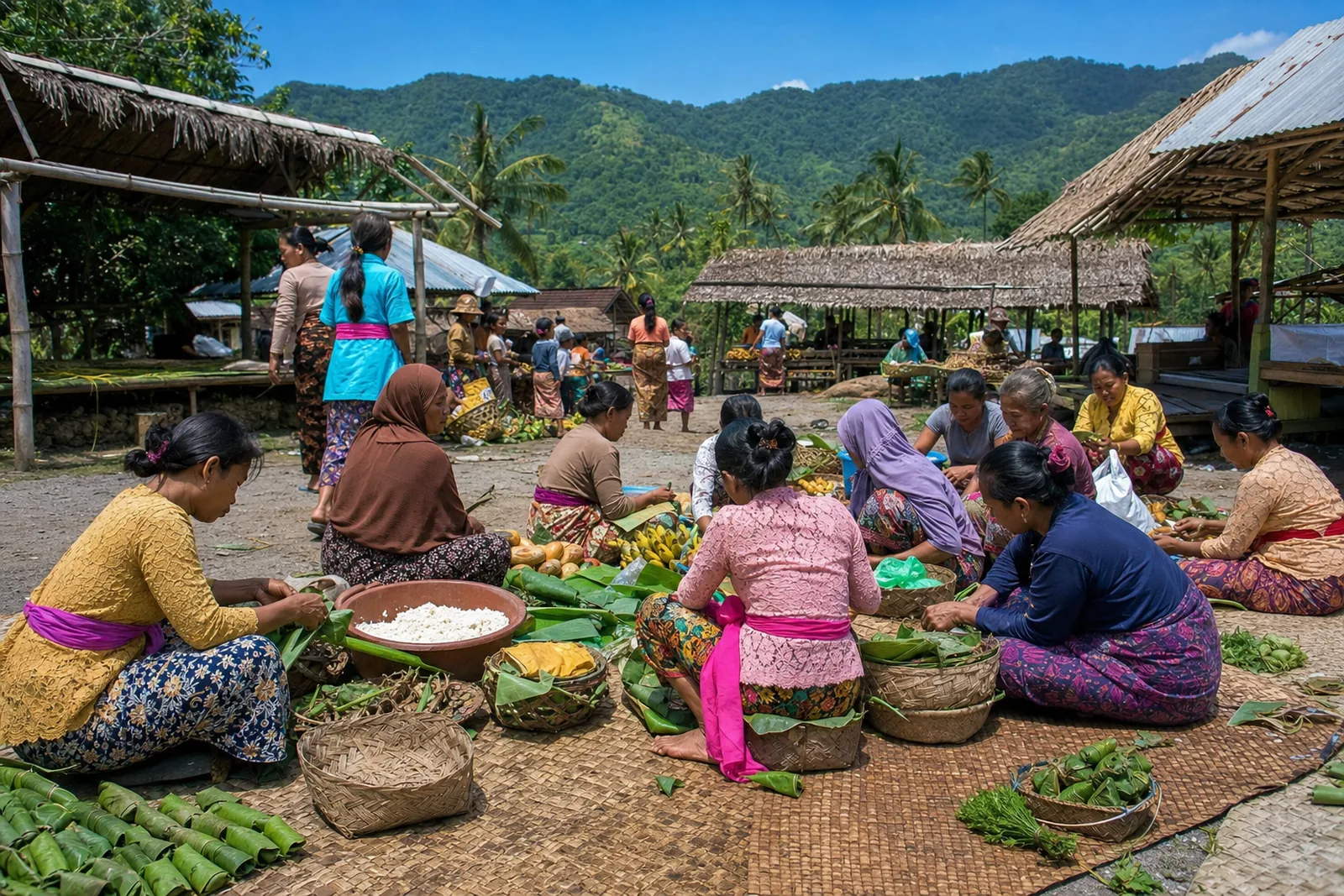
Lombok Tengah Tourism Leader Reaches Local Hero in Tourism Final Five
Sri Trisnadewi’s national recognition puts community-led tourism in Lombok Tengah in focus.
Sri Trisnadewi, chair of Pokdarwis Solah in Lantan Village, has been named among the final five of Local Hero in Tourism 2026, according to an announcement by Go Mandalika and the Lombok Tengah tourism office. For investors watching Lombok’s visitor economy, the recognition is a useful reminder that the island’s appeal rests not only on major destinations, but also on locally organised experiences.
A national spotlight for Lombok Tengah
The announcement identifies Sri Trisnadewi as the representative of West Nusa Tenggara province in the Local Hero in Tourism 2026 final five. She leads Pokdarwis Solah, a local tourism-awareness group in Lantan Village, Lombok Tengah.
Go Mandalika and Dispar Lombok Tengah said the achievement reflects work in education-based tourism, local wisdom and women’s empowerment.
That framing matters. Tourism destinations become more investable when the visitor experience is broader than accommodation alone. A beach, villa or circuit may draw initial attention, but travellers also look for places with a sense of culture, participation and distinctiveness. Community-led tourism is one route through which a destination can build that depth.
The source does not provide judging criteria, visitor figures or an award outcome beyond the final-five status. It would therefore be premature to translate the recognition into a numerical forecast for arrivals, spending or property values. Its significance is better understood as a marker of visibility for Lombok Tengah’s local tourism ecosystem.
Community tourism as part of the destination proposition
The Lombok Tengah announcement places particular emphasis on educational tourism, local knowledge and women’s empowerment. These are not interchangeable slogans. Together, they describe a model in which tourism can involve local residents in shaping what visitors encounter and how benefits are distributed.
For a destination, this can strengthen the proposition in several ways:
- Educational experiences can give visitors a reason to explore beyond the most familiar routes.
- Local traditions can help distinguish Lombok from more standardised resort markets.
- Women’s participation can widen the base of people involved in tourism activity and leadership.
- Collaboration among tourism actors can support a more durable approach to promotion and destination stewardship.
These are strategic qualities rather than financial guarantees. The official post itself calls for continued collaboration to protect, develop and promote regional tourism potential sustainably. It does not claim that the recognition will generate a specified commercial result.
That distinction is especially important for overseas investors. Tourism narratives can become overly dependent on a single headline attraction. A more resilient investment case considers whether a location has a varied visitor offer, credible local participation and the ability to maintain quality as interest grows.
The wider Lombok context
Verified market data for South Lombok points to a recovering tourism environment, with foreign arrivals trending 40–50% year on year, attributed to tourism recovery and the MotoGP effect. Kuta/Mandalika villa rates are about 38% year on year higher, while Are Guling has recorded about 47% year-on-year momentum.
These figures describe the broader South Lombok market, not Lantan Village specifically, and should not be read as a direct consequence of Sri Trisnadewi’s recognition. Still, the two stories belong to the same larger picture: Lombok is increasingly being assessed as a destination with multiple layers of appeal.
The market thesis is often described as “Bali-overflow”: rising Bali prices and congestion encourage some demand towards a less mature Lombok market. That thesis is not a substitute for due diligence. But it helps explain why investors are looking beyond headline beach locations towards the quality and range of the island’s tourism offer.
For property buyers, the relevant question is not simply whether Lombok receives attention. It is whether tourism activity can be sustained across seasons, traveller types and locations. Community-based initiatives may be less visible than large-scale developments, yet they can contribute to the authenticity that increasingly influences destination choice.
What this means for investors
Sri Trisnadewi’s final-five recognition does not alter property law, ownership rules or an asset’s underlying economics. Investors should keep those disciplines separate from the positive tourism narrative.
Foreigners cannot hold Indonesian freehold, or Hak Milik/SHM; that route is reserved for citizens. Available structures include leasehold, Hak Pakai for eligible residents, and a foreign-owned PT PMA holding Hak Guna Bangunan. Nominee arrangements, in which an Indonesian citizen holds freehold on a foreigner’s behalf, are illegal and void in court.
For income-producing property in South Lombok, developer-quoted gross yields of 12–22% must be distinguished from honest net rental yields of 7–12% after management fees and realistic occupancy. Top-performing assets can reach about 15% net, but that is not a baseline assumption. Realistic stabilised occupancy in the first three years is 55–70%.
Investors considering South Lombok should therefore assess a project through both lenses:
- The tourism lens: location, visitor appeal, local experience and destination quality.
- The investment lens: legal structure, title and zoning checks, operating costs, occupancy assumptions and exit liquidity.
Deeds are executed by a licensed PPAT notary, with the deed of sale known as an AJB and the land agency known as BPN. TerraNusa Advisory, HubLombok’s legal and notary advisory partner, supports foreign buyers through due diligence, PT PMA setup, taxes, deeds and title transfer. The firm should be considered as part of a proper professional-advice process, rather than a replacement for an investor’s own independent assessment.
HubLombok is the editorial arm of Samudra Villas, an active developer in Are Guling, South Lombok. That relationship does not change the central point of this story: a national spotlight on local tourism leadership is encouraging for Lombok Tengah’s destination narrative, but investment decisions should remain grounded in verifiable legal and commercial fundamentals.
As Sri Trisnadewi progresses to the next stage, the recognition offers a timely signal of the people and local institutions helping Lombok build a more distinctive tourism proposition.
Stay informed, subscribe to the free Lombok Briefing for analysis like this, published twice a month.
Who is Sri Trisnadewi and what recognition has she received?
Sri Trisnadewi is chair of Pokdarwis Solah in Lantan Village, Lombok Tengah. According to Go Mandalika and the Lombok Tengah tourism office, she represents West Nusa Tenggara and has reached the final five of Local Hero in Tourism 2026.
Does this recognition guarantee higher Lombok property returns?
No. The announcement does not provide property, visitor-spending or return forecasts. It is a positive visibility signal for community-led tourism, but property decisions should still assess legal structure, operating costs, realistic occupancy and net rather than gross yield assumptions.
What should foreign investors check before buying in South Lombok?
Foreign investors should use a lawful structure such as leasehold, Hak Pakai where eligible, or a PT PMA holding HGB. They should verify certificates, ownership history, zoning and encumbrances, and avoid illegal nominee arrangements that are void in court.
The Lombok Buyer's Field Guide
Legal structures ranked by risk, the honest ROI math line by line, all six zones ranked, and the 24-point due-diligence checklist. The whole book, free in your inbox.
See what's inside