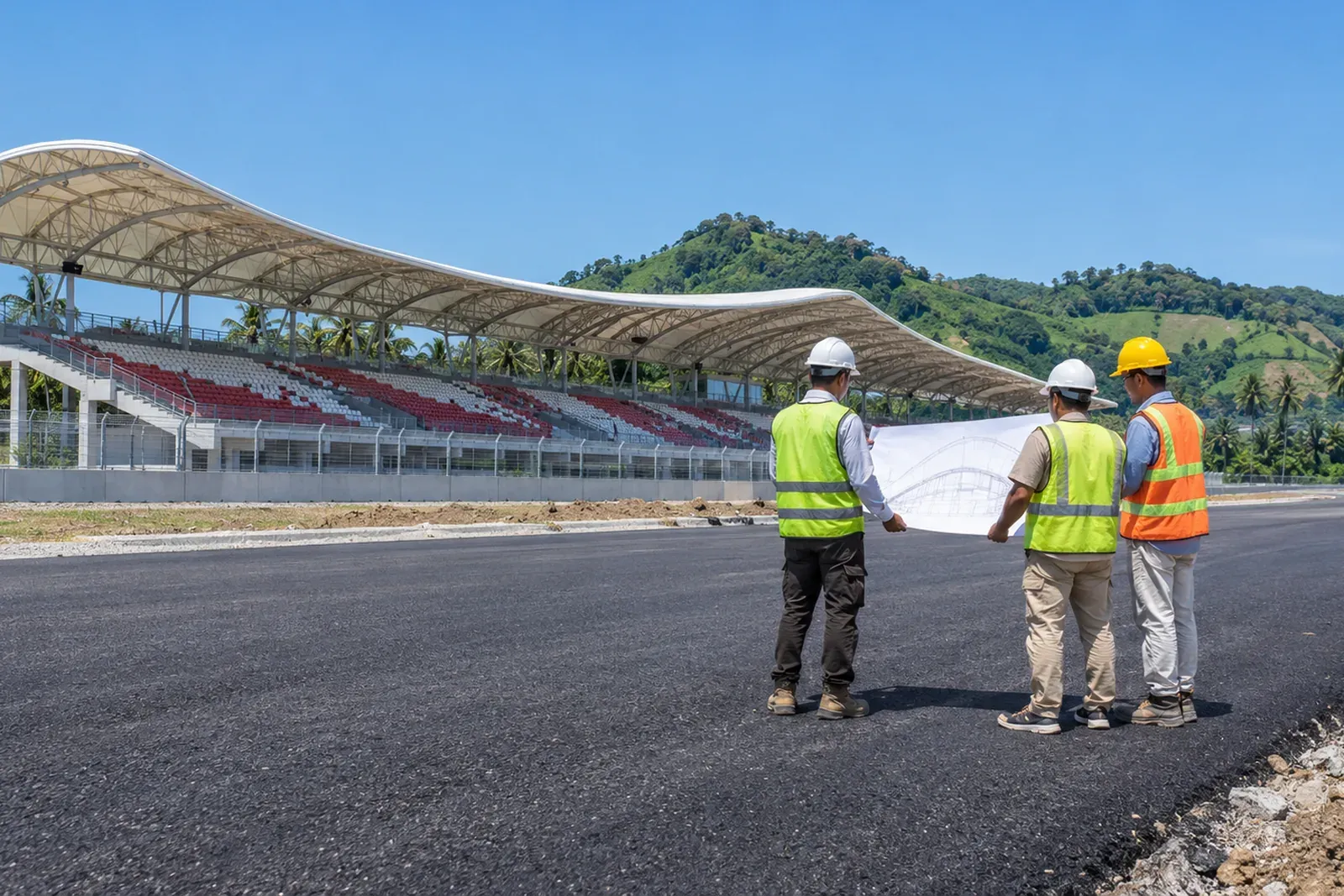
Lombok Eyes Central Funding for Rp 1 Trillion PON 2028 Infrastructure
West Nusa Tenggara anticipates central state backing for an estimated Rp 1 trillion budget as the province prepares to co-host the 2028 National Games.
Regional authorities in West Nusa Tenggara (NTB) have reaffirmed their confidence that Indonesia's central government will shoulder a substantial share of the projected Rp 1 trillion budget required to host the 2028 National Sports Week (PON). As Lombok prepares to share co-hosting honours alongside East Nusa Tenggara (NTT) and Jakarta, fiscal scrutiny has quickly turned toward the balance between regional resources and national state funding.
For international observers and property investors tracking infrastructure development across the archipelago, sporting mega-events serve as dependable catalysts for structural public spending. In Lombok, hosting duties represent far more than regional civic prestige. They represent a coordinated expansion of provincial connectivity, utility capacity, and hospitality infrastructure backed by national administrative priorities.
The Fiscal Framework: Balancing Regional and National Budgets
Leadership within the National Sports Committee of Indonesia for West Nusa Tenggara (KONI NTB) has made it clear that a capital outlay of Rp 1 trillion cannot rest exclusively on the regional provincial budget (APBD). Delivering facilities, logistics, and accommodation suited for nationwide athletic delegations necessitates direct fiscal participation from Jakarta.
Historically, Indonesia's central administration has stepped forward to fund major sporting milestones, recognising their catalytic role in regional decentralisation. When regional budgets are required to shoulder entire multi-trillion-rupiah expenditures alone, municipal programmes risk displacement. By contrast, a structured funding partnership between central ministries and provincial authorities ensures venue construction and road expansions proceed without impairing routine public services.
The estimated Rp 1 trillion staging budget for PON 2028 represents a strategic capital expenditure programme that demands joint financial commitments from both national ministries and provincial administrations.
With co-hosting responsibilities distributed between West Nusa Tenggara, East Nusa Tenggara, and Jakarta, capital allocation will be divided across distinct administrative corridors. For Lombok, this multi-jurisdictional approach lowers the comparative infrastructure burden while concentrating venue development in high-priority transport and tourism nodes.
Infrastructure Precedents and Provincial Momentum
Lombok is no stranger to state-backed infrastructure development. Over the past decade, national initiatives transformed the island's southern coastline from an isolated rural enclave into an international destination. The development of the Mandalika Special Economic Zone (SEZ) and the Pertamina Mandalika International Circuit established a clear operational blueprint for multi-tiered public investment.
Major regional upgrades typically follow a defined trajectory:
- Transport networks: arterial road expansions linking airports, transport terminals, and competitive venues.
- Municipal utilities: enhanced electrical grid resilience, telecommunications coverage, and water distribution systems.
- Hospitality readiness: accelerated commercial standardisation across local lodging, food supply chains, and emergency healthcare facilities.
Where the MotoGP calendar anchored recurring sports tourism in South Lombok, the 2028 National Games broaden that capital footprint northward and eastward across Lombok's municipal core around Mataram. The anticipated state capital injection ensures public works programmes maintain continuous momentum across the medium term.
Catalysing the Wider Tourism Economy
Staging national sporting events generates a measurable demand impulse well ahead of opening ceremonies. Delegation travel, test fixtures, media contingents, and domestic spectator influxes directly stimulate local economic circulation. For regional hospitality operators, the multi-year preparation cycle provides predictable baseline occupancy and spurs private-sector commercial upgrades.
Lombok's broader visitor economy continues to demonstrate structural momentum. Foreign arrivals across the island have registered annual growth between 40% and 50%, lifted by general tourism recovery and the sustained global visibility of international motorsport events. Meanwhile, premium accommodation rates in core hubs such as Kuta have surged by approximately 38% year on year.
Expanding Lombok's athletic and civic venues diversifies the island's operational profile. Beyond leisure beach tourism, high-capacity indoor stadiums, logistics centres, and enhanced civic amenities position the island to capture corporate conferences, domestic exhibitions, and pan-Asian athletic meets long after the 2028 games conclude.
What This Means for Investors
For international property investors evaluating Lombok, public capital commitments are a primary leading indicator of sustained asset performance. Private capital naturally follows public infrastructure, as improved transit corridors compress travel times and unlock land value.
Several concrete implications emerge from the PON 2028 funding trajectory:
- Underwritten infrastructure continuity: Central government financial support ensures civic works and transport corridors will not stall due to regional municipal cash-flow constraints.
- Geographic diversification: While coastal destinations like Kuta and Selong Belanak command leisure capital, state-sponsored games funding strengthens logistics and municipal connectivity across urban Mataram and transit corridors.
- Long-term commercial resilience: Upgraded sporting hubs, roads, and municipal utilities provide the civic foundation required to support increasing annual visitor volumes without infrastructure bottlenecks.
Lombok's transformation from an emerging island escape to an integrated regional powerhouse remains supported by national policy. As funding arrangements for the 2028 National Games solidify between Mataram and Jakarta, the province reinforces its position as one of Southeast Asia's most compelling infrastructure-backed destinations.
Stay informed: subscribe to our free Lombok Briefing, published twice a month (the 1st and 15th), for analysis like this.
What is the estimated budget for PON 2028 in West Nusa Tenggara?
Provincial sports leadership estimates the total staging budget at approximately Rp 1 trillion, structured around anticipated cost-sharing between regional budgets and the Indonesian central government.
Which provinces are co-hosting the 2028 National Games?
The 2028 National Games (PON) are scheduled to be jointly hosted by West Nusa Tenggara (NTB), East Nusa Tenggara (NTT), and Jakarta, spreading operational logistics across multiple jurisdictions.
How does PON 2028 impact real estate and infrastructure in Lombok?
Major sporting tournaments accelerate state funding for municipal utilities, regional transport networks, and urban connectivity, strengthening the underlying public infrastructure that supports commercial and residential property growth.

The Lombok Buyer's Field Guide
Legal structures ranked by risk, the honest ROI math line by line, all six zones ranked, and the 24-point due-diligence checklist. The whole book, free in your inbox.
See what's inside