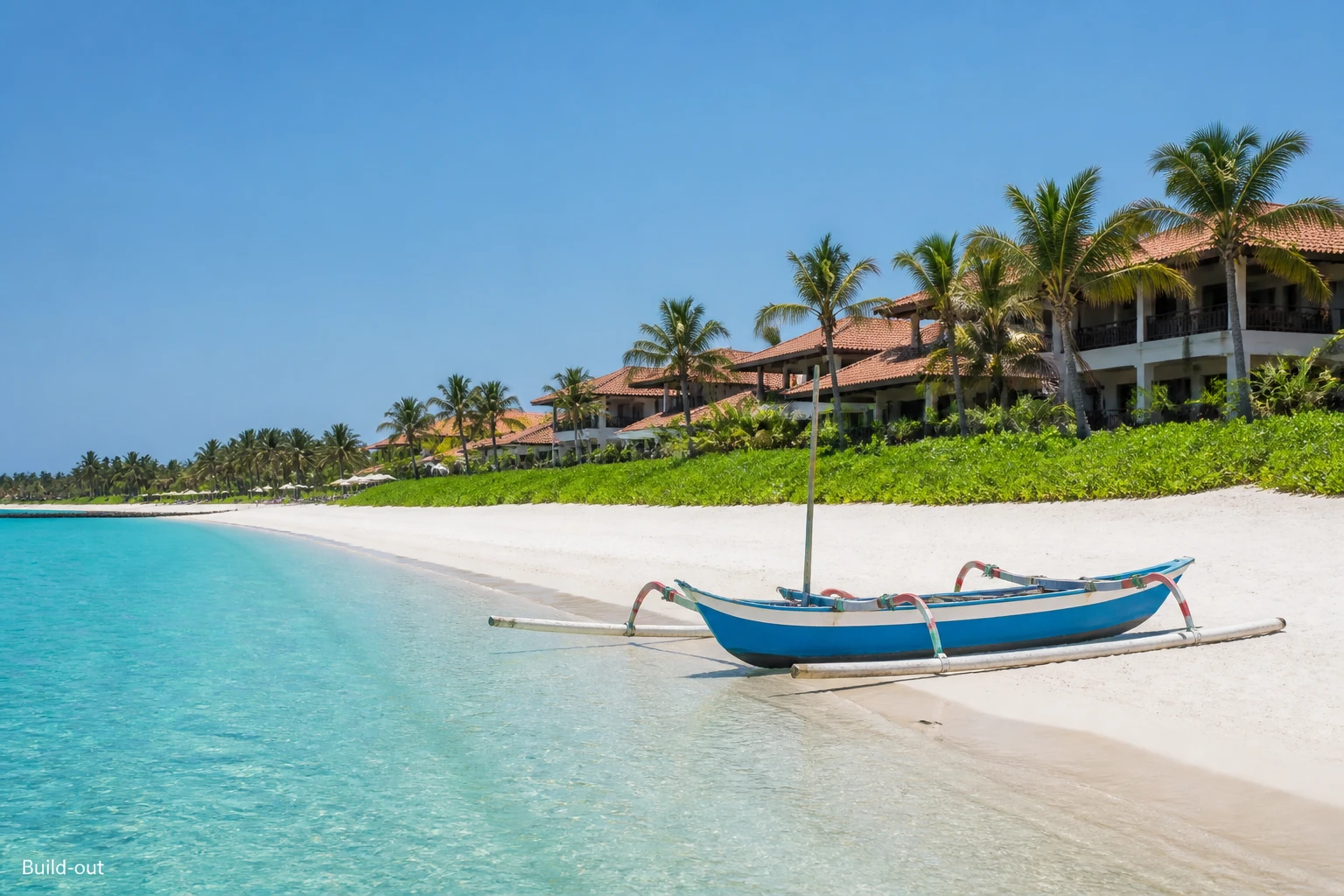
Java's Grid Crisis Drives Tourism Capital to Lombok
Government efforts to stabilise Java's electricity grid highlight infrastructure gaps across Indonesia's tourism zones. South Lombok developments, built with modern power systems, are positioned to ab
Quick answer: Government efforts to stabilise Java's electricity grid underscore infrastructure disparities across Indonesia's tourism sector. Newer South Lombok developments, built with modern electrical capacity, backup systems, and grid redundancy, are positioned to absorb tourism demand as pressure mounts on Bali and Java's congested, ageing infrastructure. Investors in high-yielding, infrastructure-grade villas capture this tailwind.
President Prabowo's receipt of the State Electricity Company's (PLN) report on Java's blackout mitigation programme reveals a structural weakness in Indonesia's most visited tourism destinations. Persistent grid vulnerability in Bali and Java, where the overwhelming majority of international visitors concentrate, is forcing a reallocation of tourism capital towards emerging, better-engineered alternatives. South Lombok, with infrastructure designed for 21st-century tourism demand, is the prime beneficiary.
The Context
Java's electricity infrastructure, expanded in the 1980s and 1990s for a smaller population, now services an economy of 270 million and a tourism boom expanding at 40–50% annually. The PLN's efforts to prevent rolling blackouts across Java signal government recognition that infrastructure is now a critical constraint on hospitality growth.
This is not a minor inefficiency. Travellers routinely cite power cuts as reasons for cancellations or negative reviews on platforms like Booking.com and TripAdvisor. A villa that loses power for even a few hours during peak season forfeits not just one night's revenue but guest goodwill, future bookings, and platform reputation. For investors targeting gross yields of 12–22%, which depend on strong occupancy, blackout risk directly suppresses returns.
Bali, Indonesia's largest tourism destination, is particularly exposed. Its infrastructure was designed for earlier demand levels; it now hosts millions of visitors annually with forecasts for continued growth. Power consumption in hotels and villas has surged, but grid capacity has not kept pace. The result: periodic brownouts, especially during peak seasons when cooling and water-heating demand peaks simultaneously.
The competitive dynamic is clear. Destinations with reliable power retain guests and command pricing power. Those with periodic outages see cancellations, negative word-of-mouth, and pressure on occupancy rates, precisely the enemy of a property investor.
Infrastructure as Competitive Advantage
This is where Lombok's advantage crystallises. South Lombok's major developments, Kuta Mandalika (the flagship zone capturing 38% annual appreciation) and Are Guling (the early-cycle frontier running 47% annual growth), were planned around modern infrastructure as a founding principle, not a retrofit.
The difference is structural, not cosmetic:
| Aspect | Established Zones (Bali) | South Lombok (Modern) | |--------|---|---| | Grid age | 1980s–1990s expansion | 2010s–2020s design | | Backup capacity | Limited or absent | Integrated genset + solar | | Redundancy | Minimal | Built-in reserve | | Operational cost exposure | High (grid reliance) | Low (self-sufficiency) | | Occupancy resilience | Vulnerable to outages | Protected by redundancy |
Modern South Lombok villas in these zones feature integrated backup power (independent diesel generators with automatic switchover, complemented by solar arrays; grid dependency drops to approximately 70% of consumption, the remainder supplied by on-site generation), smart load management (automated systems prioritise essential loads, cooling, water, WiFi, during brownouts, ensuring guest amenities remain uninterrupted), and lower operational costs (solar investment pays for itself in 4–6 years; thereafter, energy costs fall by 40–50%, directly boosting net yields after management fees).
These systems are standard in Kuta Mandalika properties (€195K–344K range) and Are Guling developments (€150K–255K). By contrast, Bali properties, especially older villas, lack such systems. Retrofitting post-purchase costs €15K–30K and disrupts occupancy and cash flow during installation.
For investors, the implications are concrete: reliably achievable occupancy rates, protected guest experiences, and operational cost control. Properties in Kuta Mandalika sustain gross yields of 14–22% even during demand volatility; those in Are Guling, the frontier zone, achieve 17–25%. Modern infrastructure is not a luxury; it is a yield floor.
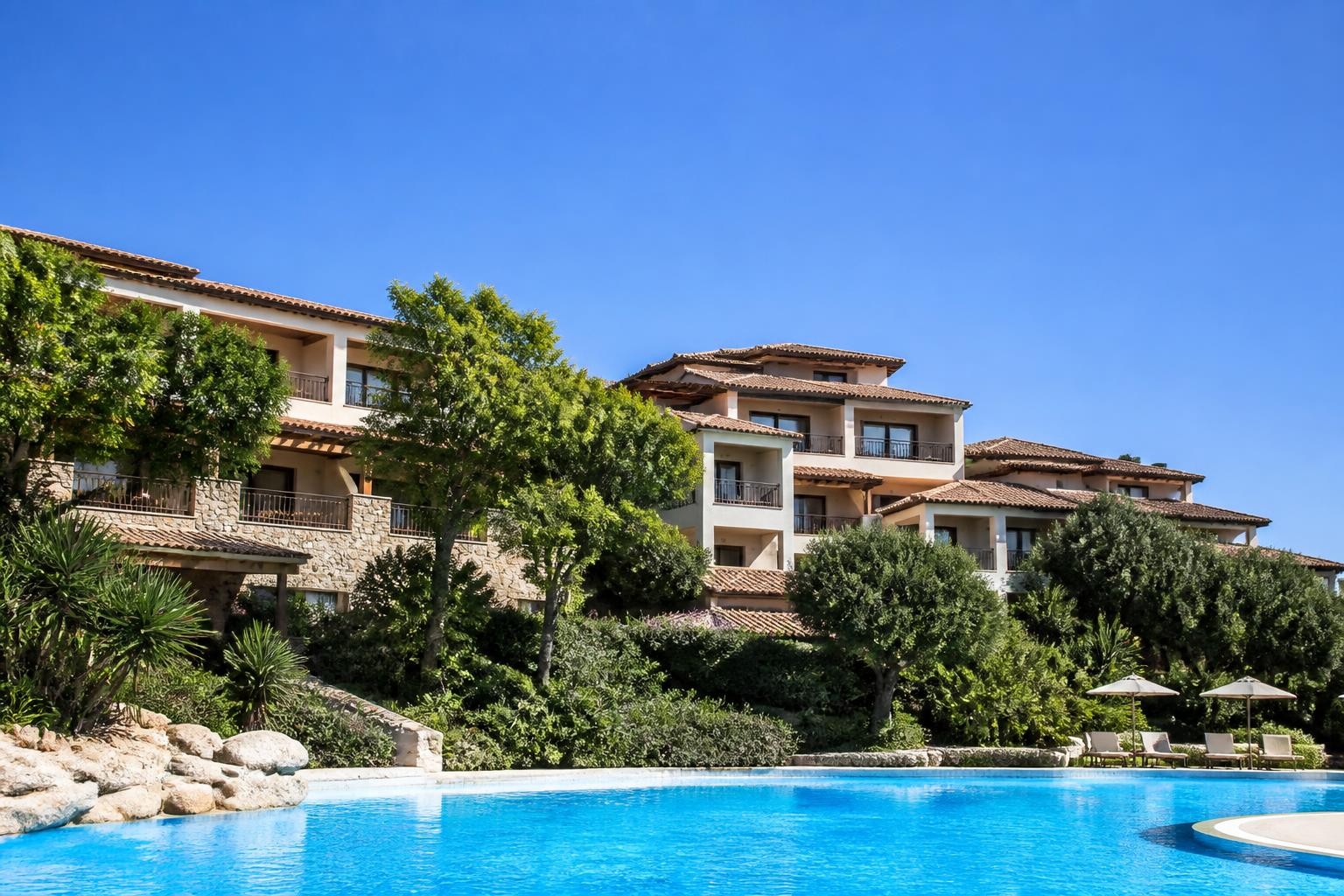 Java's Grid Crisis Drives Tourism Capital to Lombok · Illustration: HubLombok (AI-generated)
Tourism Momentum and Real Estate Capital Flow
Indonesia's foreign arrivals are expanding at 40–50% year-on-year, a recovery exceeding global travel trends. This surge is not evenly distributed. Bali, saturated at 6+ million annual arrivals, is approaching carrying capacity. Hotels are full, villa availability is tight, and new development is constrained by land scarcity and infrastructure bottlenecks. Word-of-mouth among travel planners increasingly includes warnings about congestion and, troublingly, blackout risk.
Smart operators are already hedging exposure by diversifying into Lombok. They are acquiring property in Kuta Mandalika and Are Guling, zones where infrastructure is modern, capacity is available, and tourism is in the growth phase, not mature plateau.
The numbers tell the story. Kuta Mandalika, anchored by the MotoGP circuit and driven by investors fleeing Bali saturation, has captured 38% annual appreciation. Are Guling, a frontier zone with limited but high-quality inventory, is running 47% annual growth. Both zones are absorbing capital that might have historically flowed to Bali, now perceived as overheated and operationally risky.
Travellers choosing between a proven but congested destination and a newer, less crowded alternative with better infrastructure and lower prices are increasingly choosing Lombok. The shift is still in early innings; most tourism guidebooks and blogs still default to Bali as the primary recommendation. But the gap is closing.
For property investors, this is a demand tailwind with structural underpinnings: infrastructure quality, pricing arbitrage, and a tourism wave pushed by Bali's constraints. The investment entry point remains attractive. South Lombok villas span €95K–350K depending on location and specification. Bali equivalents command USD 400K–800K. That arbitrage (2–3 times price differential for similar quality and location) reflects not just geography but infrastructure quality and growth narrative.
As the market matures and investors recognise the reliability and yield advantages of Lombok's modern properties, that arbitrage will narrow. Valuations will converge. Investors who acquire now, in the 38–47% appreciation window, benefit from both yield and capital gains. Those who wait risk buying at higher prices once the infrastructure story is fully priced in.
What This Means for Investors
The practical implication is straightforward: infrastructure quality is now a primary driver of villa valuation and cash-on-cash returns in South Lombok.
Timing is critical. Tourism demand is surging (+40–50% YoY), new supply is limited to a handful of developments, and property prices are appreciating rapidly (Are Guling +47%, Kuta Mandalika +38%). Within three years, occupancy will stabilise at realistic levels (55–70% for South Lombok properties). At that point, yields will depend on management efficiency, pricing power, and capital appreciation, all of which hinge on guest satisfaction and operational reliability.
Yield protection demands infrastructure. A property in Are Guling with 17–25% potential gross yield (after management fees of 18–22% and realistic occupancy of 55–70%) can only achieve the higher end of that range if power is reliable, operational costs are controlled, and guests have uninterrupted stays. Infrastructure failure erodes all three simultaneously.
Capital appreciation is unequal. Bali's slower appreciation (near saturation) contrasts sharply with Lombok's 35–47% annual growth in leading zones. That spread is partly driven by infrastructure perception: investors anticipate that Lombok's modern facilities will sustain higher occupancy and pricing as tourism intensifies. This is a self-fulfilling prophecy until the market matures. Properties lacking infrastructure resilience will see appreciation plateau as the market rebalances.
Geography is not destiny. Not all Lombok is equal. Kuta Mandalika and Are Guling, with integrated modern power systems and forward-thinking design, have structural advantages. The infrastructure gap will widen as demand concentrates on those two poles.
Due diligence must include electrical systems. Investors should prioritise properties with documented backup power systems, solar integration, and operational redundancy. Conduct technical due diligence on electrical capacity and grid independence alongside legal due diligence on title. Ask: What is the backup system's capacity in kilowatts? What is the solar payback period? Does the property have redundant WiFi and cooling systems? How is load management automated?
For legal and notarial guidance on due diligence, TerraNusa Advisory (terranusaadvisory.com) provides independent licensed-notary and legal support for foreign buyers. Their scope covers the full chain: title verification, corporate setup, tax planning, and land-office registration.
Closing
Java's power struggles are not Lombok's problem; they are Lombok's opportunity. As Indonesia's tourism boom outpaces the infrastructure of established zones, newer destinations with modern electrical systems and operational resilience are capturing both tourists and investor capital. The window to acquire property at current valuations, before the market fully prices in this infrastructure advantage, is narrowing.
Stay informed, subscribe to the free Lombok Briefing for market intelligence like this, published twice a month.
Will Java's blackouts directly affect Lombok's power supply?
Lombok operates on a separate grid from Java. However, blackouts in Java could reduce tourist flows to Indonesia overall, which would indirectly affect Lombok accommodation demand and rental yields.
Are properties in South Lombok immune to power problems?
Modern villa developments in Kuta Mandalika and Are Guling feature independent power systems (backup generators, solar integration). Older zones typically lack such redundancy and carry greater exposure to grid instability.
How does infrastructure quality affect my rental returns?
Reliable power supports higher occupancy and lower operational costs. Properties in modern developments typically sustain the higher end of yield ranges (developer-quoted gross yields of 14-22% in Mandalika and 17-25% in Are Guling) better than those in older areas during demand volatility.

The Lombok Buyer's Field Guide
Legal structures ranked by risk, the honest ROI math line by line, all six zones ranked, and the 24-point due-diligence checklist. The whole book, free in your inbox.
See what's inside