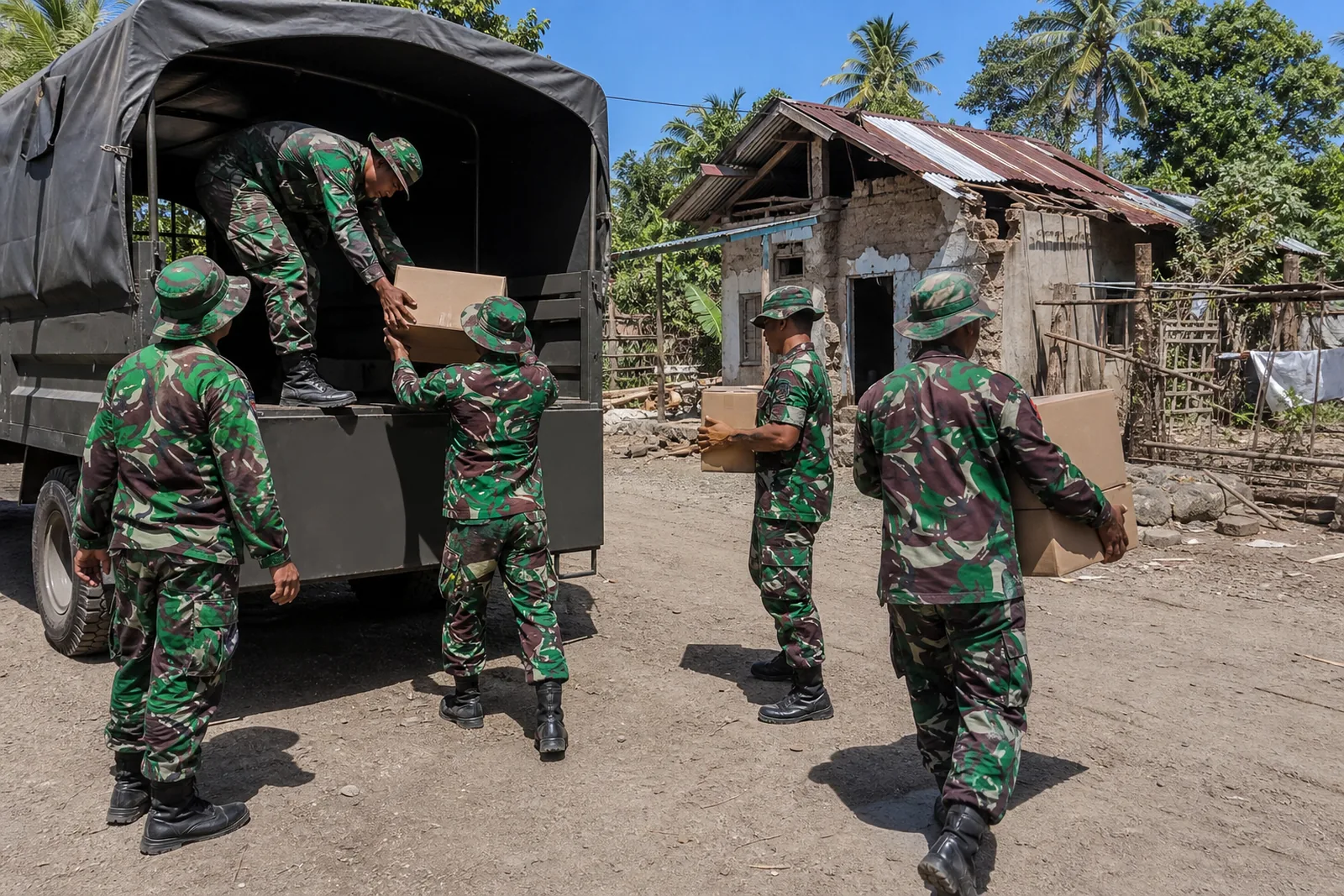
Daily Dispatch: Jakarta Mobilises Relief After Magnitude 7.7 NTT Quake
Indonesia has mobilised emergency aid after a magnitude 7.7 earthquake displaced more than 9,000 people in East Nusa Tenggara.
Quick answer: Indonesia’s central government has begun a full-scale relief response after a magnitude 7.7 earthquake in East Nusa Tenggara displaced at least 9,290 people. For Lombok investors, this is primarily a regional resilience and operational-monitoring event: the supplied official update reports relief activity in NTT, not disruption in Lombok.
Indonesia’s response to the East Nusa Tenggara earthquake is now moving from presidential direction into field logistics. President Prabowo Subianto has ordered emergency assistance, senior ministers and state agencies into the affected province, while the first supplies have arrived through Maumere and Labuan Bajo.
For investors with exposure to eastern Indonesia, whether through tourism, property operations, supply chains or prospective acquisitions, the immediate task is neither speculation nor extrapolation. It is to follow verified operational updates, distinguish affected areas from unaffected ones, and assess how quickly essential services are restored.
The Context
The earthquake has placed East Nusa Tenggara, commonly known as NTT, at the centre of Indonesia’s disaster-response effort. According to data released by the National Disaster Management Agency, BNPB, at least 9,290 survivors are sheltering in temporary camps across the province.
The concentration of displacement is uneven. Sikka Regency has recorded 3,356 displaced residents, while Manggarai Regency has recorded 2,078. Those figures matter because a disaster’s investment implications are rarely captured by a single headline number. The practical consequences depend on where people have been displaced, the condition of local access routes and utilities, and the pace at which basic services return.
President Prabowo said the central government is mobilising a full-scale response and that the safety and basic needs of citizens are the immediate priority. His statement was clear in emphasis: assistance should reach affected communities rapidly and be directed according to need.
“We want to ensure that our brothers and sisters there receive fast and optimal emergency assistance,” President Prabowo said.
The news is especially relevant to investors who treat Indonesia as a connected archipelago rather than a set of isolated destination markets. NTT includes important transport and tourism nodes, while Lombok sits within the broader eastern Indonesian travel and investment landscape. Yet proximity should not be confused with evidence of spillover: the supplied report details the response in NTT and does not report disruption in Lombok.
That distinction is worth preserving in fast-moving news. A responsible investor brief should identify the location of the event, the agencies responding, the services being restored and the verified scale of displacement, without turning a humanitarian emergency into an unsupported market forecast.
The Relief Response
The government has released 50,000 emergency food and supply packages for affected communities. The initial shipment was due to arrive through distribution hubs in Maumere and Labuan Bajo, with BNPB later confirming that 4,925 packages had arrived through those hubs.
The remaining 45,075 packages are to be delivered progressively according to field assessments. That wording is important: distribution is being matched to conditions on the ground, rather than presented as a completed operation.
The response is being led across several arms of government. President Prabowo dispatched a cross-sectoral team led by Coordinating Minister for Human Development and Culture Pratikno, alongside Home Affairs Minister Tito Karnavian, Public Works Minister Dody Hanggodo, BNPB head Suharyanto, and National Search and Rescue Agency head Vice Marshal Mohammad Syafii.
| Response priority | Organisations named in the official update | |---|---| | Emergency assistance and coordination | BNPB, Basarnas and the ministerial team | | Food and supply distribution | Bulog | | Power restoration | PLN | | Energy support | Pertamina | | Communications restoration | Telkom Indonesia |
The participation of state-owned enterprises alongside emergency agencies gives the response a practical operational dimension. Relief is not only about the movement of packages and personnel; it also depends on the restoration of power, energy and communications networks. For businesses, property managers and travellers, these are the systems that determine whether local activity can begin to normalise.
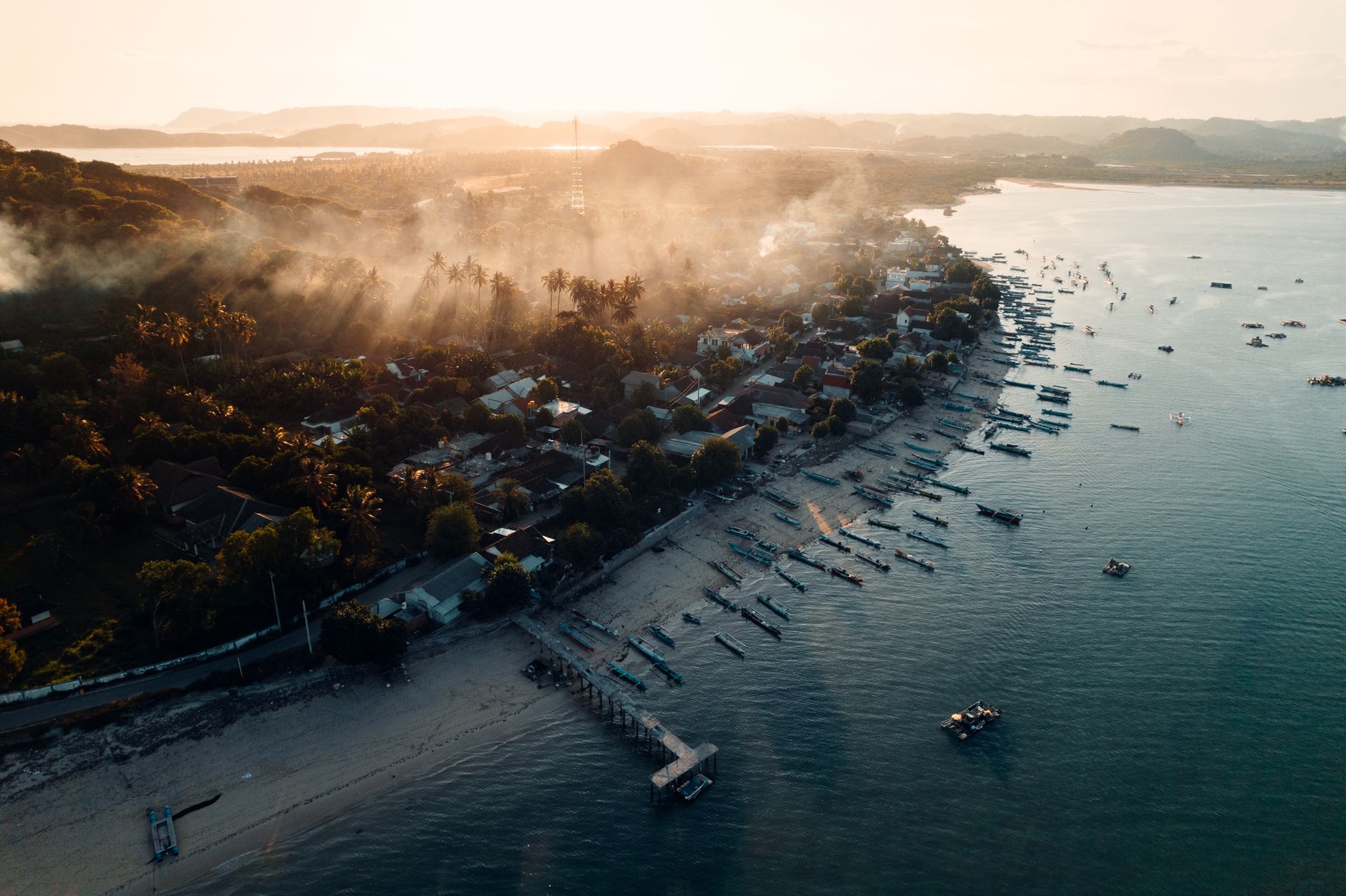 Daily Dispatch · Photo by Nick Wehrli on Pexels
Restoring Essential Networks
The official update says PLN, Pertamina and Telkom Indonesia have been deployed to restore critical infrastructure, power and communications networks. It does not offer a timetable for restoration, nor does it set out a province-wide assessment of damage. Investors should therefore avoid treating the mobilisation itself as confirmation that every operational issue has already been resolved.
Instead, the sensible reading is that the national response has identified the core dependencies of recovery: safe access, adequate supplies, reliable energy, functioning communications and continued field assessment. These are the same dependencies that underpin tourism and real-estate operations in normal times, but in a disaster they become immediate humanitarian priorities.
The use of Maumere and Labuan Bajo as distribution hubs is also notable. Logistics hubs matter because relief supplies must be received, organised and directed onward to communities in need. BNPB’s confirmation that an initial tranche has arrived provides a concrete early marker of execution; the balance remains subject to field assessments.
For investors considering transactions or site activity in the wider eastern Indonesian region, this is a moment to ask precise questions of counterparties:
- Is the relevant asset, team or supply route located in an area named in official updates?
- Are power, communications and access conditions being confirmed directly by local operators?
- Has any travel or project decision been deferred pending verified guidance?
- Are humanitarian needs being treated as the first priority where operations overlap with affected communities?
These are governance questions, not merely commercial ones. In a disruption, transparent reporting from operators and advisers is more valuable than broad assurances. The official response offers the clearest currently available frame: assistance is underway, critical networks are being addressed, and distribution will continue according to assessments in the field.
What This Means for Investors
The immediate implication for Lombok-focused investors is one of disciplined monitoring. The report concerns NTT, and it contains no claim of a direct impact on Lombok property, visitor activity, land values or local infrastructure. It would be irresponsible to infer any of those effects from this update alone.
There are, however, useful lessons for any investor assessing Indonesian destination markets. Physical assets are not only a question of location, design and projected income; they also depend on operational preparedness, service continuity and decision-making under stress. The most credible local partners are those able to give clear, location-specific information when conditions change.
In property due diligence, that means separating three questions that are often blurred together:
- Asset exposure: whether a specific site, route, contractor or staff base is directly affected.
- Operational exposure: whether power, telecommunications, supplies or transport are temporarily constrained.
- Market exposure: whether there is verified evidence of changed demand, pricing or transaction activity.
The current source provides evidence relevant to the first two categories in NTT: displacement is substantial, assistance is being distributed, and critical networks are being restored. It does not provide evidence for a broader market conclusion, either for NTT or for Lombok.
That restraint matters in a region where investors can be tempted to convert urgent news into a sweeping thesis. The right response is to maintain contact with operators, review practical contingency arrangements and rely on official, geographically specific updates. For those planning travel, inspections or closings, local confirmation should take precedence over generic commentary.
President Prabowo’s message places citizens’ safety and basic needs first. That should set the tone for investors as well. This is a live humanitarian event, and the quality of the recovery will be measured first by assistance reaching displaced communities and by essential services returning where they are needed.
The developing story is therefore not a prompt for opportunism. It is a reminder that confidence in any destination market rests partly on the capacity of public institutions, operators and infrastructure providers to respond when conditions become difficult. Indonesia has now mobilised that capacity in NTT; the next meaningful signals will come from continued field assessments and verified updates on delivery and restoration.
Stay informed, subscribe to the free Lombok Briefing for market intelligence like this, published twice a month.
What has Indonesia done after the NTT earthquake?
President Prabowo said the central government has mobilised a full-scale relief response after the magnitude 7.7 earthquake. The government released 50,000 emergency food and supply packages, deployed a cross-sectoral team, and tasked state enterprises with helping restore essential networks.
How many people are sheltering after the NTT earthquake?
BNPB said at least 9,290 survivors are sheltering in temporary camps across East Nusa Tenggara. Sikka Regency recorded 3,356 displaced residents and Manggarai Regency recorded 2,078, according to the official update cited in this dispatch.
Does this update report an impact on Lombok investments?
No. The supplied official report concerns relief operations in East Nusa Tenggara and does not report disruption to Lombok property, visitor activity, land values or infrastructure. Lombok investors should seek geographically specific operational updates rather than infer wider market effects.

The Lombok Buyer's Field Guide
Legal structures ranked by risk, the honest ROI math line by line, all six zones ranked, and the 24-point due-diligence checklist. The whole book, free in your inbox.
See what's inside