
Daily Dispatch: Jakarta Releases $2.5m for NTT Earthquake Relief
Jakarta has released initial disaster funding for earthquake-hit NTT, with further support tied to on-the-ground assessments.
Quick answer: Jakarta has disbursed 44 billion rupiah ($2.5 million) for earthquake-relief operations across East Nusa Tenggara, with further assistance contingent on damage assessments. For Lombok investors, this is a live regional risk-management signal: monitor official recovery updates, avoid extrapolating from early headlines, and distinguish emergency funding from longer-term reconstruction commitments.
The first financial response is now on the table. Indonesia’s central government says the money will support disaster-management efforts in earthquake-affected areas across NTT, while officials assess what may be required for repair and recovery.
For investors with exposure to eastern Indonesia, the announcement matters less as a valuation datapoint than as an operational one. It shows the central government moving from immediate relief towards budget calculations for subsequent phases, but it does not yet establish the scale of damage, the final recovery bill, or any direct consequence for Lombok assets.
The Context
The announcement came from Finance Minister Purbaya Yudhi Sadewa, who confirmed on Wednesday that the government had released 44 billion rupiah ($2.5 million) for disaster management in earthquake-hit parts of NTT.
The funding is described as initial support. The minister said local governments should use it first and notify the central government if it proves insufficient. In that event, he said, the government would report directly to the President and that additional funds would be allocated for areas affected by disasters of this scale.
“If there is a shortfall, notify us so we can report directly to the President. Additional funds will certainly be allocated for areas hit by disasters of this scale.”, Purbaya Yudhi Sadewa, according to ANTARA
That wording is important. It is a commitment to a process, not a completed reconstruction package. The available funds support emergency operations; subsequent assistance is expected to scale according to damage assessments and is subject to presidential approval.
The Finance Ministry, through its Directorate General of Fiscal Balance, is monitoring the fiscal position of affected local governments. Its stated purpose is to ensure sufficient support for immediate community relief. Separately, the ministry has begun calculating requirements for repair and post-disaster recovery under standard budgeting procedures.
The distinction between these workstreams should guide the reading of the news. Emergency operations are about getting assistance moving swiftly and targeting it effectively. Recovery calculations concern a later phase, when officials have a clearer assessment of the damage and can prepare the necessary budget.
For an investor, this is a moment to resist the temptation to turn an early official release into a sweeping conclusion. The announcement establishes that funding has been disbursed and that central authorities are coordinating the response. It does not, by itself, quantify physical damage, identify affected commercial assets, or set out a timetable for repair and recovery.
What the Government Has Committed To
The practical message from Jakarta has three parts: initial funding has been released, local fiscal conditions are being monitored, and additional support may follow evaluation on the ground.
| Stage | What ANTARA reports | |---|---| | Emergency response | 44 billion rupiah ($2.5 million) has been disbursed for disaster-management efforts. | | Local support | The Finance Ministry is monitoring affected local governments’ fiscal status. | | Recovery preparation | Repair and post-disaster needs are being calculated, subject to presidential approval. |
The ministry is also coordinating with the National Disaster Management Agency, BNPB, to ensure that budget is available for emergency operations. The intended outcome, according to the report, is aid distribution that remains swift and targeted.
That co-ordination point deserves attention. In periods of disruption, the quality of the administrative response can be as material to local confidence as the initial headline amount. Investors cannot infer outcomes from the existence of co-ordination alone, but they can recognise the significance of an official effort to align fiscal capacity with emergency operations.
The most useful way to interpret the minister’s statement is as a rolling framework. First, local governments deploy the initial funding. Next, officials assess whether a shortfall exists. Then the central government considers additional funding on the basis of those assessments, with the repair and recovery budget prepared through the normal process.
This is not a promise that every eventual need has already been funded. Nor is it evidence that the initial allocation will be inadequate. Both conclusions would go beyond the information available. The report instead offers a clearer, narrower fact: the government has made an initial disbursement and has signalled readiness to increase support if conditions warrant it.
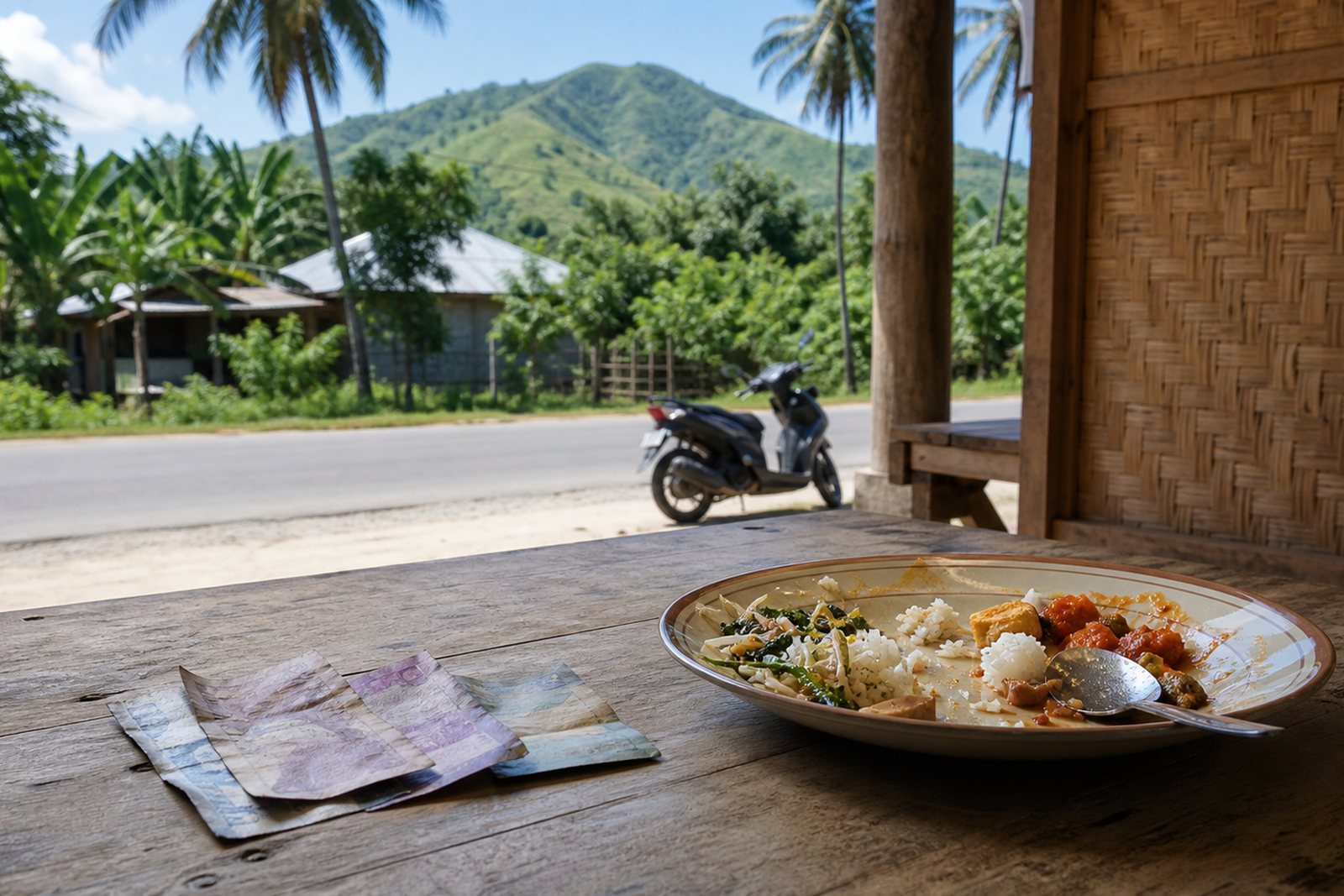 Daily Dispatch · Illustration: HubLombok (AI-generated)
Why This Is a Regional Investor Story
NTT is the focus of the relief operation. Lombok investors should therefore be precise about geography and exposure: this announcement concerns earthquake-affected areas across NTT, not a reported event in Lombok. Any direct assertion about Lombok property, tourism, infrastructure or trading conditions would require separate evidence.
Yet the story still merits a place on an investor’s regional watchlist. Investors in Indonesian real estate, hospitality and operating businesses do not assess risk solely through quarterly returns or transaction comparables. They also watch how institutions respond when a disruption occurs: who provides the first funding, whether local authorities’ fiscal position is monitored, and how emergency operations transition into a recovery budget.
The present dispatch provides evidence on the first two of those questions. Jakarta has released funds and says it is monitoring local fiscal capacity. It has also started calculating repair and recovery needs. What remains unresolved is the assessment itself: the nature and extent of the damage, the level of any additional funding, and the pace at which later-stage decisions may be approved.
That uncertainty is not a flaw in the reporting; it is the central investment fact at this stage. Early disaster announcements are necessarily incomplete because emergency response and damage assessment occur together. Investors should prefer primary official updates and verified operational information over assumptions drawn from a single initial disbursement.
A disciplined internal checklist is more useful than speculation:
- Confirm whether an asset, supplier, guest itinerary or transaction has any actual connection to affected NTT areas.
- Separate immediate operational questions from longer-term assumptions about repair and recovery.
- Ask advisers and operators for evidence-based updates rather than general reassurance.
- Treat any future funding as contingent until an official decision is reported.
- Preserve documentation of any disruption relevant to insurance, contracts or counterparties.
For prospective buyers, this is also a reminder that regional due diligence is not confined to title documents and contract language. It includes understanding the operational dependencies surrounding an asset and testing whether the people responsible for it can provide clear, sourced updates during a fast-moving event.
Where a transaction involves Indonesian property structures, specialist legal guidance remains prudent. HubLombok’s advisory partner, TerraNusa Advisory, supports foreign buyers with due diligence, company setup, taxes, deeds and title transfer. Its role is distinct from disaster-response authorities: legal due diligence can clarify a transaction’s documents and process, but it cannot substitute for official information about conditions on the ground.
What This Means for Investors
The immediate implication is vigilance, not repricing. There is no basis in the reported announcement to attach a numerical impact to Lombok property values, rental demand, construction schedules or visitor flows. Investors should not manufacture one.
Instead, the release of 44 billion rupiah ($2.5 million) should be read as confirmation that the central government has activated fiscal support for NTT relief operations. The next material facts will be the findings of damage assessments, the status of emergency operations, and any formal approval of further recovery funding.
For owners and operators with a genuine NTT link, communication is now an asset in its own right. Clear updates should distinguish what is known from what is under assessment. If a property, team member, contractor or guest plan is affected, practical evidence and verified status reports are more valuable than confident language unsupported by facts.
For Lombok-focused investors without such a direct link, the sensible response is to watch rather than react. Keep the news in its proper frame: it is a regional emergency-response development, not a documented change in Lombok market fundamentals. That distinction protects both capital allocation and credibility.
There is a broader lesson in the sequencing. Government support is moving through emergency relief, monitoring and recovery planning. The final shape of assistance will depend on information still being gathered and on approval decisions still to be made. The disciplined investor keeps those stages separate.
In a region where events can change the operating environment quickly, the premium is on verified information and calm judgement. Jakarta’s initial funding decision is meaningful; its ultimate financial and operational implications will become clearer only as the assessment process advances.
Stay informed, subscribe to the free Lombok Briefing for market intelligence like this, published twice a month.
How much funding has Jakarta released for NTT earthquake relief?
Indonesia’s government has disbursed **44 billion rupiah ($2.5 million)** for disaster-management efforts in earthquake-affected areas across East Nusa Tenggara. The Finance Ministry says further assistance may be allocated after on-the-ground evaluations identify any shortfall and assess damage.
Does the NTT relief announcement change Lombok property fundamentals?
The reported announcement does not establish a direct change to Lombok property values, rental demand, infrastructure or tourism. It concerns emergency operations in earthquake-affected NTT areas. Lombok investors should monitor verified official updates and avoid treating an initial relief allocation as a market forecast.
Will the Indonesian government provide more funding to NTT?
Finance Minister Purbaya Yudhi Sadewa said additional funds would be allocated if the initial support proves insufficient for areas affected by disasters of this scale. The central government is calculating repair and recovery needs, with future support scaling according to damage assessments and presidential approval.

The Lombok Buyer's Field Guide
Legal structures ranked by risk, the honest ROI math line by line, all six zones ranked, and the 24-point due-diligence checklist. The whole book, free in your inbox.
See what's inside