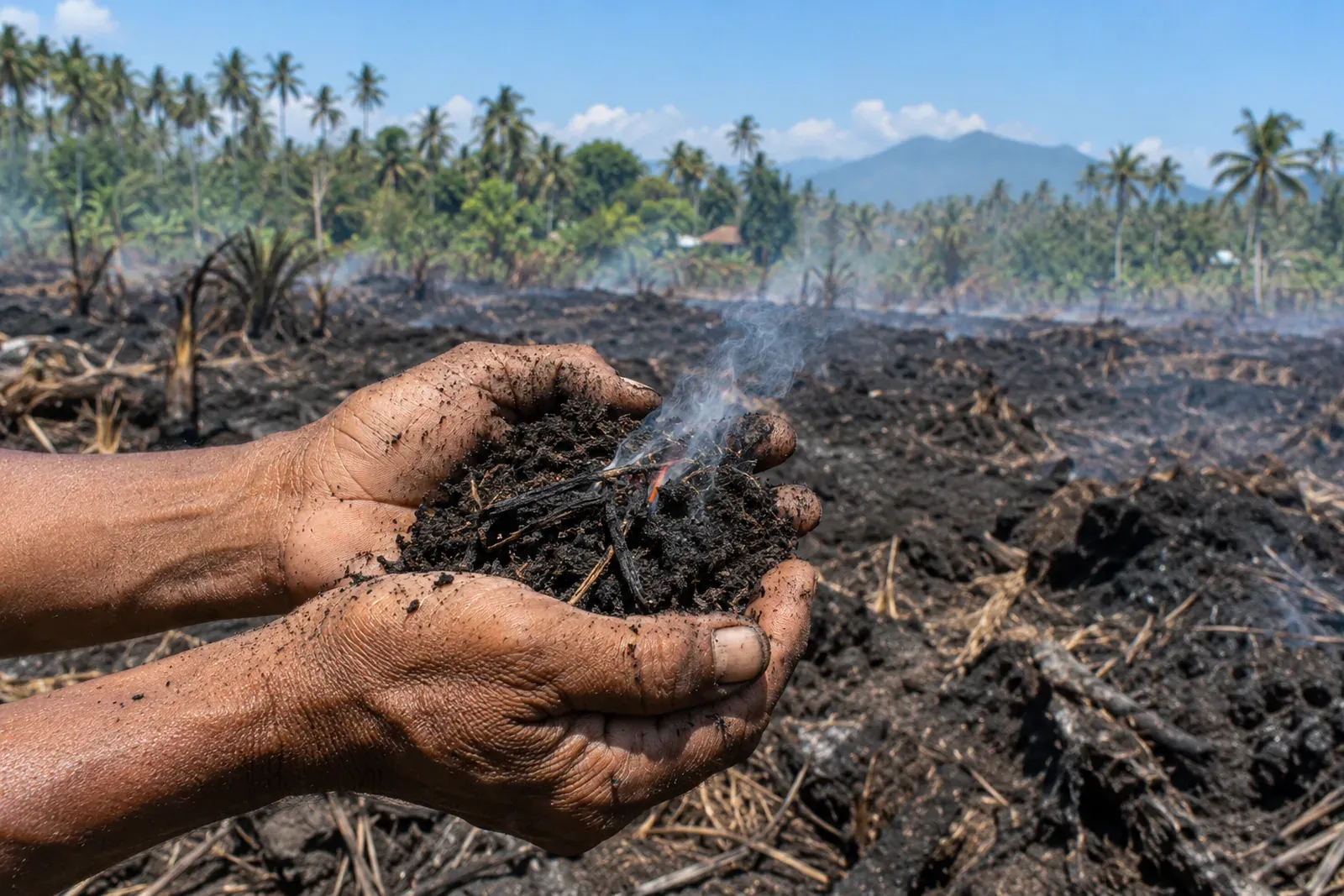
Indonesia Releases Rp 1.235 Trillion Aid Package for Wildfire Relief
Jakarta deploys Rp 1.235 trillion across priority provinces to safeguard public health and contain peatland fires.
Indonesia has stepped up central government interventions against seasonal land and forest fires, transferring the second phase of a Rp 1.235 trillion aid package dedicated to emergency response and public healthcare. Coordinating Minister for Human Development and Culture Sugiono confirmed that safeguarding affected populations remains the administration's primary operational focus.
Following presidential directives, authorities are moving beyond passive mitigation strategies. Rather than waiting for seasonal rainfall, state agencies have mounted an integrated containment campaign across the archipelago's most exposed commercial and agricultural corridors.
Prioritising Healthcare in Affected Communities
The central government's financial package, equivalent to approximately US$68.46 million, targets immediate medical interventions in regions severely compromised by haze and particulate pollution. Public health facilities in affected districts are receiving substantial emergency resources to manage spikes in acute respiratory infections.
Key Intervention Metrics:
- Total central aid package: Rp 1.235 trillion (~US$68.46 million)
- Deployed emergency personnel: Approximately 71,000 personnel
- Priority administrative areas: 6 provinces and 35 districts and cities
Direct medical logistics include the distribution of protective masks, mobile oxygen systems, and the construction of dedicated oxygen shelters. These facilities offer temporary respite for vulnerable residents, particularly children and older individuals, during severe smoke haze episodes.
Deployment Logistics Across Priority Provinces
Emergency allocations began with an initial tranche distributed on Sept 7 to six frontline provinces: South Sumatra, Jambi, Central Kalimantan, West Kalimantan, South Kalimantan, and Riau. Together with 35 constituent municipal and regency administrations, these regional jurisdictions represent the epicenter of annual peatland burning.
The deployment strategy combines ground-level suppression teams with specialised hardware engineered for difficult peat terrain:
- Surface suppression gear: Water pumps, heavy-duty hoses, and mobile storage tanks deployed to remote rural perimeters.
- Sub-surface containment: Specialised peatland water injectors and deep-well drilling rigs designed to quench persistent underground smoulders.
- Personnel operations: Operational funding and field logistics for approximately 71,000 military, police, and regional disaster mitigation personnel.
In tandem with ground squads, aerial operations have recorded measurable containment over the past week. Disaster agencies continue to employ water-bombing aircraft and dry ice cloud seeding to stimulate local precipitation and suppress fire fronts across remote concessions.
Fiscal Governance and State Response Mechanisms
The coordinated expenditure underscores Jakarta's heightened administrative focus on environmental risk management. Forest fires historically generate diplomatic and economic friction across Southeast Asia, disrupting aviation networks and reducing productivity across primary sectors.
Minister Sugiono emphasised that relief funds must be disbursed with full operational accountability. Regional administrative bodies, including municipal authorities in cities like Palangka Raya, have complemented central transfers by activating local emergency reserves to support sustained field logistics.
By establishing formal procurement pathways for firefighting equipment, the state aims to standardise containment response times across provincial borders. The logistical framework focuses on containing small outbreaks before dry-season winds expand hotspots into regional haze emergencies.
What this means for investors
For international capital monitoring the Indonesian macroeconomic environment, Jakarta's assertive containment stance offers critical insight into state capacity, fiscal priorities, and environmental governance.
First, the mobilisation of Rp 1.235 trillion demonstrates prompt fiscal deployment during seasonal crises. The allocation shows an institutional capability to direct national capital and 71,000 personnel to regional hotspots without destabilising broader sovereign budgets.
Second, the geographic containment to specific agricultural belts in Sumatra and Kalimantan highlights the regional diversity of the Indonesian archipelago. Peripheral economic zones such as Nusa Tenggara and the southern island belt remain geographically insulated from the primary peatland fire basins, experiencing distinct climatic and environmental conditions.
Finally, investors in Indonesian sovereign debt, infrastructure, and tourism real estate should note the government's transition toward preemptive operational protocols. A systematic reliance on cloud seeding, ground monitoring, and targeted healthcare infrastructure reflects an improving institutional capacity to manage systemic operational risks.
As Indonesia continues to strengthen its domestic disaster response mechanisms, administrative execution during seasonal weather cycles remains an essential indicator of overall governance maturity.
Stay informed: subscribe to our free Lombok Briefing, published twice a month (the 1st and 15th), for analysis like this.
What is the total value of Indonesia's wildfire aid package?
The central government aid package totals Rp 1.235 trillion, which represents approximately US$68.46 million. The funds cover healthcare services, oxygen supplies, protective equipment, and field deployment costs for firefighting teams.
Which provinces are prioritized for central government wildfire relief?
The central aid package prioritizes six provinces: South Sumatra, Jambi, Central Kalimantan, West Kalimantan, South Kalimantan, and Riau, alongside 35 affected regencies and cities managing active peatland and forest fires.
What firefighting and medical resources are being deployed?
The operation mobilizes around 71,000 personnel using water pumps, peatland injectors, deep wells, and aerial water bombing. Medical logistics include masks, portable oxygen, and dedicated oxygen shelters for affected communities.

The Lombok Buyer's Field Guide
Legal structures ranked by risk, the honest ROI math line by line, all six zones ranked, and the 24-point due-diligence checklist. The whole book, free in your inbox.
See what's inside