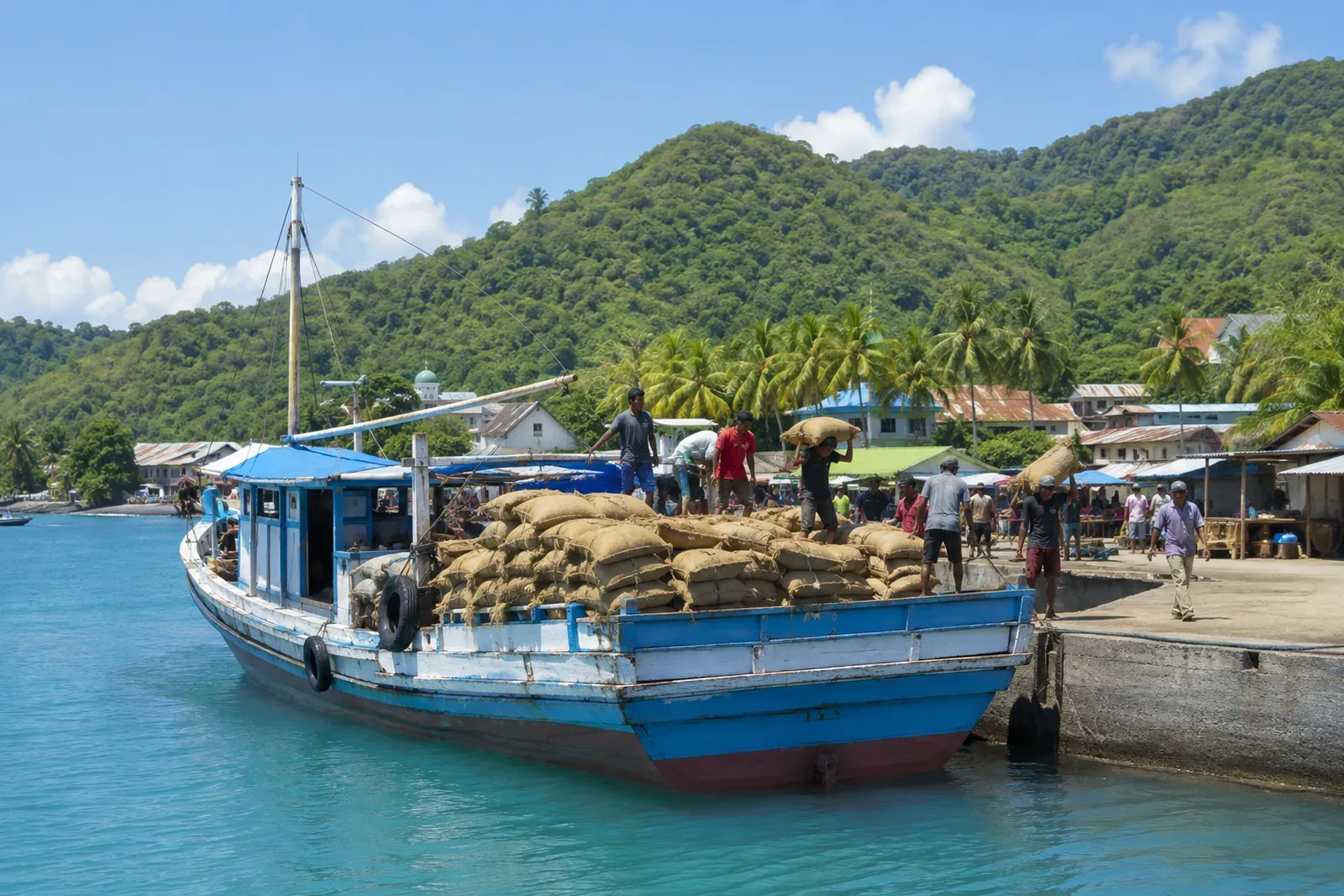
Indonesia and Russia Open Talks on Fertiliser, Shipping and Trade Investment
Indonesia and Russia have opened investment discussions spanning urea fertiliser, shipping and trade, with implications for investors tracking Indonesia’s industrial direction.
Quick answer: Indonesia and Russia are exploring investment cooperation in urea fertiliser, energy, minerals and shipping, while Indonesia considers a study for a potential Pupuk Indonesia plant in Vladivostok. For Lombok investors, the immediate effect is indirect: the development signals Indonesia’s active pursuit of industrial resilience and wider trade links rather than a local property-market change.
Indonesia’s investment agenda has acquired a Pacific-facing dimension. A meeting between President Prabowo Subianto and Russia’s President Vladimir Putin in Vladivostok has moved beyond diplomatic language into a set of potential commercial follow-ups: fertiliser production, industrial inputs, vessel technology and a prospective trade framework.
For investors accustomed to reading Indonesia through tourism, real estate and domestic consumption, this is a useful reminder that the country’s investment story is also being shaped by industrial policy. The key question is not whether every discussion becomes a project. It is whether the discussions reveal where the government and state-owned enterprises intend to build capability, partnerships and market access.
The Context
According to Antara Business, Rosan Roeslani, Minister of Investment and Downstreaming, said the presidents’ meeting considered investment opportunities across fertilisers, energy, mineral resources and shipping. The breadth matters. These are sectors closely connected to Indonesia’s stated interest in strengthening material and industrial resilience.
The most concrete item disclosed so far is Pupuk Indonesia’s exploration of an investment connected to a urea fertiliser plant in Vladivostok. The company has signed a joint study to assess its potential to invest there. That is a meaningful procedural step, but investors should distinguish a joint study from a final investment decision, a completed facility or a confirmed timetable.
“We have just signed a joint study to assess Pupuk Indonesia's potential to invest in Vladivostok for urea fertilizer,” Rosan said in the statement cited by Antara.
Pupuk Indonesia’s President Director, Rahmad Pribadi, framed the memorandum of understanding around two objectives: a greater role in national resilience and overseas expansion. He also described Vladivostok’s Pacific-facing position as significant because the region has long been one of the company’s primary markets.
That combination of market geography and resilience is the central strategic thread. Indonesia is not merely discussing exports in the abstract; its state fertiliser company is examining whether a presence in a location facing the Pacific could serve an established market relationship. The source does not establish whether the study will lead to investment, how any project might be structured or what its commercial economics could be. Those are precisely the details investors should wait to see.
For now, the evidence supports a narrower conclusion: Indonesia is testing an overseas industrial opportunity with Russia in a sector viewed by the government as strategically relevant.
From Memorandum to Investment Test
The joint study is the story’s practical centre of gravity. In investment analysis, its value lies in what it permits decision-makers to investigate rather than in any assumption that it guarantees a result. A study can clarify potential uses, technology, market logic and the feasibility of cooperation. It does not remove execution, policy or commercial risk.
Rosan said Pupuk Indonesia’s improved performance and efficiency created an opportunity to expand overseas investment. This is an official assessment, not an independently audited investment conclusion in the source. It should therefore be read as management and ministerial positioning: the company is being encouraged to consider a wider regional role.
Investors should separate the announced elements as follows:
| Announced element | What the source confirms | What remains unconfirmed | |---|---|---| | Urea fertiliser | A joint study on Pupuk Indonesia’s potential Vladivostok investment | A final project decision or operational outcome | | Shipping | An offer of a modern vessel for fishery processing | Technology selection or eventual use | | Trade | Planned ratification of an Indonesia-Eurasia free trade agreement | The resulting commercial effects |
The discipline is important because policy announcements can easily be treated as completed transactions. Antara’s reporting presents a live set of explorations and planned follow-up, not a finished industrial package. That is still relevant for capital allocation: it identifies the sectors receiving senior-level attention and shows the use of state-owned corporate capacity in Indonesia’s overseas strategy.
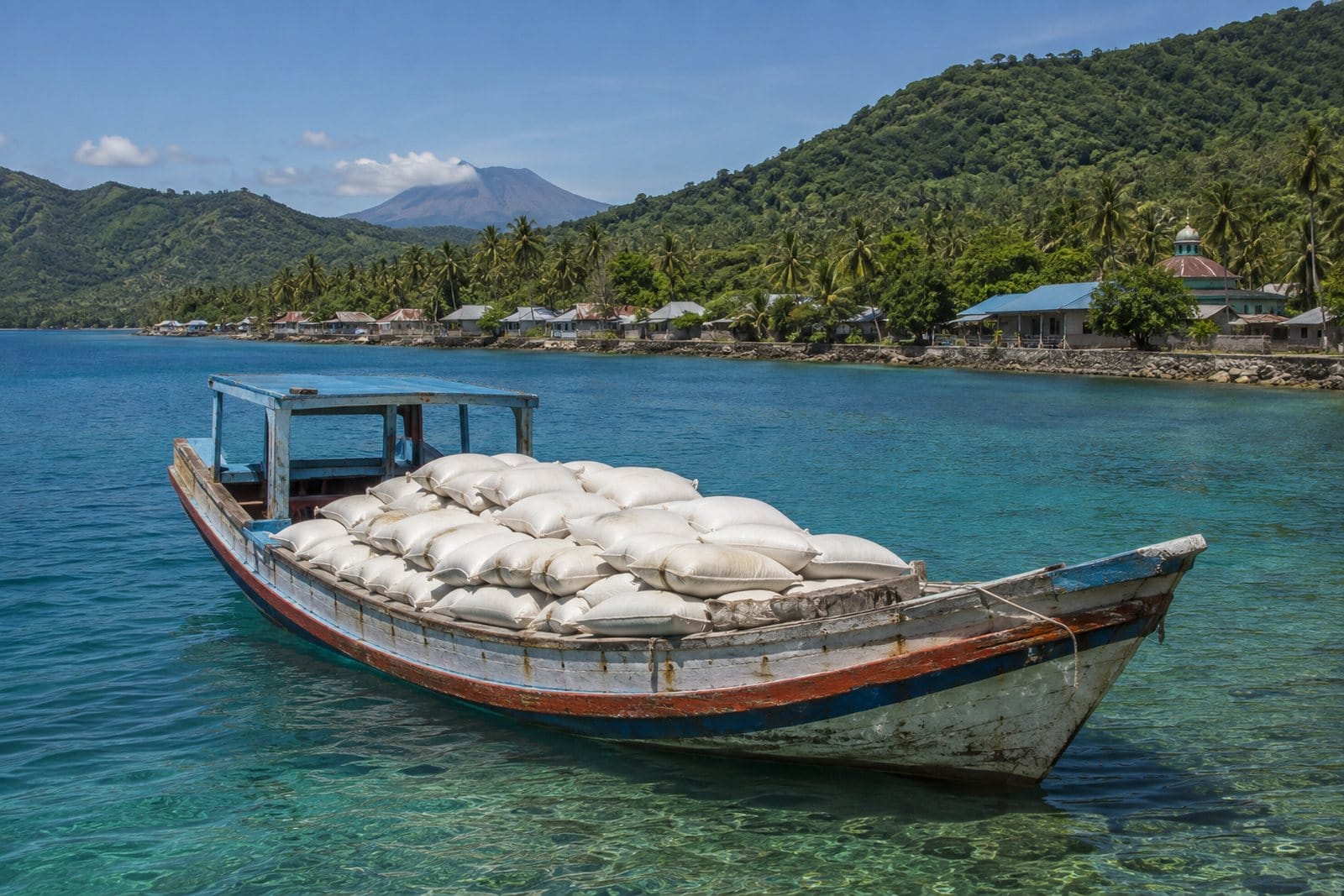 Indonesia and Russia Open Talks on Fertiliser, Shipping and Trade Investment · Illustration: HubLombok (AI-generated)
The Vessel Offer and the Trade Framework
Shipping was the other prominent operational theme. Rosan said President Putin offered a modern vessel more than 102 metres long to support the direct processing of fishery products. President Prabowo, according to the minister, will send a team to study the vessel’s technology and potential uses.
Again, the language is deliberately preliminary. There is an offer, followed by a promised technical assessment. There is no confirmed acquisition, deployment site, commercial structure or impact on Indonesia’s fisheries sector in the source. For investors, the appropriate response is to monitor the review rather than price in a shipping or fisheries outcome.
The potential trade framework is broader. Rosan highlighted the planned ratification of a free trade agreement between Indonesia and Eurasia, which he said could widen trade and investment opportunities between Indonesia and Russia. He said Indonesia-Russia trade had increased by more than 12% compared with the preceding year.
“This will expand trade, cooperation, partnerships, and investment between the two countries,” Rosan said, referring to the timing of closer cooperation and the planned agreement.
That statement is an official expectation. It is not evidence that a particular company, project or regional market will benefit. Yet it establishes the intended direction of travel: more channels for trade, partnerships and investment between the two countries.
For internationally minded investors in Indonesia, the signal is best understood through three lenses:
- Industrial policy: fertiliser, energy, mineral resources and shipping are being discussed together, pointing to a policy conversation about productive capacity rather than a single isolated transaction.
- Pacific market access: Pupuk Indonesia sees Vladivostok’s position facing the Pacific as strategically significant for a market it describes as longstanding.
- Execution watchpoints: the study, the vessel review and the free trade agreement’s ratification each require subsequent developments before their investment effects can be assessed.
What This Means for Investors
The immediate investment implication is one of attention, not immediate repricing. The Antara report contains no direct announcement affecting South Lombok land, villas, tourism operations or local infrastructure. It would be a mistake to attach a local real-estate conclusion to an industrial and diplomatic development without evidence.
Still, Lombok investors should not ignore national policy signals. Foreign investment decisions in Indonesia are made within a wider institutional setting: trade relationships, industrial priorities, state-owned enterprise strategy and the government’s approach to resilience can shape the country context in which sector-specific investments are evaluated.
The most useful investor posture is therefore selective. Track the next disclosures around the Pupuk Indonesia study, the team examining the vessel technology and the planned free trade agreement. Look for information that moves an item from exploration towards a defined transaction: confirmed commitments, terms, implementation details or a clear link to an investable operating effect.
Until then, the dispatch supports neither exuberance nor dismissal. It suggests that Indonesia is pursuing a more outward-facing industrial conversation with Russia, using fertiliser and maritime capability as focal points. The developments may matter most initially to investors following Indonesian industrial policy, trade and state-owned enterprises; for Lombok-focused capital, the relevance remains contextual and indirect.
The value of a live dispatch is not to turn every presidential meeting into a market verdict. It is to identify the first concrete documents, promised reviews and policy pathways, and to recognise the difference between a strategic opening and an investable outcome.
Stay informed, subscribe to the free Lombok Briefing for market intelligence like this, published twice a month.
What has Pupuk Indonesia agreed to do in Vladivostok?
Pupuk Indonesia has signed a joint study to assess its potential investment in a urea fertiliser plant in Vladivostok. The reported agreement is an exploratory step, not confirmation of a final investment decision, completed plant or operating timetable.
Does this news directly affect South Lombok property investors?
No direct South Lombok property impact was announced. The report concerns Indonesian-Russian discussions on fertiliser, energy, mineral resources, shipping and trade. For Lombok investors, its relevance is currently indirect: it offers a view of Indonesia’s wider industrial and trade policy direction.
What does the proposed Indonesia-Eurasia trade agreement mean?
Indonesia’s minister said planned ratification of a free trade agreement between Indonesia and Eurasia is expected to widen trade and investment opportunities with Russia. The source does not specify its final commercial effects, so investors should follow subsequent ratification and implementation details.
The Lombok Buyer's Field Guide
Legal structures ranked by risk, the honest ROI math line by line, all six zones ranked, and the 24-point due-diligence checklist. The whole book, free in your inbox.
See what's inside