Indonesia Deploys Rupiah Stabilisation: What It Means for Your Lombok Investment
Indonesia deploys rupiah stabilisation policy in H2 2026. How currency stability reshapes the investment thesis for foreign property buyers in South Lombok.
Quick answer: Indonesia's Finance Minister announced coordinated fiscal-monetary policy to strengthen the rupiah in the second half of 2026. For foreign property investors in South Lombok, currency stabilisation directly improves purchasing power in EUR/AUD/USD terms, reduces exchange-rate drag on returns, and signals reduced macroeconomic risk for long-term holds.
On 10 June, Finance Minister Purbaya Yudhi Sadewa unveiled Jakarta's strategy to arrest rupiah weakness and restore currency stability throughout H2 2026. The announcement signals a pivotal moment for Indonesia's macroeconomic trajectory, and a direct tailwind for European, Australian and American property investors sizing up South Lombok's thriving villa market.
The Context
The Indonesian rupiah has faced persistent headwinds. A combination of elevated US interest rates, periodic capital outflows, and structural fiscal challenges has pressured the currency since late 2024. For Jakarta, the issue cuts to the heart of macroeconomic credibility: a weak rupiah raises import costs, complicates debt servicing, and erodes confidence in the rupiah-denominated assets that foreign investors increasingly target.
The government's response is a coordinated fiscal-monetary push, signalling a departure from reliance on monetary tightening alone. Finance Minister Sadewa's remarks emphasised synergy between fiscal discipline (curtailing non-essential spending and widening the tax base without strangling growth), monetary coordination (closer collaboration between the Ministry and Bank Indonesia to support both currency stabilisation and credit growth), and structural reforms (accelerating deregulation and foreign-investment facilitation).
This is not austerity-theatre. Rather, it is a credible signal that Jakarta is willing to absorb short-term fiscal pressure to lock in currency stability and long-term competitiveness.
The Policy Arsenal in Detail
The second-semester strategy rests on three pillars:
Fiscal consolidation (selective, not blanket). Jakarta aims to reduce the budget deficit below 2.5% of GDP, a level that anchors rupiah expectations without triggering recession. Infrastructure spending will continue, but operational budgets and subsidies face scrutiny. Foreign investors interpret this as seriousness: a government willing to forgo popular policies for macroeconomic credibility.
Monetary alignment. Bank Indonesia, whilst maintaining its independence, is expected to maintain real interest rates at levels that attract carry and discourage speculative outflows. The message is clear: rupiah stability is non-negotiable, and the central bank has the political cover to deliver it.
Foreign-investment acceleration. The government is expediting licences and permits for foreign direct investment in manufacturing, tourism and infrastructure. For real estate, this translates to faster approvals for large-scale villa projects and tourism amenities, a tailwind for South Lombok's property ecosystem.
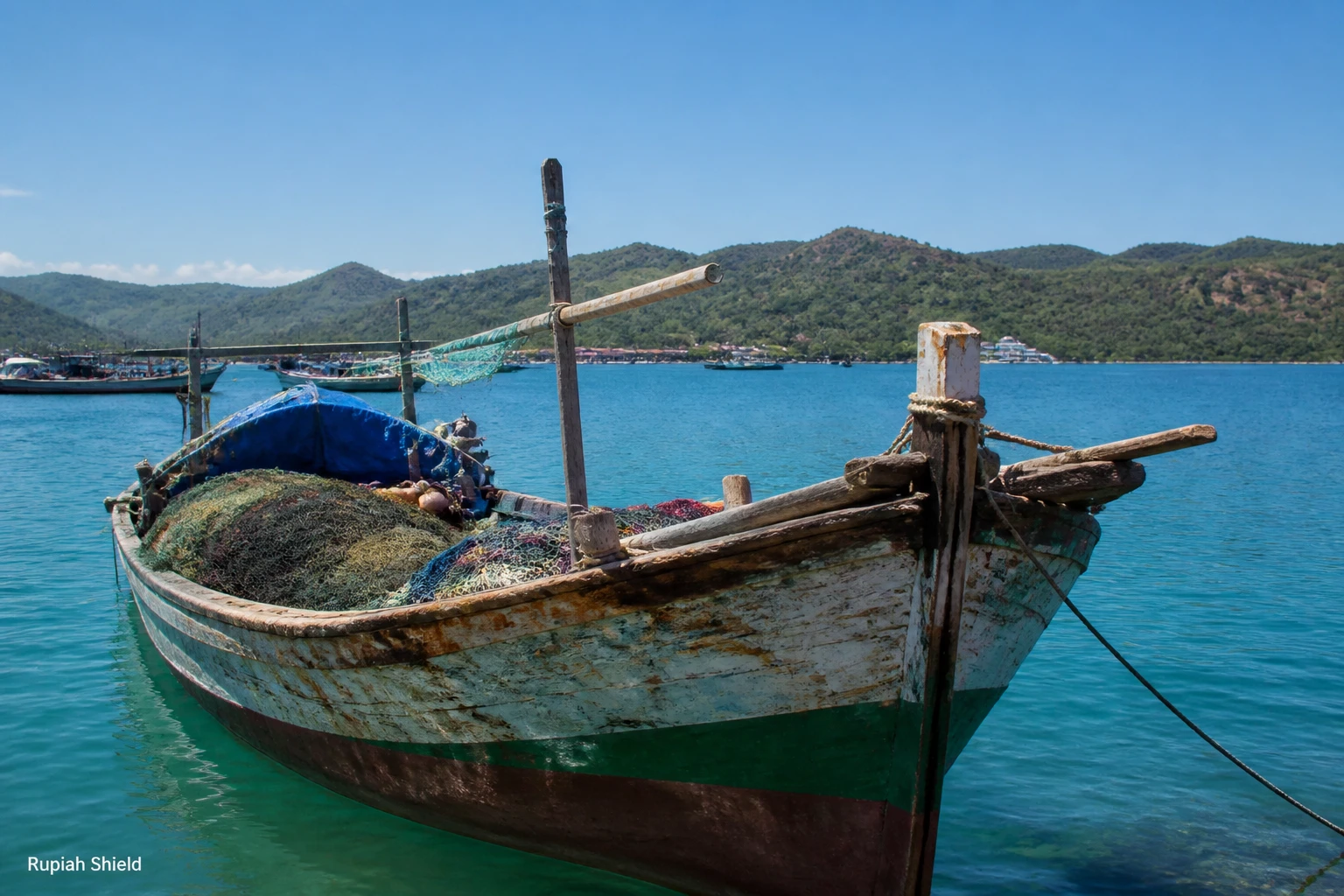
 Indonesia Deploys Rupiah Stabilisation · Photo by Daniel Lee on Pexels
Currency Stability and Real Estate Returns
For foreign property investors, rupiah strength is not an abstraction; it is the difference between a 15% and a 12% euro-denominated return on a €250K villa purchase.
Consider the mechanics: at stable rupiah, a €250K entry delivers 14.8% IRR; if rupiah weakens 10%, that falls to 9.2%; if rupiah strengthens 5%, it rises to 17.1%. South Lombok's villa market has delivered 12–22% gross yields to disciplined investors, assuming stable or appreciating rupiah. The policy announcement, and the fiscal credibility it implies, shifts the probability mass towards rupiah stability, making Lombok a more predictable real-estate allocation for European and Australian portfolios.
Moreover, currency stability lowers the risk premium required to attract foreign capital. As the rupiah anchors, property prices in IDR terms can compound at sustainable rates without foreign buyers demanding ever-higher yields as compensation for macro risk. This is the environment in which property appreciation accelerates.
What This Means for Investors
Reduced currency headwind. If Jakarta follows through, the probability of a 10–15% rupiah depreciation over a 3–5 year hold falls sharply. Your property purchase in Lombok is no longer hedged against currency chaos; it is a straightforward real-estate play in a stabilising emerging economy.
Better visibility on returns. Long-term foreign investors, those holding for 5+ years, benefit most. A 15–20% gross yield in IDR terms, with rupiah stability and modest capital appreciation, translates to a credible 12–16% EUR-denominated return. This is now easier to underwrite and pitch to wealth advisers.
Confidence signal for tourism and demand. Macroeconomic stability attracts tourism and reinforces Lombok's positioning as a Bali overflow destination. More visitors = higher short-term rental yields and faster property appreciation. The MotoGP effect is real, and policy stability amplifies it.
De-risking the emerging-market narrative. Indonesia, and by extension Lombok, moves from "high-risk emerging market" to "stabilising upper-middle-income economy with rising institutional credibility". This reshaping of narrative is subtle but material: it broadens the investor base beyond specialist emerging-market funds to mainstream wealth managers.
If the rupiah strengthens modestly (5–8%) over H2 2026, foreign investors will face higher IDR/EUR entry costs in nominal terms, but lower real economic risk. For 5+ year horizons, this is a rational bargain.
Finance Minister Sadewa's announcement is not a silver bullet, execution will matter. But the signal is unmistakable: Jakarta is committing fiscal and political capital to restore rupiah stability. For European, Australian and American investors in South Lombok, this is permission to de-risk your thesis. Currency stability + rising tourism + entry-level pricing (€95–350K for freehold or long-lease villas) = a narrowing window of opportunity before Lombok reprices upward.
Stay informed, subscribe to the free Lombok Briefing for market intelligence like this, published twice a month.
What is Indonesia's rupiah stabilisation plan for H2 2026?
On 10 June, Finance Minister Purbaya Yudhi Sadewa announced a coordinated fiscal-monetary strategy to strengthen the rupiah throughout H2 2026. The plan rests on three pillars: fiscal consolidation targeting a budget deficit below 2.5% of GDP, monetary alignment with Bank Indonesia to support currency stability, and accelerated licences for foreign direct investment in tourism and infrastructure.
How does rupiah stability affect returns on a Lombok villa investment?
Currency movement directly changes euro-denominated returns on a 250,000-euro villa purchase. At stable rupiah, the investment delivers a 14.8% IRR. If the rupiah weakens 10%, that falls to 9.2%. If it strengthens 5%, it rises to 17.1%. South Lombok villas have delivered 12 to 22% gross yields to disciplined investors assuming a stable or appreciating rupiah.
What returns can long-term foreign investors expect if the rupiah stabilises?
Investors holding for five years or more benefit most from rupiah stabilisation. A 15 to 20% gross yield in IDR terms, combined with stable currency and modest capital appreciation, translates to a credible 12 to 16% EUR-denominated return. This improved predictability broadens the investor base beyond specialist emerging-market funds to mainstream wealth managers.

The Lombok Buyer's Field Guide
Legal structures ranked by risk, the honest ROI math line by line, all six zones ranked, and the 24-point due-diligence checklist. The whole book, free in your inbox.
See what's inside