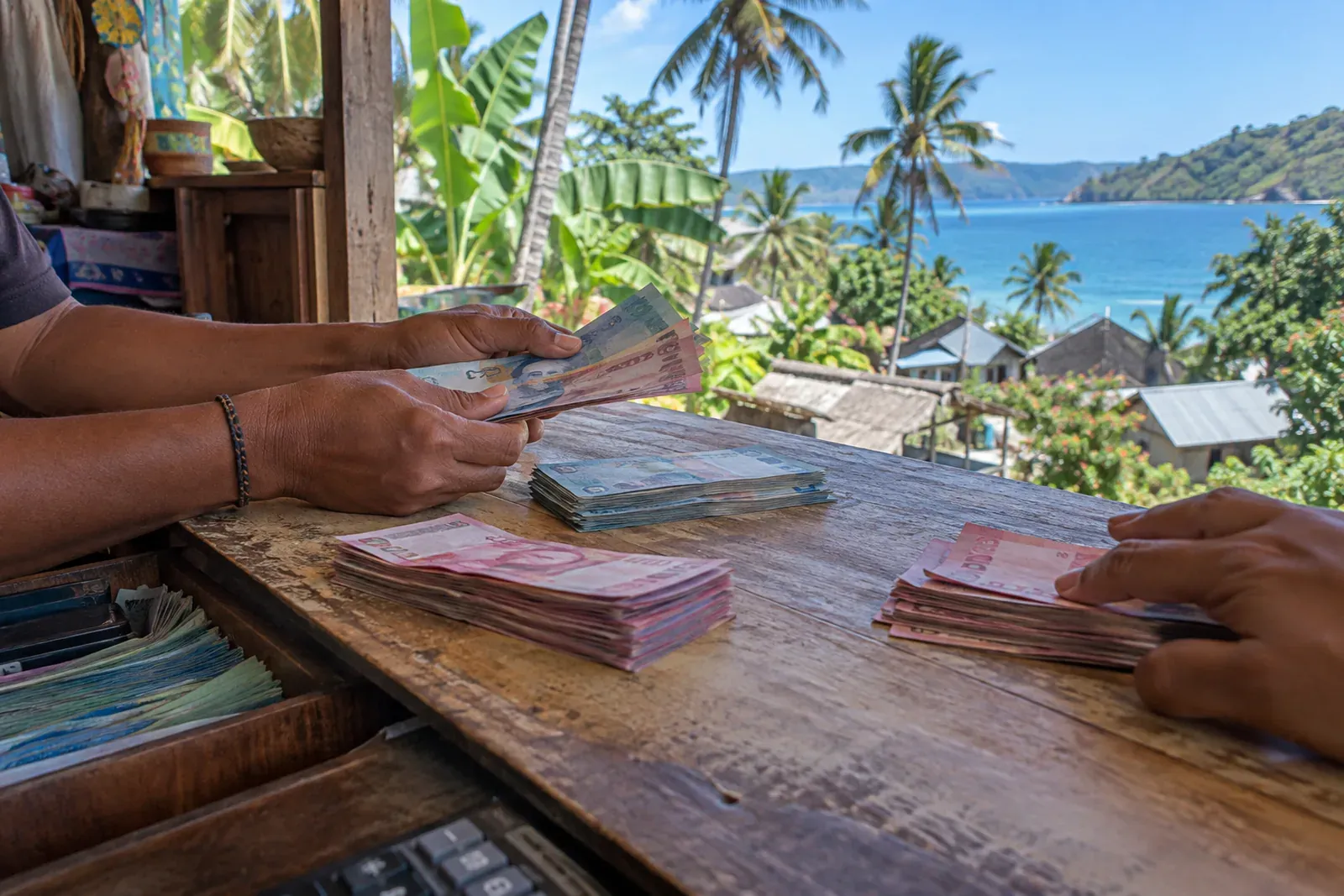
Indonesia Pushes BRICS Currency Links as Global Financial Risks Rise
Bank Indonesia has urged BRICS members to deepen local-currency settlement and cross-border payment links amid geopolitical fragmentation.
Bank Indonesia is seeking closer financial links among BRICS economies, arguing that local-currency transactions and connected cross-border payment systems could help countries navigate a more fragmented global environment.
The message, delivered at a senior BRICS gathering in Mumbai, places Indonesia’s central bank at the centre of a wider discussion about resilience, payment infrastructure and the practical mechanics of international commerce.
A call for practical financial integration
At the 2nd BRICS Finance Ministers and Central Bank Governors Meeting, held on September 9–10 in Mumbai, Bank Indonesia called for member nations to accelerate local currency transactions, known as LCT, and enhance cross-border payment connectivity.
According to Bank Indonesia, the aim is to help shield regional economies from geopolitical risks and global market fragmentation. The institution’s position is not a call for financial isolation; rather, it is an argument for a broader set of workable payment and settlement channels between participating economies.
Destry Damayanti, Bank Indonesia’s Governor, said Indonesia saw a strategic opportunity for BRICS to turn common challenges into mutual resilience. She highlighted concrete cooperation on local currency transactions and cross-border payment connectivity, while recognising that implementation must reflect the development stage and national priorities of each country.
Key message from Bank Indonesia: deeper local-currency settlement and payment connectivity should be pursued alongside national priorities and differing stages of economic development.
For investors, that emphasis matters. Financial integration is often discussed in sweeping geopolitical terms, but its value is ultimately measured in the reliability and usability of the systems through which businesses, consumers and institutions make payments across borders.
Indonesia and India focus on implementation
On the sidelines of the meeting, Damayanti met Sanjay Malhotra, Governor of the Reserve Bank of India, to discuss faster Indonesia–India financial integration.
The dialogue focused on three areas identified by Bank Indonesia:
- Expanding the Indonesia–India Local Currency Transaction framework;
- Establishing a Local Currency Bilateral Swap Arrangement, or LCBSA;
- Linking cross-border QR-code payment systems between the two countries.
Bank Indonesia described the bilateral discussion as a practical route for translating BRICS commitments into economic and financial connectivity with mutual benefits. That language is notable because it shifts the focus from declarations to institutional arrangements: transaction frameworks, liquidity support and payment-system links.
The meeting also underlines Indonesia’s interest in remaining an active participant in international financial cooperation while protecting its own policy priorities. Deputy Finance Minister Juda Agung represented Indonesia alongside Damayanti.
BRICS broadens the financial agenda
The Mumbai gathering brought together central-bank leaders and finance ministers from BRICS members including Indonesia, Brazil, Russia, India, China, South Africa, Egypt, the United Arab Emirates, Ethiopia and Iran.
Delegates adopted a joint statement addressing global economic challenges through cooperation in several areas:
- Digital transformation;
- Artificial intelligence;
- Cyber resilience;
- Sustainable finance;
- Local-currency adoption.
BRICS also reiterated its support for reforms to the global financial architecture, with particular attention to International Monetary Fund governance. The group is advocating changes that would increase the voice and representation of developing countries.
This is a broad agenda, and it should be read accordingly. A joint statement signals a shared direction rather than an immediate change to how every cross-border transaction is priced, settled or regulated. Yet the inclusion of payment connectivity and local-currency use alongside technology, cyber resilience and sustainable finance suggests that the operational foundations of finance are now central to the bloc’s policy conversation.
Stability remains the central theme
Bank Indonesia framed its intervention against escalating geopolitical tensions and the need to preserve stability while cultivating new sources of growth. This balance is important: greater financial connectivity can widen options, but central banks must also weigh domestic conditions, regulatory capacity and national objectives.
Damayanti’s remarks therefore positioned cooperation as a bridge-building exercise in an increasingly fragmented global landscape. Bank Indonesia said that, working in synergy with the government, it would continue contributing to international cooperation designed to produce inclusive and tangible outcomes aligned with national priorities and long-term economic and financial stability.
For international investors watching Indonesia, the significance lies less in any single announced mechanism than in the policy direction. The country is seeking a larger role in regional and international financial discussions while supporting structures that may make cross-border economic activity more connected among participating markets.
What this means for investors
Investors should distinguish between the policy ambition and its eventual commercial effect.
- Local-currency transactions: Bank Indonesia wants BRICS cooperation to expand local-currency settlement. The source does not indicate a replacement for other transaction currencies, nor does it set an implementation timetable.
- Cross-border payments: The proposed Indonesia–India QR-code linkage points to a focus on practical payment connectivity. Its relevance will depend on how the framework is implemented and adopted.
- Financial resilience: Bank Indonesia presents these measures as tools to address geopolitical risk and market fragmentation, while maintaining domestic stability.
- Institutional reform: BRICS’ support for International Monetary Fund governance reform reflects a longer-term effort to reshape representation within the global financial system.
For those assessing Indonesia alongside opportunities connected to Lombok, the immediate lesson is one of policy context rather than a direct property-market signal. International capital allocation still requires asset-specific due diligence, legal advice and careful assessment of currency, transaction and operating risks. What the BRICS discussion adds is evidence that Indonesia is actively pursuing wider financial cooperation as part of its approach to long-term stability.
Stay informed, subscribe to the free Lombok Briefing for analysis like this, published twice a month.
What did Bank Indonesia propose at the BRICS meeting?
Bank Indonesia called on BRICS members to accelerate local currency transactions and improve cross-border payment connectivity. It presented both measures as forms of practical financial cooperation that could help regional economies address geopolitical risks and global market fragmentation.
What did Indonesia and India discuss on financial integration?
Bank Indonesia Governor Destry Damayanti and Reserve Bank of India Governor Sanjay Malhotra discussed expanding the Indonesia–India Local Currency Transaction framework, establishing a Local Currency Bilateral Swap Arrangement, and linking cross-border QR-code payment systems.
Does the BRICS statement change investment conditions in Lombok?
The source does not identify a direct change to Lombok investment conditions. For investors, the development is best understood as wider Indonesian policy context: Bank Indonesia is pursuing international financial cooperation while stressing stability and national priorities.

The Lombok Buyer's Field Guide
Legal structures ranked by risk, the honest ROI math line by line, all six zones ranked, and the 24-point due-diligence checklist. The whole book, free in your inbox.
See what's inside