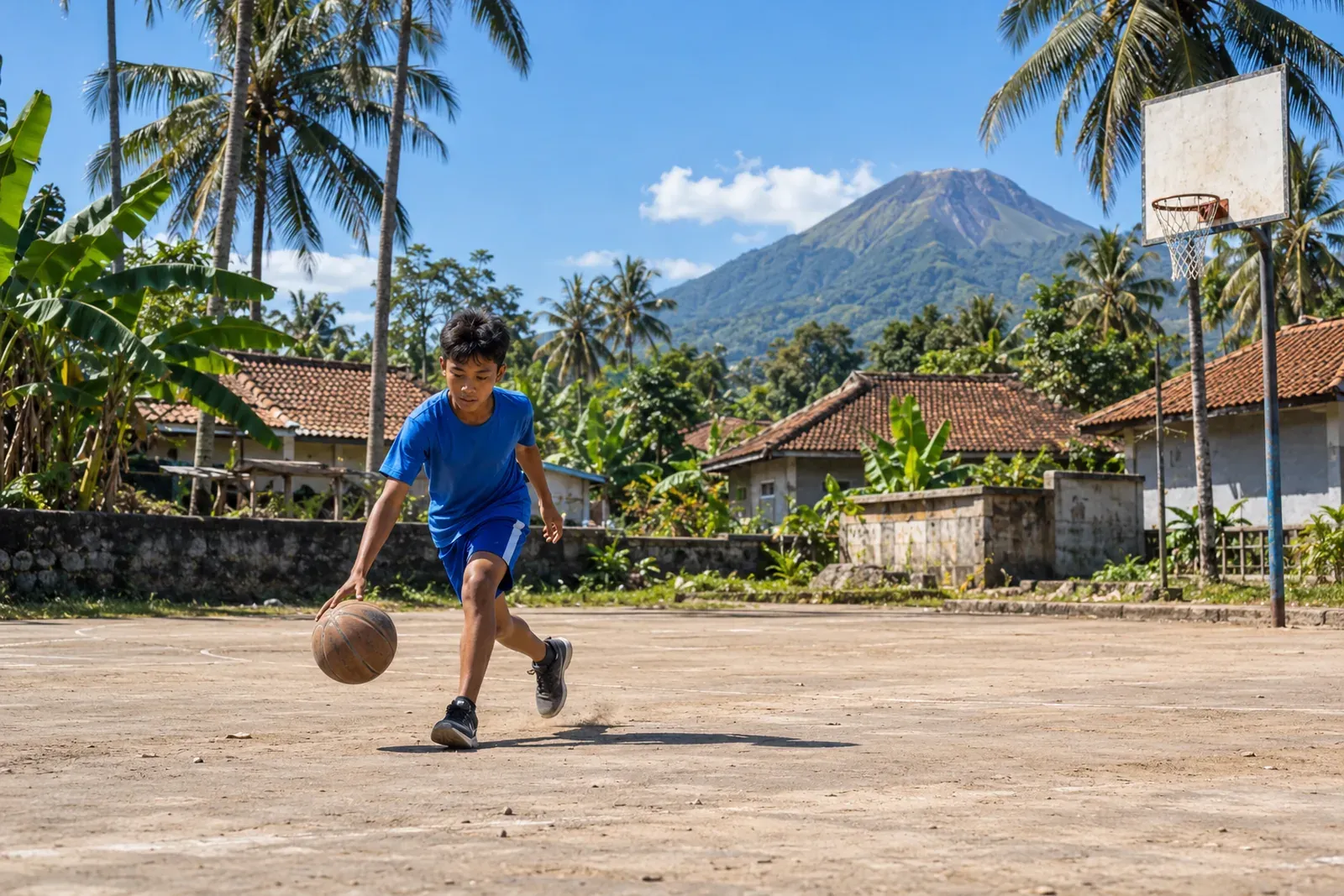
Indonesia Backs Youth Sports and Olympic Ambitions with Multi-Year Funding Commitment
President Prabowo Subianto commits to long-term school sports funding and early Olympic training following Rp 158.3 billion in bonuses for Asian Games and Para Games medalists.
Indonesia is pivoting its athletic ambitions toward early talent identification and structured multi-year funding, moving away from ad-hoc tournament preparations. Speaking from the Presidential Palace in Jakarta, Youth and Sports Minister Erick Thohir confirmed that President Prabowo Subianto has pledged sustained backing for grassroots school sports to cultivate character and strengthen the nation's human capital.
The policy shift signals an increasingly institutional approach to public investment in youth, combining educational health initiatives with rigorous athletic pathways. For international observers tracking Indonesia's demographic dividend and policy governance, the strategic commitment underscores how the current administration aims to modernize state institutions and project national capability on the global stage.
Multi-Year Funding Replaces Compressed Training Cycles
A central tenet of the government's renewed sports roadmap is the transition to structured, multi-year budgetary support. In past cycles, national athletes often faced compressed preparation windows, with training camps frequently commencing a mere six months before major international competitions. Minister Erick Thohir noted that this cycle has been restructured to begin preparations much earlier.
By launching national training camps earlier in the competitive cycle and underpinning them with guaranteed multi-year funding, the administration intends to build institutional endurance. The focus targets four core priority disciplines that have demonstrated competitive distinction on the world stage:
- Weightlifting: A traditional podium powerhouse for Indonesia at global championships.
- Sport climbing: An increasingly dominant discipline where Indonesian speed climbers hold world records.
- Badminton: The historic bedrock of Indonesian Olympic pedigree.
- Archery: A foundational discipline targeted for technical enhancement and youth pipelines.
Minister Erick emphasized that sports development in primary and secondary schools forms the bedrock of this broader strategy. Cultivating physical discipline and team culture early builds national character while preparing Indonesia's vast youth population for future economic and social leadership.
Record Bonuses for Asian Games and Para Games Medalists
The presidential announcement coincided with a formal ceremony at the Presidential Palace, where President Prabowo disbursed substantial state bonuses to athletes, coaches, and sports association leaders returning from the 2026 Aichi-Nagoya Asian Games and Asian Para Games.
Official State Bonus Allocations
- Total bonus package: Rp 158.3 billion (approximately US$ 8.7 million)
- Asian Games athletes and coaches: Rp 61.1 billion
- Asian Para Games contingent: Rp 97.2 billion
The disbursements rewarded performances that comfortably outpaced official state targets across both competitions. At the 2026 Asian Games, the Indonesian contingent secured 39 medals, comprising five gold, 11 silver, and 23 bronze medals. This haul elevated Indonesia to 16th place in the overall medal standings, surpassing the government's pre-tournament target of four gold medals.
The nation's para-athletes achieved even greater heights at the 2026 Asian Para Games. Indonesian competitors amassed 73 medals: 15 gold, 21 silver, and 37 bronze. The result positioned Indonesia eighth overall on the continent, more than doubling the initial target of seven gold medals. The higher bonus share awarded to para-athletes, totaling Rp 97.2 billion, reflects both their expanded medal tally and the administration's stated commitment to equitable institutional recognition.
Institutional Discipline and Youth Development
The formal integration of school sports programs with elite athletic pipelines reflects a coordinated administrative push across ministerial portfolios. Related domestic initiatives have seen government ministries collaborate on morning fitness routines, baseline student health checks, and community athletic facilities.
This holistic framework links public health policy directly with long-term human resource competitiveness. Indonesia is navigating a pivotal demographic window, with over half its population under the age of thirty. Establishing formal health benchmarks and structured athletic programs within the state educational framework is designed to improve baseline productivity and instil collective discipline across emerging generations.
What This Means for Investors
While elite athletics may appear distinct from commercial real estate or macroeconomic governance, state capital allocation offers valuable insight into broader executive priorities:
- Predictable, Multi-Year Planning: The departure from short-term six-month funding toward multi-year commitments mirrors the Prabowo administration's wider emphasis on programmatic continuity across infrastructure, education, and institutional development.
- Strengthening Human Capital: Direct investments into youth welfare and structured education support the long-term productivity of Indonesia's domestic workforce, a critical pillar for sustained macroeconomic expansion.
- National Branding and Tourism: Consistent international athletic performance elevates the country's sovereign profile, reinforcing the broader growth in national pride, international exposure, and sports-related infrastructure across the archipelago.
As Indonesia continues to execute its long-term development agenda, disciplined governance and predictable state backing will remain key markers of policy maturity.
Stay informed: subscribe to our free Lombok Briefing, published twice a month (the 1st and 15th), for analysis like this.
How much did Indonesia allocate in bonuses for 2026 Asian Games medalists?
The government awarded Rp 158.3 billion, roughly 8.7 million US dollars, in total bonuses. Of this package, Rp 61.1 billion went to Asian Games athletes and coaches, while Rp 97.2 billion was allocated to competitors and staff from the Asian Para Games.
Which Olympic disciplines are prioritised under Indonesia's multi-year sports plan?
Under the preparation framework outlined by Youth and Sports Minister Erick Thohir, the government is prioritizing four core disciplines: weightlifting, sport climbing, badminton, and archery. These sports will receive early national training camp funding rather than short-term budgets.
How did Indonesia perform at the 2026 Asian Games and Asian Para Games?
Indonesia won 39 medals at the Asian Games, including five gold, finishing 16th and beating its four-gold target. At the Asian Para Games, the team secured 73 medals, including 15 gold, placing eighth overall and surpassing the seven-gold target.

The Lombok Buyer's Field Guide
Legal structures ranked by risk, the honest ROI math line by line, all six zones ranked, and the 24-point due-diligence checklist. The whole book, free in your inbox.
See what's inside