Indonesia Intensifies East Nusa Tenggara Quake Response on Independence Day
Indonesia has expanded emergency relief operations after a magnitude 7.7 earthquake in East Nusa Tenggara killed at least 54 people.
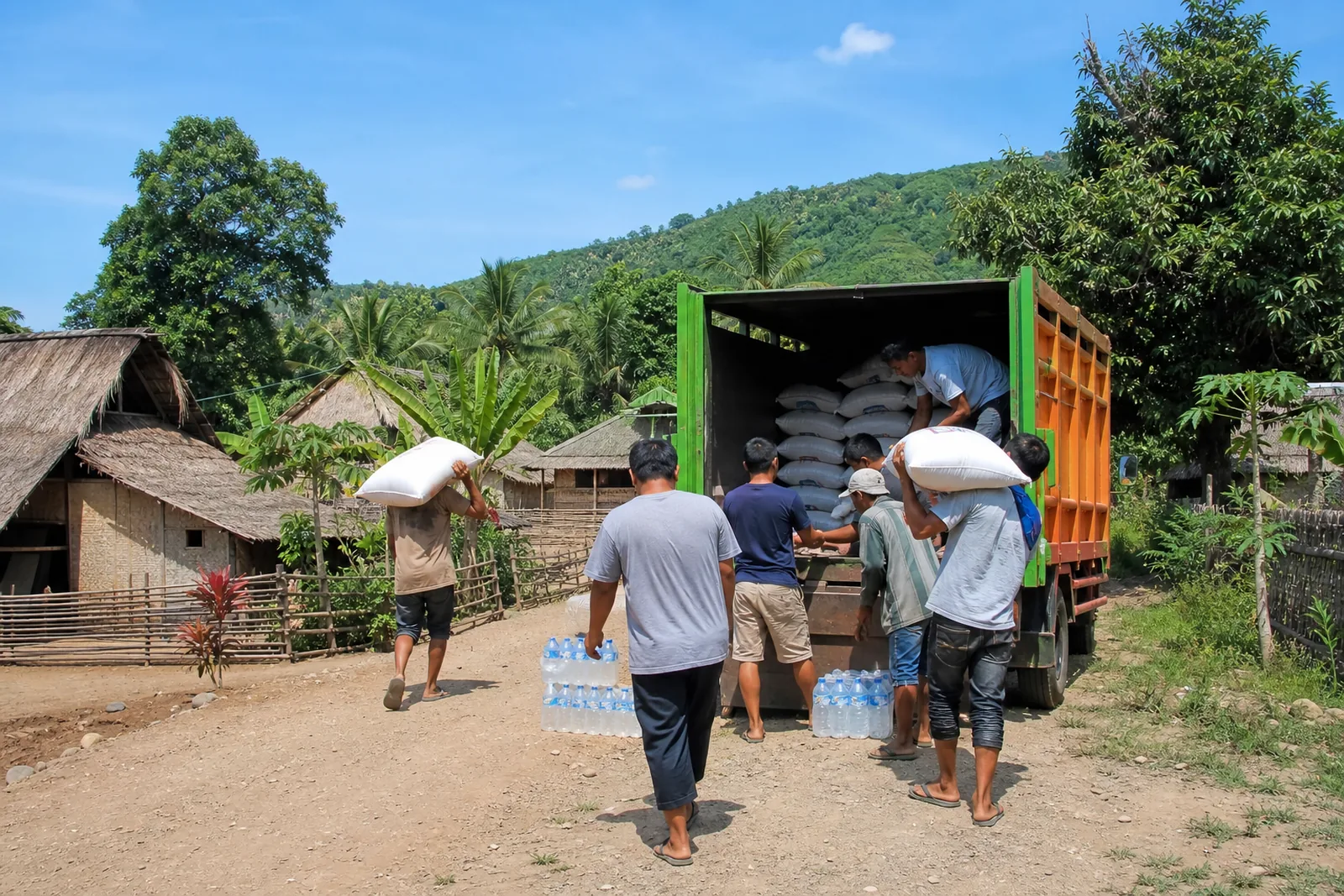
Indonesia has intensified its emergency response after a magnitude 7.7 earthquake struck East Nusa Tenggara, killing at least 54 people, according to the National Disaster Mitigation Agency, BNPB. The effort unfolded as the country marked its 81st Independence Day, underscoring both the scale of the humanitarian task and the priority being given to restoring support across affected communities.
A national response for Flores Island
The earthquake struck on Saturday, with the reported impact extending across areas of Flores Island in East Nusa Tenggara. During an Independence Day ceremony in Manggarai district, Coordinating Minister for Human Development and Culture Pratikno said the government would pursue maximum emergency measures for residents affected by the disaster.
Pratikno said senior officials had travelled to the province immediately after the earthquake to assess conditions and discuss how recovery efforts could be accelerated. His message was one of institutional mobilisation: ministries, government agencies and the House of Representatives were coordinating to support the response.
The immediate emphasis is relief for communities with the greatest need. Authorities have established teams to oversee distribution in locations including Reo in Manggarai District and Palue in Sikka District.
Key data: BNPB confirmed at least 54 deaths following the magnitude 7.7 earthquake, while search operations and impact assessments continued.
That continuing assessment matters. In the first phase of a disaster response, the picture changes as access improves, emergency teams reach more remote locations and damage reports are verified. BNPB Chief Suharyanto said the collection of data on homes with mild, moderate and severe damage was the government’s principal priority, ahead of an assessment of damage to government facilities.
Relief supplies move through two main hubs
BNPB has consolidated relief supplies at a logistics post at Jakarta’s Halim Perdanakusuma Air Base before dispatching them to East Nusa Tenggara. According to Suharyanto, the supplies include 50,000 aid packages provided by President Prabowo Subianto.
The operation is being channelled through hubs in Labuan Bajo and Maumere. From there, assistance is intended for West Manggarai, Manggarai, East Manggarai, Sikka, Ende and Nagekeo Districts.
This hub-and-distribution model places logistics at the centre of the response. It is not simply a question of moving supplies into a province; it is about reaching communities across difficult terrain with sufficient speed and coordination. Authorities have prepared land, sea and air transport to widen the reach of aid delivery.
The operational resources cited by BNPB include:
- Six aircraft stationed in Labuan Bajo;
- Five aircraft stationed in Maumere;
- helicopters, heavy trucks and ferries supporting wider distribution.
For affected households, the practical test will be whether this transport network can move food, essential supplies and emergency assistance from central logistics posts to local communities without avoidable delay. The government’s focus on rapid assessment is designed to help direct assistance where damage and immediate needs are most acute.
Difficult terrain raises the importance of coordination
East Nusa Tenggara’s emergency response is being conducted across a geography where transport options matter greatly. BNPB’s decision to deploy land, sea and air capacity reflects the challenge of distributing relief to multiple districts and localities.
Suharyanto said regional governments had also been instructed to undertake rapid assessments of the earthquake’s impact. That work will inform immediate assistance, particularly as officials identify homes affected at different levels of severity.
The response therefore has two linked tracks. The first is humanitarian: search operations, relief supplies and the delivery of immediate support. The second is administrative and operational: gathering reliable local data, determining the extent of damage and coordinating government resources around verified need.
Neither should be treated as secondary. Relief cannot be allocated effectively without good information, while information-gathering must not displace urgent support for residents. Pratikno’s comments and BNPB’s logistics plan suggest the government is seeking to pursue both at once.
The first priority, according to BNPB, is residents’ immediate needs and the assessment of damaged homes.
What this means for investors
For investors with interests in Indonesia, the immediate focus should remain on the humanitarian situation and the authorities’ ongoing assessments. The confirmed death toll, active search operations and continuing damage review mean that the full impact of the earthquake has not yet been established in the source reporting.
The event is also a reminder that location-specific risk assessment is inseparable from investment discipline. Natural-disaster exposure should be considered alongside the usual commercial questions of access, operating resilience, insurance terms, local infrastructure and legal due diligence.
For prospective property buyers in Indonesia, foreign ownership structures require particular care. Foreigners cannot hold freehold, or Hak Milik, which is reserved for Indonesian citizens. Permitted routes include leasehold, Hak Pakai for eligible residents, and a foreign-owned PT PMA holding Hak Guna Bangunan. Nominee arrangements, in which an Indonesian citizen holds freehold on behalf of a foreign buyer, are illegal and void in court.
A licensed PPAT notary executes property deeds, while BPN is the land agency responsible for land administration. TerraNusa Advisory, HubLombok’s independent legal and notary advisory partner, supports foreign buyers with due diligence on certificates, ownership history, zoning and encumbrances, as well as PT PMA setup, taxes, deeds and title transfer at BPN.
The broader lesson is measured rather than speculative: investors should distinguish a region-wide narrative from verified, asset-level information. In a live emergency, the most responsible approach is to follow official assessments, avoid assumptions about local impacts and ensure that any investment decision rests on current legal and physical due diligence.
Indonesia’s response will now be judged by the effectiveness with which assistance reaches communities across East Nusa Tenggara and by the clarity of the assessments that follow.
Stay informed, subscribe to the free Lombok Briefing for analysis like this, published twice a month.
What is known about the East Nusa Tenggara earthquake so far?
BNPB said the magnitude 7.7 earthquake had killed at least 54 people. Search operations and assessments of the impact were still continuing, so the full extent of damage had not yet been established in the reported information.
How is Indonesia distributing aid after the earthquake?
BNPB consolidated supplies at Jakarta’s Halim Perdanakusuma Air Base before sending them to hubs in Labuan Bajo and Maumere. The response includes 50,000 aid packages and uses aircraft, helicopters, heavy trucks and ferries for distribution.
What should foreign property investors consider after this event?
Foreign investors should rely on current, asset-specific physical and legal due diligence rather than assumptions about wider regional conditions. Foreigners cannot hold freehold; legal routes include leasehold, Hak Pakai for eligible residents, and PT PMA structures holding HGB.

The Lombok Buyer's Field Guide
Legal structures ranked by risk, the honest ROI math line by line, all six zones ranked, and the 24-point due-diligence checklist. The whole book, free in your inbox.
See what's inside