Indonesia Executive Drama: Gibran Contests Diplomas as Resignation Offer Emerges
President Prabowo advises Vice President Gibran to mount a court defence over his credentials after an offer to resign, testing executive cohesion in Jakarta.
Quick answer: Indonesian Vice President Gibran Rakabuming Raka will mount a formal legal challenge at the State Administrative Court to defend the authenticity of his academic credentials following guidance from President Prabowo Subianto. Crucially, State Secretary Minister Prasetyo Hadi confirmed Gibran offered his resignation during a two-and-a-half-hour meeting, presenting foreign investors with an unexpected test of executive cohesion.
Political tension reached the highest corridors of power in Jakarta on Tuesday afternoon as Vice President Gibran Rakabuming Raka confirmed he will initiate formal court proceedings to counter ongoing public disputes regarding his academic qualifications. The dramatic disclosure arrived alongside an official acknowledgement from the presidential palace that Gibran had offered to resign his post during private discussions with President Prabowo Subianto. For international capital allocators and long-term property investors monitoring Indonesian sovereign stability, the episode represents the first major stress test of the administration's dual-leadership architecture.
The Context
The dispute concerning Vice President Gibran's educational background has moved from intermittent commentary into a full-scale legal confrontation. Speaking directly to journalists at the Vice Presidential Palace in Jakarta on Tuesday afternoon, Gibran confirmed that President Prabowo had personally instructed him to settle the matter through formal judicial institutions rather than public polemics.
Specifically, Prabowo advised the vice president to pursue contentious proceedings through the State Administrative Court (PTUN), submitting comprehensive institutional records spanning his primary education through to his undergraduate degree. In parallel, Gibran stated his intention to coordinate with the Ministry of Primary and Secondary Education to seek a judicial review before the Supreme Court (MA). In his public remarks, Gibran emphasised that he welcomed constructive scrutiny and respected civic input, remarking firmly that he did not wish to see the issue evolve into a protracted national debate.
Yet the most consequential development for political observers was disclosed shortly beforehand by State Secretary Minister Prasetyo Hadi at the Presidential Palace Complex. Hadi revealed that during a confidential meeting lasting approximately two and a half hours on Tuesday morning, Gibran formally tabled his desire to step down from the vice presidency in response to mounting political controversy. Addressing reporters, Hadi clarified that President Prabowo had not rejected the resignation out of hand, but instead chose not to execute a precipitous decision, offering counsel and structured guidance on how to navigate the institutional defence.
This sequence of events reveals an administration determined to enforce procedural regularity over sudden executive fracture. By directing the controversy towards the administrative court and Supreme Court channels, the presidency is attempting to institutionalise a dispute that threatened to distract from core legislative and economic agendas.
Executive Stability and Cabinet Dynamics
The political union between President Prabowo Subianto and Vice President Gibran has served as the anchor for policy continuity since their electoral victory. International investors have historically weighted Indonesian political risk through the prism of executive harmony, particularly given previous eras where factional frictions disrupted regulatory implementation.
Minister Hadi's confirmation of the two-and-a-half-hour deliberation indicates that while the resignation discussion was substantive, President Prabowo prioritised state stability over political concession. Rather than permitting an abrupt vacancy at the pinnacle of government, the head of state channelled his deputy towards statutory recourse. This response reflects an orthodox doctrine of governance: utilising established state courts, such as the PTUN and Supreme Court, to defuse controversies that could otherwise destabilise parliamentary alliances.
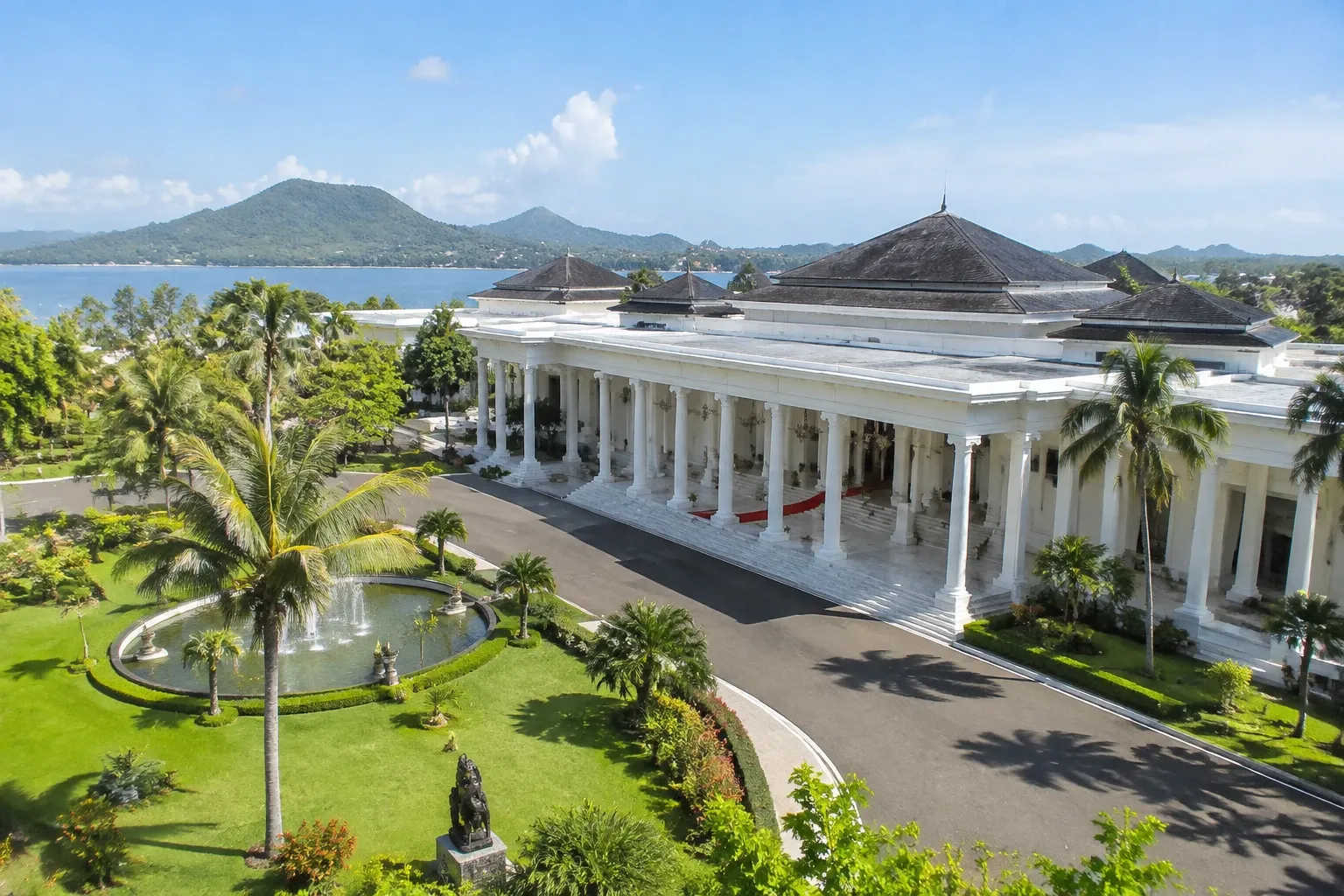
 Indonesia Executive Drama · Photo by SHOX ART on Pexels
For institutional observers, the handling of this episode provides valuable insight into decision-making dynamics within the palace. The administration has opted for transparency regarding the offer to resign while maintaining an outward posture of collective resilience. By permitting Minister Hadi to confirm the resignation discussions publicly while simultaneously directing Gibran towards the courts, the executive branch is seeking to demonstrate accountability without signalling political paralysis.
Furthermore, Gibran's coordination with the Ministry of Primary and Secondary Education underscores a strategy anchored in formal administrative verification. For international businesses operating within Indonesia, predictable bureaucratic and legal procedure remains the ultimate determinant of commercial confidence. The choice to avoid unilateral executive decrees or contentious media campaigns in favour of structured legal review indicates that established institutional guardrails continue to govern executive behaviour.
Institutional Mechanisms and Sovereign Perception
When foreign enterprises evaluate capital deployment across Southeast Asia, legal certainty and institutional predictability outweigh political noise. Indonesia has spent the past decade strengthening its administrative frameworks, establishing clear protocols for commercial dispute resolution, administrative challenges, and corporate structuring.
The decision by the head of state to redirect political friction into the State Administrative Court reflects an executive framework committed to constitutional process over arbitrary disruption.
The deployment of the PTUN to resolve disputes concerning administrative documentation is a well-established practice under Indonesian administrative law. The court operates as an independent tribunal examining the lawfulness of administrative decisions and certificates issued by state bodies. By preparing to place documents dating from primary education to undergraduate completion before an administrative judge, the vice presidency is subjecting executive credentials to strict judicial standards.
This reliance on formal channels helps mitigate the sovereign risk premium often associated with political transitions in emerging economies. The broader international investment landscape, ranging from sovereign debt holders in Jakarta to infrastructure funds and direct foreign investors across the archipelago, generally reacts with caution to sudden cabinet departures. The measured pace adopted by President Prabowo avoids the institutional turbulence that a sudden vice-presidential resignation would inevitably provoke.
| Political Event | Administrative Channel | Immediate Institutional Outcome | | :--- | :--- | :--- | | Academic credential dispute | State Administrative Court (PTUN) | Formal submission of historical educational records | | Educational review coordination | Ministry of Primary and Secondary Education | Preparation for Supreme Court (MA) judicial review | | Resignation offer by Vice President | Bilateral presidential consultation | 2.5-hour dialogue resulting in court guidance |
What This Means for Investors
For real estate and direct infrastructure investors across frontier markets such as South Lombok, political rumblings in central Jakarta must be evaluated through an objective lens. Headline political friction rarely translates into regulatory disruption for long-term real estate assets, provided the rule of law and foundational property statutes remain unaltered.
Direct capital deployment in regions like South Lombok relies on established statutory frameworks that remain insulated from palace personnel adjustments:
- Corporate Title Security: Foreign investors acquiring real estate typically utilise a foreign-owned company (PT PMA) holding a Right to Build title (Hak Guna Bangunan / HGB), which provides 30-year initial tenure with statutory extensions. Hak Milik (freehold) remains strictly reserved for Indonesian citizens only, a constitutional principle unaffected by executive controversies.
- Leasehold Structures: Investors operating through Hak Sewa (leasehold, typically 25 to 30 years with contractual extension clauses) or personal Hak Pakai (right to use, requiring residency permits) operate under civil law protections that remain entirely steady.
- Statutory Acquisition Costs: Transfer duties such as the 5% BPHTB (buyer land acquisition tax) and annual land and building taxes (PBB) are codified in fiscal statute and executed locally via licensed land deed officials (PPAT) and the National Land Agency (BPN).
- Operational Yield Dynamics: Core economic drivers in high-growth destinations continue to be dictated by visitor arrivals and regional infrastructure rather than political discourse in the capital. High-performing assets in South Lombok target honest net rental yields of 7-12% after accounting for realistic occupancy of 55-70%, management fees of 18-22%, and booking platform commissions of 15-20%.
While sensationalist headlines regarding executive resignations often trigger short-term caution among casual observers, experienced allocators recognise that institutional processes safeguard underlying economic fundamentals. Indonesia's national governance model has repeatedly demonstrated resilience through structural disputes, ensuring foreign investment protections and property rights endure.
HubLombok is the editorial arm of Samudra Villas, an active developer in South Lombok. That relationship is disclosed here because it shapes what we cover, not what we conclude.
Stay informed: subscribe to the free Lombok Briefing, published twice a month (the 1st and 15th), for market intelligence like this.
What legal steps will Vice President Gibran take to defend his credentials?
Vice President Gibran will submit his complete educational records to the State Administrative Court (PTUN) and coordinate with the Ministry of Primary and Secondary Education for a Supreme Court judicial review, following specific counsel from President Prabowo.
Did President Prabowo accept Vice President Gibran's offer to resign?
No. State Secretary Minister Prasetyo Hadi confirmed that while Gibran expressed a desire to resign during a 2.5-hour meeting, President Prabowo did not reject or accept the offer, advising him instead to resolve the issue through the legal system.
How does this political dispute affect foreign investors in Indonesia?
Direct foreign investment frameworks remain insulated from executive friction. Legal mechanisms such as PT PMA corporate structures, HGB land titles, and leasehold protections are codified in national statute and continue to operate normally through established administrative channels.

The Lombok Buyer's Field Guide
Legal structures ranked by risk, the honest ROI math line by line, all six zones ranked, and the 24-point due-diligence checklist. The whole book, free in your inbox.
See what's inside