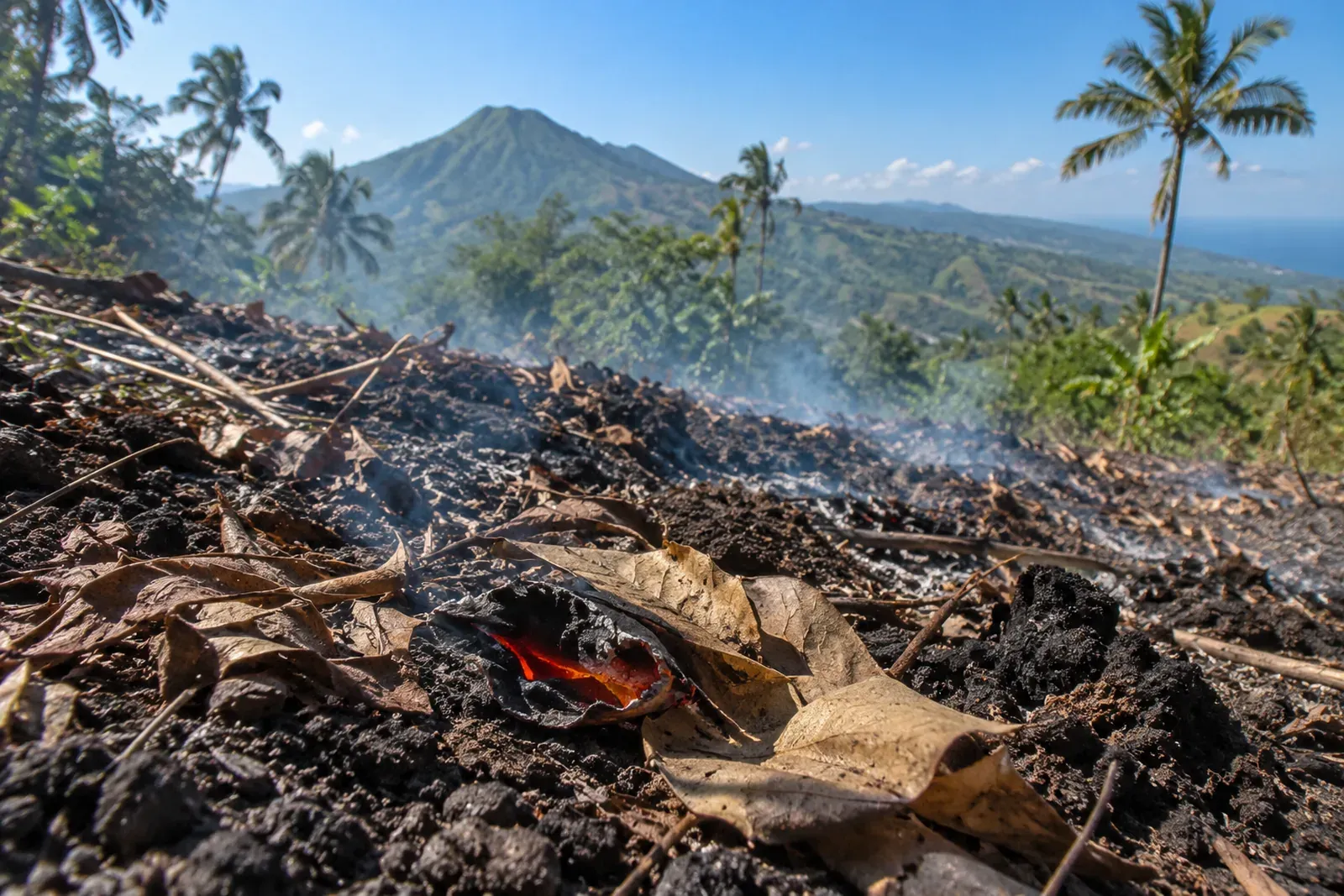
Indonesia Threatens Permit Revocation for Foreign Firms Over Land Fires
President Prabowo Subianto warns foreign enterprises linked to recurring forest fires that operating permits will be cancelled, signalling a strict enforcement era for foreign capital.
Indonesia is sending an unmistakable signal to international corporate concessionaires regarding environmental compliance and regulatory accountability. Speaking in Jakarta, President Prabowo Subianto announced that foreign-backed enterprises responsible for recurring land and forest fires face outright permit revocation, with seized concessions earmarked for reallocation to domestic professionals.
For foreign investors observing Southeast Asia's largest economy, the directive marks a definitive shift from passive oversight to assertive state sovereignty over natural resources. The policy reinforces a broader message across Jakarta's administrative apparatus: regulatory compliance is no longer negotiable, and corporate governance standards will be applied without diplomatic hesitation.
The Two-Strike Doctrine on Environmental Violations
Addressing delegates at the 2026 National Coordination Meeting of the Regional Financial Access Acceleration Team in Jakarta on Thursday, President Prabowo highlighted systemic non-compliance among corporate landholders. The head of state pointed out that several foreign-affiliated groups have operated commercial concessions for more than a decade while repeatedly flouting forestry and land-clearing laws.
"Regarding forest fires, there are indications that many foreign companies bear responsibility. They have held concessions for over a decade, yet some have committed violations three, four, or even a dozen times, some as many as 19 times," Prabowo stated. "If they commit two violations, their permits should simply be revoked."
The President also addressed geopolitical friction surrounding transboundary haze and climate targets, noting that while international observers frequently criticise Jakarta for environmental management, foreign capital often underpins the very enterprises driving illegal burning. The administration confirmed it will publicly name the foreign-affiliated corporate entities implicated in the blazes at an appropriate time.
Under the proposed restructuring, concessions stripped from offending corporations will not lie idle. Instead, the administration intends to transfer operational rights to qualified younger Indonesians and regional specialists, aligning environmental remediation with domestic economic empowerment.
Enforcement Numbers: Police and Ministry Crackdown
The presidential remarks reflect an already accelerating inter-agency enforcement operation involving the Indonesian National Armed Forces (TNI), the National Police (Polri), and the Ministry of Forestry. Across affected provinces, administrative sanctions and criminal investigations are advancing simultaneously.
The regulatory action currently active across government agencies reveals significant operational scale:
- Corporate suspects named: Police have formally named 11 corporations as suspects in active fire investigations, including 3 foreign-invested enterprises.
- Formal investigations underway: The National Police Criminal Investigation Agency (Bareskrim) has escalated 98 corporate-linked fire reports to formal criminal investigations.
- Administrative suspensions: The Ministry of Forestry suspended the Forest Utilization Business Permits of 6 additional companies in Central Kalimantan.
- Cumulative corporate penalties: A total of 32 forestry firms have now received formal administrative penalties.
- Land under sanction: Ministry sanctions now cover concessions spanning over 1.9 million hectares, containing 18,489 hectares directly damaged by fire.
Forestry Minister Raja Juli Antoni reaffirmed that administrative penalties represent only the initial tier of liability. Companies subjected to permit suspensions remain vulnerable to independent criminal charges if state investigators establish deliberate environmental damage.
Regulatory Discipline in the Modern Indonesian Economy
While the current crackdown concentrates on commercial forestry and agricultural concessions in regions such as Central Kalimantan, international investors should view the move within a wider macroeconomic context. The Prabowo administration is establishing clear boundaries around foreign investment, balancing open access to capital markets with unyielding sovereign enforcement.
Historically, multi-jurisdictional corporations operated in resource sectors under the assumption that commercial sanctions would remain confined to financial penalties or protracted civil arbitration. By introducing permit revocation after two confirmed violations, the administration is materially altering corporate risk calculations. The strategy demonstrates that operating licences in Indonesia depend entirely upon adherence to domestic statutes.
This climate of heightened scrutiny also illustrates the divergence between opaque resource extraction models and structured, transparent real estate or infrastructure investments. Across Indonesia, institutional oversight is strengthening, rewarding entities that maintain spotless corporate hygiene, complete notary documentation, and direct statutory alignment.
What this means for investors
For international capital navigating Indonesia, these developments provide both a warning and a reassurance. The central government is demonstrating that it will enforce legal compliance regardless of foreign parentage, eliminating regulatory complacency across all asset classes.
Key takeaways for overseas investors include:
- Compliance as an investment filter: Due diligence can no longer treat environmental and licensing compliance as secondary formalities. Concessions, titles, and operating rights require robust, documented verification through qualified legal channels.
- Reputational and operational exposure: The planned public naming of foreign-affiliated offenders will create immediate global reputational fallout for parent organisations, reinforcing the necessity of strict operational oversight on the ground.
- Preference for transparent legal frameworks: Capital allocators are increasingly distancing themselves from complex concession regimes in favour of transparent, title-verified property acquisitions, such as leasehold or foreign-owned company structures operating within defined tourist and urban commercial zones.
- Institutional maturation: Rigorous state enforcement signals institutional confidence. Economies capable of holding major commercial concessionaires to account offer greater long-term legal security for compliant foreign capital than jurisdictions characterised by selective non-enforcement.
As Indonesia continues its economic trajectory, the separation between compliant international operators and rogue concessionaires will only widen, creating a cleaner, more predictable investment environment for those committed to rigorous operational standards.
Stay informed: subscribe to our free Lombok Briefing, published twice a month (the 1st and 15th), for analysis like this.
Why is Indonesia threatening to revoke foreign company permits?
President Prabowo Subianto announced that foreign-backed companies responsible for repeated forest and land fire violations face permit revocation. Some enterprises have committed up to 19 violations over a decade, prompting a strict policy where two environmental infractions can trigger licence cancellation.
How many corporate entities are currently under investigation?
Indonesian police have named 11 corporations as suspects, including 3 foreign-invested firms, with 98 corporate-linked cases elevated to formal investigations. Separately, the Forestry Ministry has penalised 32 forestry companies, placing more than 1.9 million hectares of concessions under administrative sanctions.
What will happen to land concessions seized from errant foreign firms?
President Prabowo stated that concession land seized from non-compliant foreign enterprises will be reallocated to capable young Indonesians and regional specialists, directly aligning natural resource governance and environmental law enforcement with domestic economic empowerment.

The Lombok Buyer's Field Guide
Legal structures ranked by risk, the honest ROI math line by line, all six zones ranked, and the 24-point due-diligence checklist. The whole book, free in your inbox.
See what's inside