Indonesia’s export overhaul: what it could mean for Lombok investors
Jakarta’s push to reshape natural resource exports could lift regional incomes, strengthen infrastructure and alter the investment case for Lombok.
Indonesia’s latest policy debate is not just about commodities. It is about the shape of growth, the geography of capital, and which provinces will capture the next wave of industrial spillovers. The MPR’s public backing for President Prabowo’s plan to overhaul natural resource exports signals a familiar but consequential direction: fewer raw shipments, more domestic processing, and a stronger attempt to keep value onshore.
For Lombok investors, this matters even if the island is not a mining province in the conventional sense. Policy shifts in Jakarta often travel through the economy in indirect but material ways: through employment, logistics, infrastructure budgets, household spending, and ultimately the depth of demand for tourism, residential property and small business activity across the archipelago.
The Context
According to Antara Business, Eddy Soeparno, Deputy Speaker of Indonesia’s People’s Consultative Assembly (MPR), has voiced strong support for Prabowo’s plan to overhaul natural resource exports. The broad policy logic is clear enough. Rather than exporting unprocessed commodities and importing more expensive finished goods, the government wants to expand domestic downstream industries, capture more margin locally and build a more resilient industrial base.
This is hardly a new idea in Indonesia. The country has spent years testing various forms of resource nationalism, export restrictions and processing mandates. Nickel is the most obvious example, where policy has already encouraged large-scale smelting capacity and attracted heavy foreign investment. The new debate suggests that the administration may want to apply similar thinking more widely across sectors linked to minerals, energy inputs and other extractive exports.
The economic argument has three strands.
- First, processing at home can increase GDP contribution per tonne extracted.
- Second, it can create better-paid industrial jobs than raw commodity extraction alone.
- Third, it may reduce the long-running pattern in which Indonesia exports value and imports finished products.
For investors, however, the question is not whether downstreaming sounds sensible. It is whether the policy can be implemented consistently, financed intelligently and integrated with wider regional development.
“The strategic challenge is not the slogan of downstreaming, but the discipline required to make it investable.”
That discipline matters because export reform can cut two ways. If executed well, it can deepen industrial capacity, improve local supply chains and raise tax receipts over time. If handled abruptly, it can also disrupt export revenues, strain working capital, and create uncertainty for businesses that depend on commodity flows. The real issue is therefore not ideology, but execution.
To put the scale in perspective, Indonesia remains one of South-East Asia’s most important resource economies. Any meaningful shift in export structure can influence the rupiah, manufacturing input costs, port activity and regional government revenues. These are not abstract variables. They shape the confidence of domestic buyers, the appetite of developers and the liquidity available for tourism-linked investment across areas such as South Lombok and the corridor around Lombok International Airport.
Why This Matters Beyond the Mine Site
For Lombok, the connection runs through the island’s role in Indonesia’s broader investment map. Lombok is not competing as an extractive centre. It is competing as a beneficiary of national growth: a place where improved infrastructure, stronger domestic demand and rising tourism receipts can translate into higher occupancy, better land absorption and firmer long-term asset values.
That matters because Lombok’s investment case has increasingly been framed as a Bali overflow thesis. As Bali becomes more expensive and more saturated, capital and travellers look eastward for lower entry points and stronger yield profiles. In South Lombok, investors are still often finding entry opportunities in the €95,000 to €350,000 range, depending on land position, build quality and proximity to the coast or transport links. In a market where well-structured assets can still target 12-22% gross yields, any national policy that supports incomes and mobility can strengthen the underlying demand story.
The channel from export policy to property demand is indirect, but real:
- More domestic processing can support industrial hiring outside Java.
- Stronger regional wages can lift internal travel and domestic consumption.
- Improved logistics and ports can benefit island economies that depend on supply chains.
- A more credible growth narrative can increase inbound and domestic investor confidence.
There is also a fiscal angle. If downstreaming improves the value captured from exports, the government may have greater room to fund roads, ports, utilities and airport-linked capacity. For Lombok, infrastructure is not a side issue; it is the market. Accessibility determines the pace at which villas, serviced land and hospitality projects can move from speculative to bankable.
A useful way to read the policy is as part of a larger Indonesian investment cycle, rather than a stand-alone commodities story. Lombok’s market is sensitive to national momentum, because many buyers are not purchasing only a villa or a plot. They are buying an operating environment: stable domestic growth, continued tourism expansion, and a government willing to spend on connective infrastructure.
| Theme | Potential upside | Main risk | |---|---|---| | Downstreaming of exports | Higher value capture, more jobs, stronger tax base | Policy inconsistency or abrupt restrictions | | Regional infrastructure | Better logistics, airport and port connectivity | Delays, budget pressure, execution gaps | | Lombok property demand | Stronger investor confidence and end-user demand | Overbuilding in the wrong micro-locations | | Tourism spend | More domestic travellers and higher ancillary demand | External shocks and uneven seasonality |
The policy debate also arrives at a moment when Lombok’s tourism narrative is already gaining traction. Industry watchers have pointed to visitor growth, improving international visibility and stronger interest in the island as a premium alternative to Bali. In that context, macro policy matters because it affects not only buyers from abroad, but also Indonesian professionals, entrepreneurs and family offices who increasingly see island real estate as both an income asset and a hedge against domestic inflation.
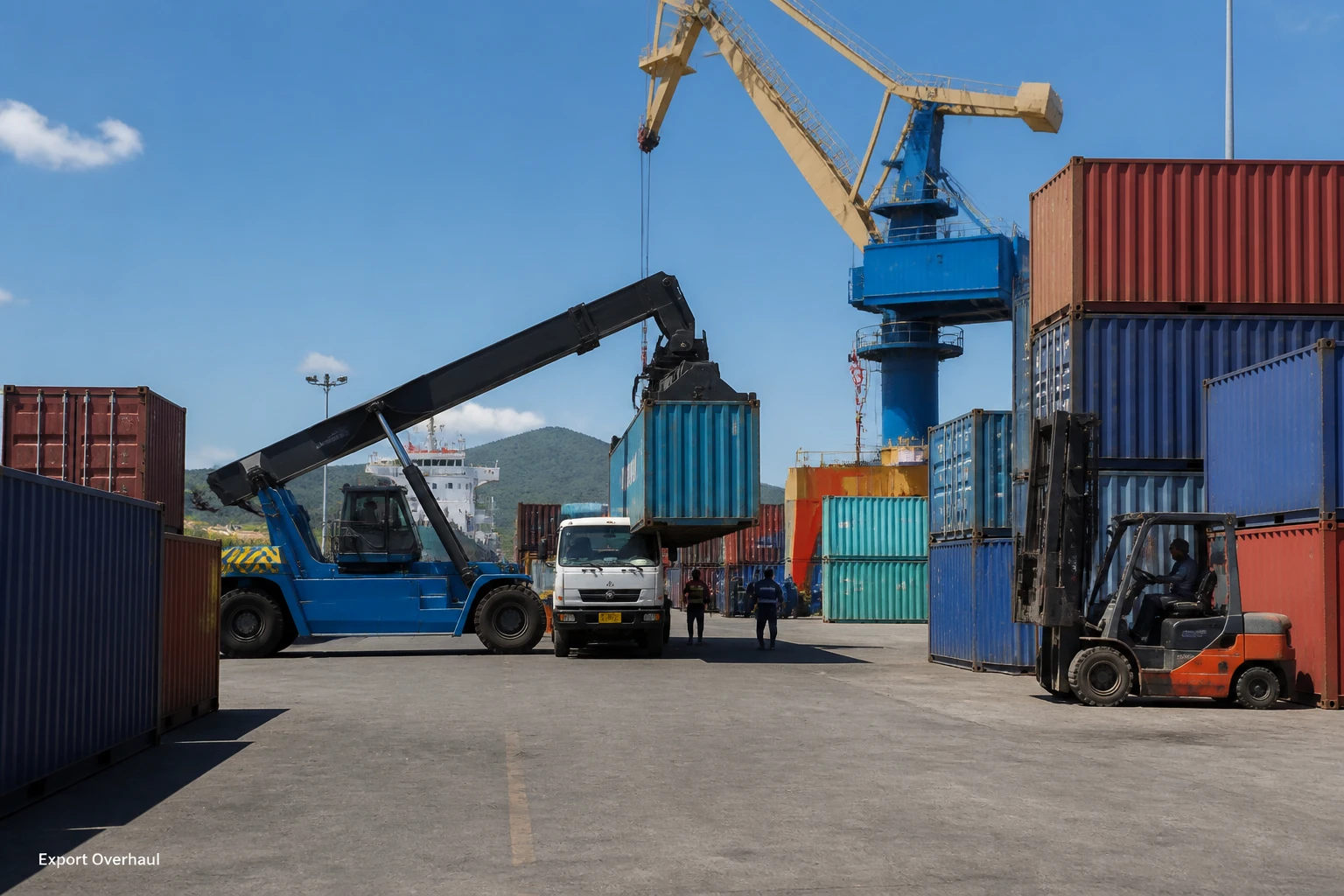
 Indonesia’s export overhaul · Photo by Tom Fisk on Pexels
The most important point for property investors is that national industrial policy can strengthen the island’s demand floor without necessarily changing its immediate supply dynamics. Lombok remains a market where location discipline matters. Coastal access, road quality, beach quality, water reliability, and the credibility of the operator all remain decisive. A stronger economy does not rescue a weak project. But it can reward the better-located, better-financed assets more quickly.
What This Means for Investors
For a Lombok-focused investor, the right interpretation is not to chase commodity headlines. It is to understand how the export overhaul fits into the broader capital cycle. If Jakarta succeeds in capturing more value from natural resources, the benefit should eventually show up in wages, public spending and investor sentiment. Those three variables are the quiet engines behind second-home demand, resort occupancy and land price resilience.
The implications are practical:
- If you are looking at South Lombok, focus on assets that can monetise both domestic and international demand rather than relying on a single buyer profile.
- If you are comparing yield opportunities, stress-test assumptions against occupancy, not just projected nightly rates.
- If you are considering land banking, prioritise corridors where infrastructure visibility is improving, especially around airport access and coastal routes.
- If you are funding off-plan product, assess the developer’s balance sheet and delivery record as carefully as the renderings.
It is also worth noting that the macro backdrop remains supportive for a differentiated island market. The argument for Lombok has never been that it should mirror Bali. It is that it should offer a more selective, higher-conviction version of the same regional tourism story: lower acquisition prices, room for appreciation, and a still-emerging premium hospitality pipeline.
That is why the current export policy discussion matters. It reinforces a broader theme investors should not ignore: Indonesia is trying to move up the value chain, and when it does, the gains rarely stay in one sector. They flow into transport, services, housing and travel. Lombok, as a frontier leisure and lifestyle market, can benefit if that policy ambition translates into execution.
For now, the conclusion is measured rather than dramatic. The MPR’s support for Prabowo’s export overhaul is a signal that downstreaming remains central to the administration’s economic imagination. Whether it becomes a durable growth engine will depend on consistency, financing and administrative discipline. But for investors watching Lombok, the direction of travel is broadly constructive: a more value-added Indonesian economy is usually a better backdrop for a rising island market.
Stay informed — subscribe to the free Lombok Briefing for weekly market intelligence like this.
How does Indonesia's export overhaul policy affect Lombok property investors?
The link is indirect but real. Greater domestic processing can support industrial hiring outside Java, raising regional wages, domestic travel and consumption. Improved logistics and port investment can benefit island economies like Lombok. A more credible national growth narrative can also increase inbound and domestic investor confidence, strengthening demand for villas and serviced land.
What entry price range should foreign buyers expect in South Lombok?
In South Lombok, investors are still finding entry opportunities in the €95,000 to €350,000 range, depending on land position, build quality and proximity to the coast or transport links. Well-structured assets in the area can still target 12 to 22 percent gross yields, making it attractive compared to more saturated markets like Bali.
Why is Lombok described as a Bali overflow market for property investors?
As Bali becomes more expensive and more saturated, capital and travellers look eastward for lower entry points and stronger yield profiles. South Lombok still offers entry opportunities in the €95,000 to €350,000 range, with well-structured assets targeting 12 to 22 percent gross yields, positioning the island as an accessible alternative for buyers priced out of Bali.

The Lombok Buyer's Field Guide
Legal structures ranked by risk, the honest ROI math line by line, all six zones ranked, and the 24-point due-diligence checklist. The whole book — free in your inbox.
See what's inside