Indonesia’s export gate is tightening: June 1 reform reshapes commodity trade
Jakarta is moving strategic commodity exports onto a state-managed track from 1 June. Investors should watch pricing power, FX flows and contract risk.
Indonesia has moved from rhetoric to implementation. From 1 June, a new export framework for strategic natural resources begins to take effect, placing key commodity flows under tighter state supervision and, in some cases, through state-owned exporters. For investors, the immediate question is not whether Jakarta wants more control. It is how far that control will reach before it begins to alter pricing, settlement and the reliability of long-standing commercial arrangements.
The Context
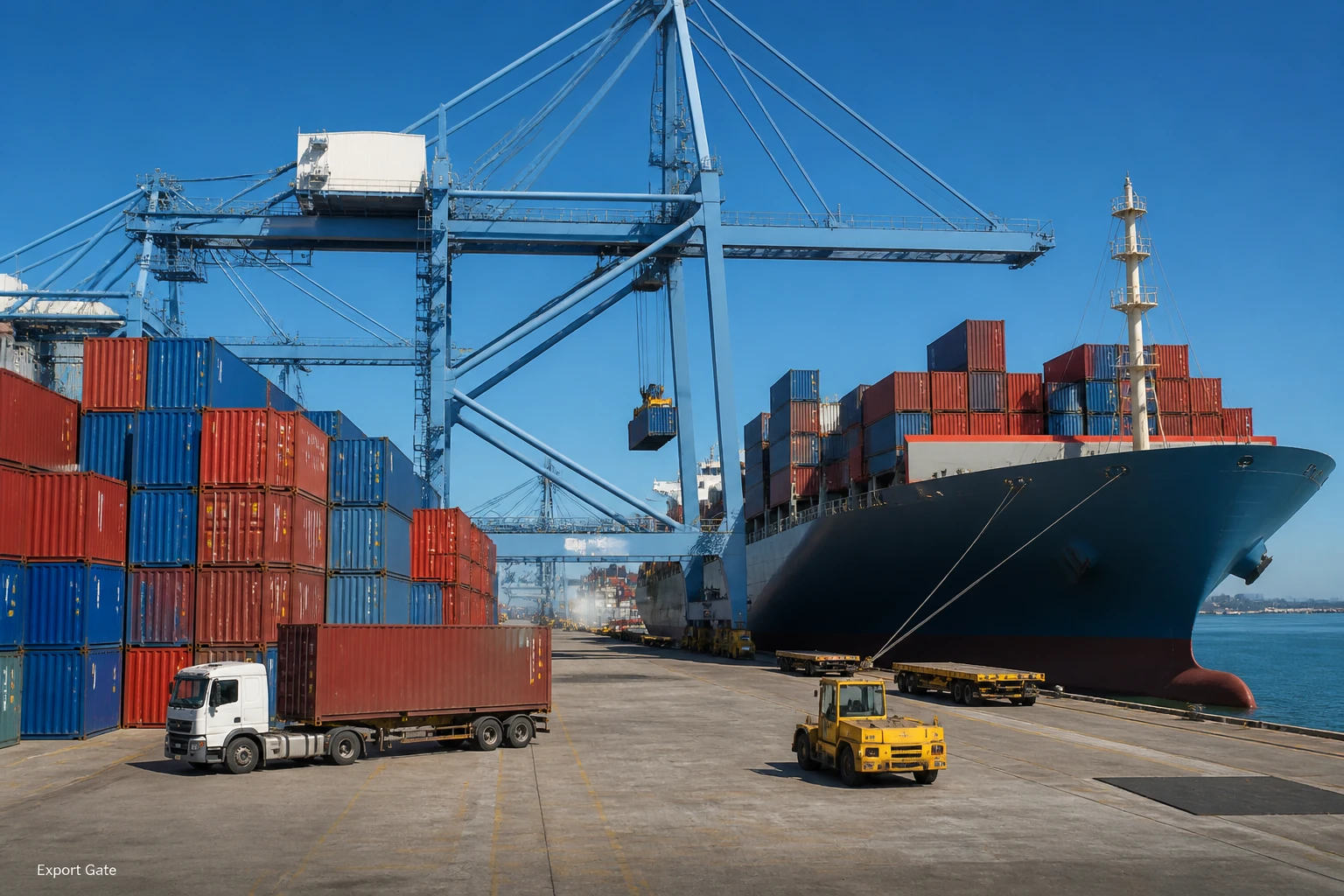
 Indonesia’s export gate is tightening · Photo by Markus Winkler on Pexels
President Prabowo Subianto used a parliamentary address this week to frame the reform as an anti-leakage measure, arguing that the country has lost vast sums through under-invoicing, transfer pricing and illegal extraction. Antara reported that the administration sees a potential US$150 billion a year in recoverable value from better governance of natural-resource exports, while AP noted the president’s claim that the country had lost as much as US$908 billion because commodities were undervalued at export.
That is the political logic. The market logic is more nuanced.
Indonesia is not a marginal player. It is the world’s largest exporter of thermal coal and palm oil, and it also sits on some of the most strategically important mineral endowments in the world. When Jakarta changes the rules of the export channel, it is not merely adjusting paperwork. It is attempting to reshape the way cash, contracts and foreign exchange move through the system.
The latest reform appears to operate in phases. Petromindo reported that documentation for coal, crude palm oil and ferroalloys would begin processing through the newly established PT Danantara Sumberdaya Indonesia from 1 June, before the full export process is transferred later in the year. In other words, this is not a single overnight switch. It is a managed migration from private or semi-private routing to a more centralised state structure.
“The primary objective of this policy is to strengthen oversight and monitoring, and to combat under-invoicing, transfer pricing and the diversion of export proceeds.”
For commodity investors, that sentence matters because it signals the government is looking at the entire trade chain, not just the final invoice. That can be positive if it improves transparency. It can also introduce execution risk if the new framework slows settlement, complicates approvals or forces contract renegotiation.
What Changes First
The most important detail is the sequencing. The policy is not being presented as a blanket shutdown of exports. Rather, Jakarta appears intent on creating a centralised gatekeeper for selected commodities while preserving continuity for the broader economy. That reduces the chance of an immediate supply shock, but it does not eliminate transition risk.
Here is the practical map investors should keep in mind:
| Element | Reported direction | Investor implication | |---|---|---| | Start date | 1 June 2026 | The market enters the transition window immediately | | Commodities | Coal, crude palm oil, ferroalloys | Exposure is concentrated in core export earners | | Export channel | State-owned enterprise / state-managed process | Greater policy influence over pricing and routing | | Policy aim | Stop under-invoicing and transfer pricing | Potentially stronger state revenue capture | | Transition model | Phased handover | Lower disruption than a hard launch, but still operationally sensitive |
Two points stand out.
First, the government is trying to capture more value upstream and keep more foreign exchange within the domestic system. That is consistent with broader emerging-market efforts to tighten capital retention and improve fiscal capture from natural resources. It also aligns with Prabowo’s wider growth narrative: more disciplined resource management, more state revenue and stronger bargaining power in global markets.
Second, there is a reputational dimension. Indonesia has long tried to move beyond the image of a simple bulk exporter by forcing more value-added activity onshore. This policy sits in that same tradition. The difference is that it reaches deeper into export mechanics. If the state becomes the default commercial intermediary, then the credibility of the process will matter as much as the headline policy.
That is why industry groups are already signalling caution. The Indonesian Mining Association has warned, in effect, that legal certainty and long-term contract integrity must be preserved. That is not a token complaint. Mining and plantation businesses are typically financed against multi-year offtake agreements, hedge structures and shipping schedules. Any change that undermines those arrangements raises the cost of capital.
The investor takeaway is straightforward: policy intention and operational execution are not the same thing.
Why Markets Should Care
At first glance, this may look like a domestic governance story. It is not. Indonesia is a key node in the global commodity cycle, and policy changes of this kind can spill into pricing, shipping and FX behaviour far beyond Jakarta.
The likely market channels are:
- Commodity pricing: if export routing becomes slower or more centralised, spot supply may tighten temporarily for certain grades.
- Contract risk: existing offtake agreements could face amendment pressure if the new system changes who signs, invoices or settles.
- FX flows: the government wants more export proceeds to remain visible and, presumably, more controllable inside the banking system.
- Fiscal upside: stronger enforcement can raise tax and royalty collection, supporting the budget narrative.
- Investment sentiment: the same reform that strengthens governance can also raise concerns about state intervention if implementation is opaque.
For foreign investors, the critical question is whether this becomes a disciplined administrative reform or the beginning of a more interventionist export regime. The distinction matters because it influences how global buyers, lenders and insurers price Indonesian counterparty risk.
There is also a wider macro backdrop. Indonesia has been trying to manage currency pressure and maintain investor confidence while balancing growth and social spending. A stronger export take may help the state, but if it unsettles the private sector too sharply, the medium-term cost could be higher borrowing costs and weaker foreign participation. In a country where commodities remain central to both external accounts and fiscal revenues, that trade-off is not theoretical.
The policy could, however, generate some benefits if executed with precision. Better export monitoring can reduce leakage, improve revenue collection and strengthen the credibility of official trade data. That would be especially relevant if the government wants to build a more investable long-term story around downstream industrialisation, energy security and mineral processing.
For the property and tourism reader, the link is indirect but real. When a commodity supercycle is managed more effectively, it can feed into infrastructure spending, regional employment and banking liquidity. Those are the conditions that eventually support domestic demand, including in growth corridors such as Bali-overflow locations and South Lombok, where entry pricing remains materially lower than mature Indonesian resort markets and where the broader thesis still rests on tourism-linked capital formation. If this policy succeeds, the state could have more fiscal room to back roads, airports and public works. If it misfires, the risk is the opposite: higher friction, lower confidence and more caution from private capital.
What This Means for Investors
This is a live policy shift with three immediate implications.
First, watch the implementation calendar, not just the announcement. The difference between documentation processing on 1 June and full transaction control later in the year is material. Early-stage administration may be manageable; full export centralisation would be more disruptive and more consequential for pricing power.
Second, separate governance gains from operational risk. A cleaner export system can improve revenues and reduce leakage, but only if the new process is fast, predictable and commercially credible. Any sign of bottlenecks, payment delays or arbitrary approvals would weaken the investment case even if the policy is popular domestically.
Third, monitor the signalling effect. If Jakarta demonstrates that it can centralise export channels in coal, palm oil and ferroalloys without a major dislocation, the model could be extended or deepened elsewhere in the commodity chain. That would matter not only for miners and agribusiness groups, but also for lenders, shipping firms and counterparties with Indonesia exposure.
The base case is that the government wants to show strength without triggering a supply shock. That means a staged rollout, selective exemptions and careful messaging to investors. But even under that scenario, the export relationship is changing. The balance of power is shifting further towards the state, and global buyers will need to price that into future contracts.
For investors in Indonesia-linked assets, the message is clear: this is not just a policy headline. It is a structural reminder that commodity flows, FX management and state revenue strategy are becoming more tightly linked in Jakarta. In the near term, that may support the government’s fiscal ambitions. Over time, the market will judge the reform on a stricter test: whether greater control also delivers greater certainty.
Stay informed, subscribe to the free Lombok Briefing for market intelligence like this, published twice a month.
What commodities are covered by Indonesia's June 1 export reform?
The policy targets coal, crude palm oil and ferroalloys. Documentation for these commodities begins processing through PT Danantara Sumberdaya Indonesia from 1 June 2026, before full export is transferred later. Indonesia is the world's largest exporter of thermal coal and palm oil.
How will Indonesia's export reform affect existing contracts?
Existing offtake agreements could face amendment pressure if the new system changes who signs, invoices or settles. The Indonesian Mining Association has warned that legal certainty and long-term contract integrity must be preserved, as these agreements typically finance mining and plantation businesses.
Is Indonesia's export reform being implemented immediately?
No. The reform operates in phases. From 1 June 2026, documentation processes through the new state channel, PT Danantara Sumberdaya Indonesia, before full export is transferred later in the year. This phased approach reduces immediate supply shock but does not eliminate transition risk.

The Lombok Buyer's Field Guide
Legal structures ranked by risk, the honest ROI math line by line, all six zones ranked, and the 24-point due-diligence checklist. The whole book, free in your inbox.
See what's inside