Indonesia Says Debt Remains Manageable as Rupiah Weakens Past Rp18,000
Jakarta is signalling calm as the rupiah slips beyond Rp18,000 per US dollar, but investors should watch funding costs, imported inflation and bond sentiment.
Indonesia’s finance ministry is trying to draw a clear line between currency weakness and fiscal stress. In a live market where the rupiah has slipped beyond Rp18,000 per US dollar, the message from Jakarta is that sovereign debt remains serviceable and the state’s balance sheet is still under control.
That distinction matters for investors. A softer currency can rattle local assets, lift the cost of imports and sharpen volatility across rates and equities, but it does not automatically signal a financing crisis. The immediate question is whether this move stays an orderly macro adjustment or starts to contaminate sentiment in government bonds, banks and consumer-facing sectors.
The Context
The latest comments, carried by Antara Business, came against the backdrop of a sharper-than-comfortable rupiah slide. The currency’s move through Rp18,000 per US dollar is psychologically important because it pushes investors back into the familiar debate over external vulnerability, import pricing and the government’s ability to defend stability without over-tightening domestic conditions.
For now, the authorities are signalling that the state can still meet its obligations. That is not a trivial point. When emerging-market currencies weaken, investors tend to ask three questions in quick succession:
- Can the sovereign still refinance itself at reasonable rates?
- Does the currency move reflect transient dollar strength or a deeper local imbalance?
- Will policymakers respond with support measures that are credible but not growth-crushing?
Indonesia enters this episode with several buffers that markets know well: a relatively deep domestic investor base, an established local bond market and a central bank that has spent years building credibility around stability. Those buffers do not make the rupiah invulnerable, but they do reduce the odds that a single exchange-rate move translates into a funding crisis.
The key market distinction is between currency discomfort and debt distress.
That is why today’s dispatch is not simply about a number on a screens. It is about whether the price action begins to change the cost of capital across the economy. If investors conclude that the weak rupiah is a one-off adjustment, the read-through to sovereign credit may be limited. If, however, they begin to price a more persistent depreciation path, local financing conditions can tighten quickly.
There is also a second-order effect that global investors should not miss. For countries that import fuel, machinery and a wide range of intermediate goods, a weaker currency can feed into domestic prices with a lag. That can complicate policy, particularly if the central bank must choose between cushioning growth and protecting the exchange rate.
Why Markets Care Now
The immediate market implications are broader than the currency pair itself. A move beyond a widely watched threshold such as Rp18,000 can affect portfolio behaviour even if the macro fundamentals remain intact. In practice, investors often react first to the signal and only later to the underlying data.
The table below captures the main transmission channels that matter in the coming weeks:
| Channel | Likely near-term effect | Investor relevance | |---|---:|---| | Rupiah depreciation | Higher imported costs | Pressure on margins for import-heavy sectors | | Sovereign debt service | Manageable for now | Supports confidence in local bonds | | Inflation expectations | Slight upward bias | Could alter central bank tone | | Equity sentiment | More selective | Favour domestic earners over importers | | Policy response | Watchful, not panicked | Credibility test for officials |
The key is that this is a macro story with micro consequences. A weaker rupiah does not hit all assets equally. Companies with dollar revenues or strong pricing power are typically better insulated than those reliant on imported inputs. Banks may be relatively resilient if funding remains stable, but sentiment can still soften when the currency sells off quickly.
For overseas investors, the current situation is especially relevant because Indonesia often sits in a portfolio as a higher-yielding emerging-market allocation rather than a pure defensive holding. That means the market can attract capital when carry is favourable, but it can also see rapid outflows when the dollar strengthens or risk appetite fades.
The authorities’ insistence that debt remains manageable should therefore be read in the context of confidence management as much as macro arithmetic. If policymakers can keep the market convinced that the weakness is orderly, they may avoid a self-reinforcing cycle in which currency pressure drives more selling.
There is a useful comparison here with other markets that have faced similar pressure. When local authorities communicate clearly and fiscal credibility is intact, currency weakness can remain contained. When communication is weak or external financing needs look larger, the same exchange-rate move can become a bigger capital-market event.
Investors should also separate sovereign risk from household and corporate pain. Even if the state can service debt comfortably, the private sector may still feel strain through higher import costs, hedging expenses and margin compression. That matters for listed consumer names, manufacturers and sectors exposed to foreign-currency liabilities.
In other words, the phrase “manageable debt” is reassuring, but it is not the same as “no consequences”. It suggests resilience at the sovereign level, not immunity across the broader economy.
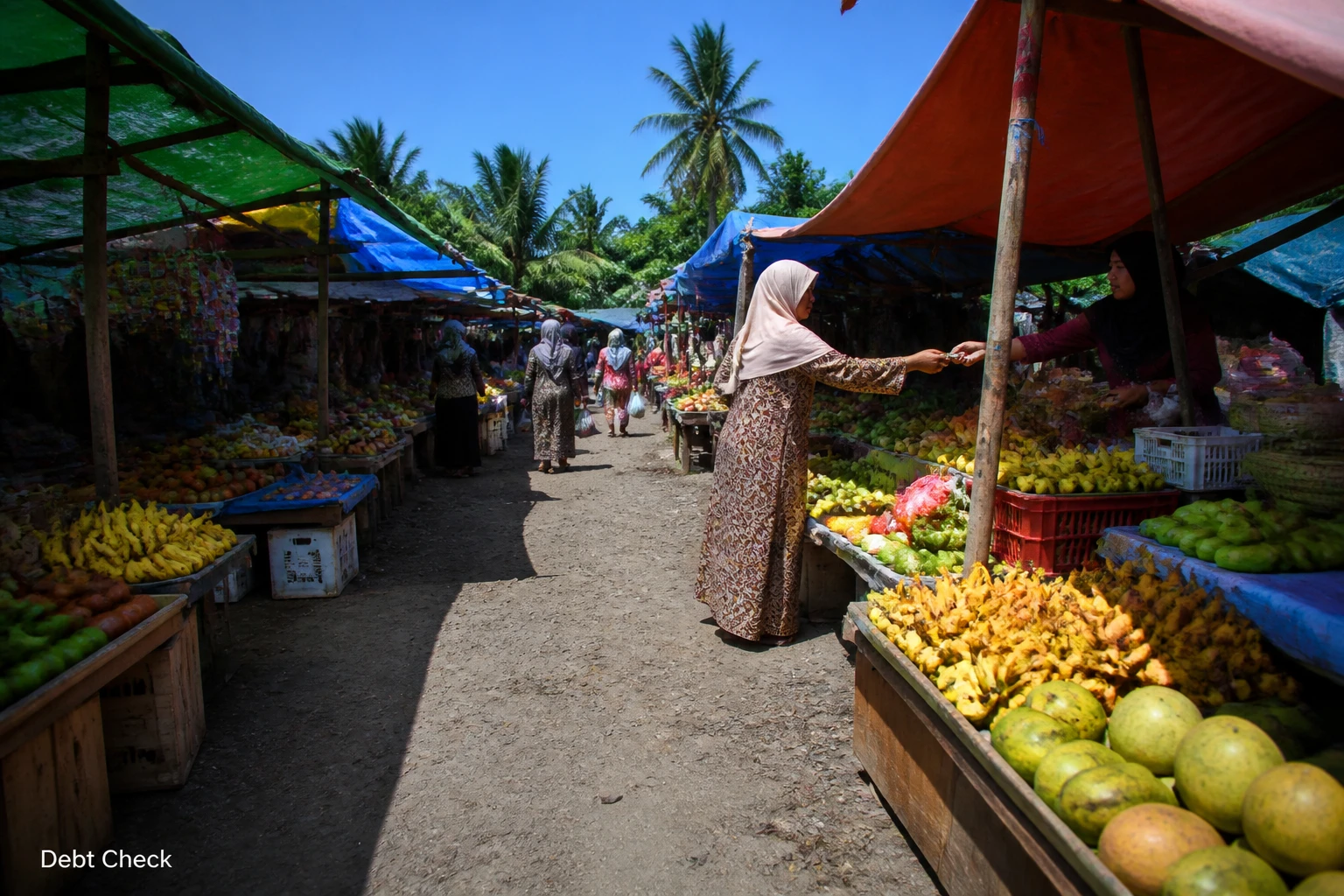
 Indonesia Says Debt Remains Manageable as Rupiah Weakens Past Rp18,000 · Photo by Ahsanjaya on Pexels
What This Means for Investors
For investors with exposure to Indonesia or the wider ASEAN complex, this is a moment for discipline rather than drama. The current signal is not that the country is heading into a debt event; it is that currency weakness may begin to influence asset selection, timing and hedging decisions more noticeably.
The most important takeaways are straightforward:
- Government bonds: The sovereign narrative remains intact for now, which should help prevent a disorderly repricing unless depreciation accelerates further.
- Equities: Favour domestic franchises with pricing power and limited import dependence. Be more cautious on businesses with thin margins and foreign-currency costs.
- FX exposure: Unhedged investors should review rupiah risk more seriously if the currency stays under pressure.
- Policy watch: The next signal will come from whether officials lean more heavily on stability measures or choose to emphasise growth protection.
- Sentiment risk: Threshold moves can matter as much as fundamentals in the short run, especially when global dollar strength dominates.
For those looking at Southeast Asia as a portfolio allocation, Indonesia still offers scale, domestic demand and a policy framework that has so far avoided the kind of structural fragility that turns currency weakness into crisis. But that does not make the present move irrelevant. The market will be watching for any sign that a weaker rupiah starts to affect inflation expectations, funding conditions or official guidance.
There is also a broader lesson for global allocators. In an era of elevated dollar sensitivity, even countries with credible fiscal frameworks can see their asset prices re-rated quickly when FX momentum turns. That creates opportunity for investors who understand the difference between noise and stress, but it also punishes complacency.
The immediate verdict, based on today’s reporting, is calm rather than complacent: debt remains serviceable, the state is not flashing red, and the main risk is a slower grind in sentiment rather than a sudden balance-sheet shock. That is often how important macro episodes begin - not with a crisis headline, but with a currency move that forces investors to look more closely at what is truly being priced.
Stay informed, subscribe to the free Lombok Briefing for market intelligence like this, published twice a month.
Has the rupiah falling past Rp18,000 per US dollar triggered a debt crisis in Indonesia?
Not according to Indonesia's finance ministry, which states that sovereign debt remains serviceable and the state's balance sheet is under control. The key distinction officials are drawing is between currency discomfort and debt distress. Indonesia's deep domestic investor base and established local bond market reduce the risk that an exchange-rate move translates into a funding crisis.
Which sectors are most exposed when the rupiah weakens?
Companies reliant on imported inputs face higher costs and margin compression, while those with dollar revenues or strong pricing power are typically better insulated. Consumer names, manufacturers and businesses with foreign-currency liabilities feel the most strain. Banks may be relatively resilient if funding stays stable, though sentiment can soften when the currency sells off quickly.
Does 'manageable debt' mean there are no consequences for the Indonesian economy?
No. The article makes clear that resilience at the sovereign level does not mean immunity across the broader economy. Even if the state can meet its obligations, a weaker rupiah feeds into higher import costs, tighter hedging expenses and inflation pressure with a lag, which can complicate central bank policy and squeeze the private sector.

The Lombok Buyer's Field Guide
Legal structures ranked by risk, the honest ROI math line by line, all six zones ranked, and the 24-point due-diligence checklist. The whole book, free in your inbox.
See what's inside