Indonesia Courts Nobel Laureates in New Research Push
President Prabowo’s outreach to Nobel laureates signals a sharper ambition for Indonesia’s research ecosystem and scientific partnerships.
Quick answer: President Prabowo Subianto has invited Nobel laureates to work with Indonesian researchers and academics, signalling a renewed official push to strengthen scientific talent and research capacity. For Lombok investors, the immediate effect is indirect, but the meeting reinforces Indonesia’s intention to deepen international collaboration across science, technology and environmental priorities.
Indonesia’s investment story is often read through tourism, infrastructure and natural resources. Friday’s State Palace meeting offers a different, more institutional signal: the country’s leadership is seeking intellectual partnerships that could strengthen the domestic research ecosystem over time. The announcement is not a property-market catalyst in itself, but it matters to investors assessing the breadth and direction of Indonesia’s long-term development agenda.
The Context
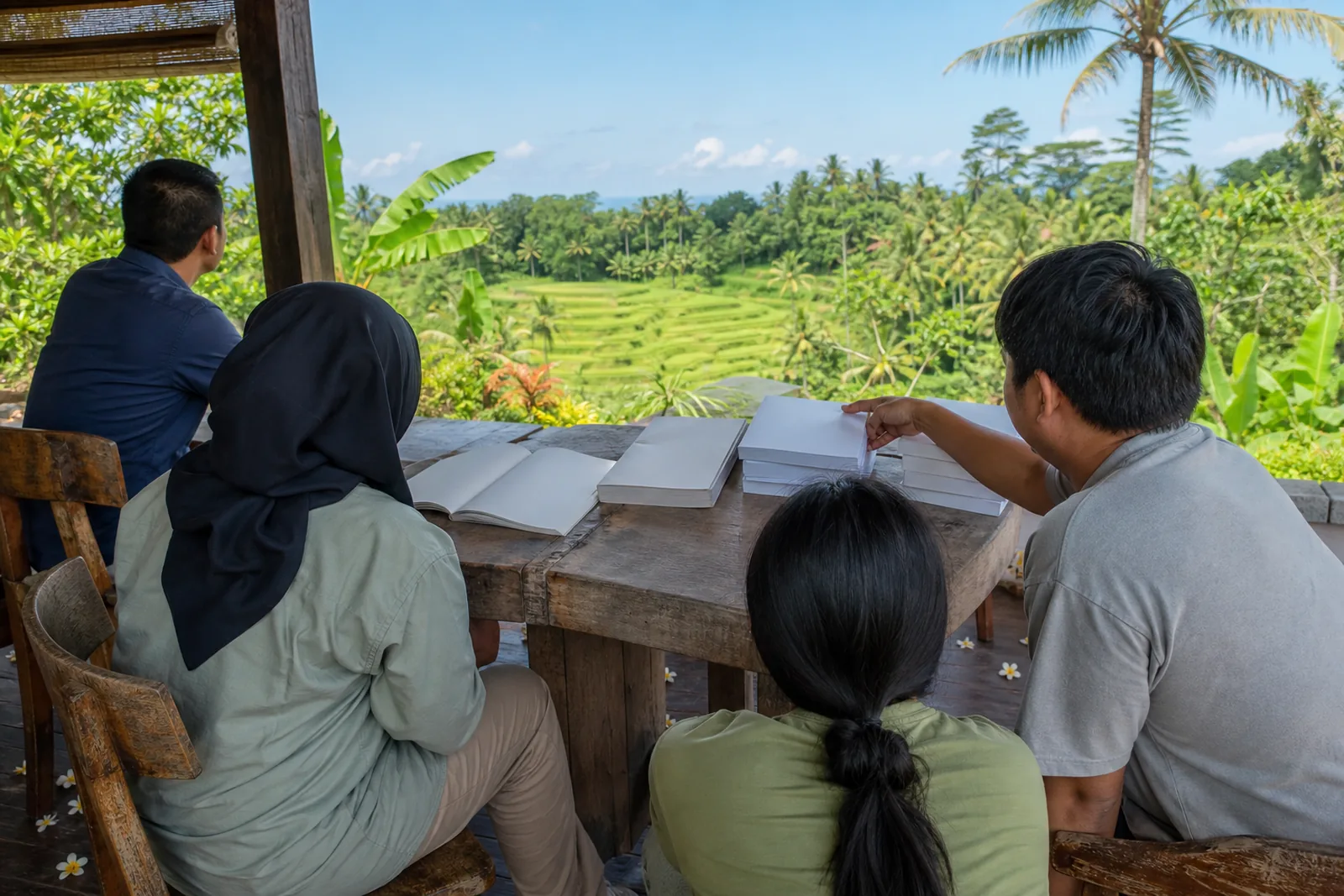
According to Arif Satria, head of Indonesia’s National Research and Innovation Agency, known as BRIN, President Prabowo welcomed Timor-Leste President Jose Ramos-Horta and several Nobel laureates at the State Palace on Friday. The President invited the laureates to collaborate with Indonesian researchers and academics, with the stated aim of strengthening the country’s research ecosystem and developing scientific talent.
The visitor list brought together figures from peace, chemistry, medicine, physics and economics. Ramos-Horta, a Nobel Peace Prize recipient, attended alongside fellow peace laureate Kailash Satyarthi. The meeting also included chemistry laureates Frances H. Arnold and Benjamin List; medicine laureate Tim Hunt; physics laureate Brian P. Schmidt; and economics laureates Robert C. Merton and James A. Robinson.
This was more than a ceremonial exchange. Satria said Prabowo encouraged practical cooperation and expressed hope that it could be implemented soon. The emphasis, as reported by BRIN, was on connecting internationally recognised scholars with Indonesian researchers and academic institutions.
For overseas investors, the relevant point is the official framing. Indonesia is presenting scientific capability as part of national capacity-building, rather than as a narrow academic concern. That is a useful distinction in a market where investability depends not only on individual projects, but also on the quality of institutions, skills and cross-border relationships that surround them.
“Prabowo encouraged the laureates to work with Indonesian researchers and academics,” BRIN Head Arif Satria said, describing an effort to strengthen Indonesia’s scientific talent.
Why the Meeting Matters Beyond Research
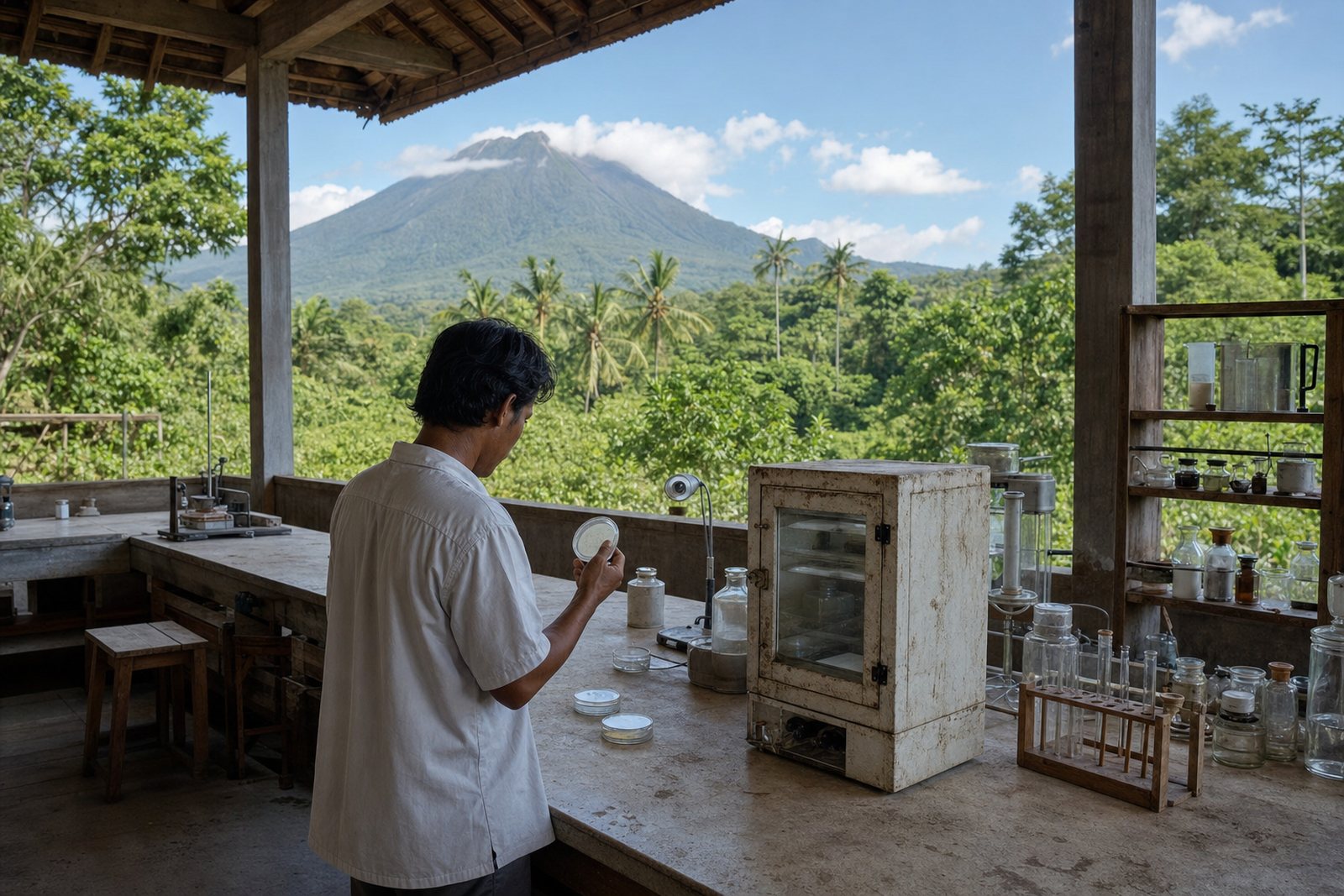
BRIN already has experience working with Nobel laureates, Satria said. He cited Japanese chemist Susumu Kitagawa, whose work with the agency concerns natural-gas research using metal-organic framework technology. Kitagawa is establishing a sister laboratory in Indonesia to explore the production of natural gas at lower pressure using his invention, according to Satria.
That detail gives the President’s invitation a practical backdrop. It suggests that the proposed engagement is not being presented as a first encounter between Indonesian institutions and global scientific networks, but as an extension of existing cooperation.
The meeting also placed research within a broader regional and policy agenda. Prabowo said Indonesia follows a good-neighbour policy through stronger science and technology cooperation with Southeast Asian countries. He outlined government priorities including the free nutritious meals programme, fishermen’s villages and environmental conservation.
Environmental protection featured directly in the discussion. After learning that the laureates had visited a conservation site in Lampung, Prabowo reaffirmed his commitment to protecting Indonesia’s flora and fauna, Satria said.
For investors, these strands should be read carefully and separately:
- Research collaboration can strengthen domestic capability, but the announcement does not specify commercial projects, investment terms or implementation milestones.
- Regional science and technology cooperation may support Indonesia’s wider policy positioning, though it does not create an immediate local-market return.
- Conservation and community priorities are material to the long-term operating environment, particularly in destination markets where natural assets and local consent are central to value.
 Indonesia Courts Nobel Laureates in New Research Push · Illustration: HubLombok (AI-generated)
A Signal of Institutional Ambition, Not an Investable Event
The clearest immediate significance is political and institutional. By convening Nobel laureates and inviting collaboration with Indonesian academics, Prabowo is associating the government’s development agenda with research capability and international exchange.
That is relevant for a long-horizon investor because scientific capacity is linked, in broad terms, to the ability of an economy to solve problems, train specialists and absorb new technologies. Yet the announcement should not be overstated. The source identifies the invitation, existing BRIN cooperation involving Kitagawa, and the President’s stated priorities. It does not set out funding commitments, signed agreements, project locations, delivery timetables or revenue opportunities.
This is therefore best treated as a live policy signal rather than an investment recommendation.
The invitation also arrives in a context where Indonesia is seeking to connect domestic priorities with international expertise. Natural-gas research, environmental conservation, fisheries-related communities and nutrition were all raised in the official account. They point towards a government narrative that places scientific collaboration alongside social and environmental objectives.
For those tracking Lombok and other Indonesian destination markets, the lesson is one of diligence. National statements can inform the direction of travel, but asset-level decisions still depend on the fundamentals: legal structure, title and zoning checks, development permissions, operating assumptions, management quality and the relationship between a project and its surrounding community.
Foreign buyers of Indonesian property should remain particularly clear-eyed about legal routes. Foreigners cannot hold freehold title, known as Hak Milik or SHM; lawful structures include leasehold, Hak Pakai for eligible residents, and a foreign-owned PT PMA holding Hak Guna Bangunan. Nominee arrangements are illegal and void in court. A strong national science agenda does not alter these requirements.
What This Means for Investors
The short answer is that Friday’s meeting is constructive, but indirect. It may be welcomed as evidence that Indonesia wants deeper international engagement in science and technology. It does not, however, change the investment case for a Lombok asset overnight.
Investors should take three practical conclusions from the dispatch:
- Treat it as a governance and capability signal. The President’s invitation places research talent and international collaboration visibly within the national agenda.
- Separate policy messaging from asset underwriting. No commercial terms, investable project pipeline or delivery schedule was announced in the source.
- Keep local diligence non-negotiable. In Lombok, that means verifying title, zoning, ownership history and encumbrances before committing capital, and using a licensed PPAT notary for deeds.
TerraNusa Advisory, HubLombok’s independent legal and notary advisory partner, supports foreign buyers with due diligence, PT PMA company setup, tax matters and deed and title transfer at the land office. Its role is relevant precisely because broad national developments never replace transaction-level verification.
The broader message from Jakarta is one of ambition: Indonesia wants globally recognised expertise to work alongside its own researchers, while linking that effort to regional cooperation, environmental protection and domestic priorities. Investors should welcome the direction, watch for concrete follow-through, and remain disciplined about what has, and has not, yet been announced.
Stay informed, subscribe to the free Lombok Briefing for market intelligence like this, published twice a month.
What did President Prabowo invite Nobel laureates to do?
President Prabowo Subianto invited Nobel laureates to collaborate with Indonesian researchers and academics. BRIN Head Arif Satria said the proposed cooperation is intended to strengthen Indonesia’s research ecosystem and help develop scientific talent, with the President hoping it can be implemented soon.
Does this announcement create an immediate Lombok investment opportunity?
No immediate Lombok investment opportunity or commercial project was announced in the source. The meeting is better read as an institutional signal of Indonesia’s interest in international science and technology cooperation, rather than as a change to property returns, regulations or transaction requirements.
What existing Nobel-linked research did BRIN identify?
BRIN Head Arif Satria said the agency has worked with Japanese chemist Susumu Kitagawa on natural-gas research using metal-organic framework technology. He said Kitagawa is establishing a sister laboratory in Indonesia to explore producing natural gas at lower pressure using his invention.
The Lombok Buyer's Field Guide
Legal structures ranked by risk, the honest ROI math line by line, all six zones ranked, and the 24-point due-diligence checklist. The whole book, free in your inbox.
See what's inside