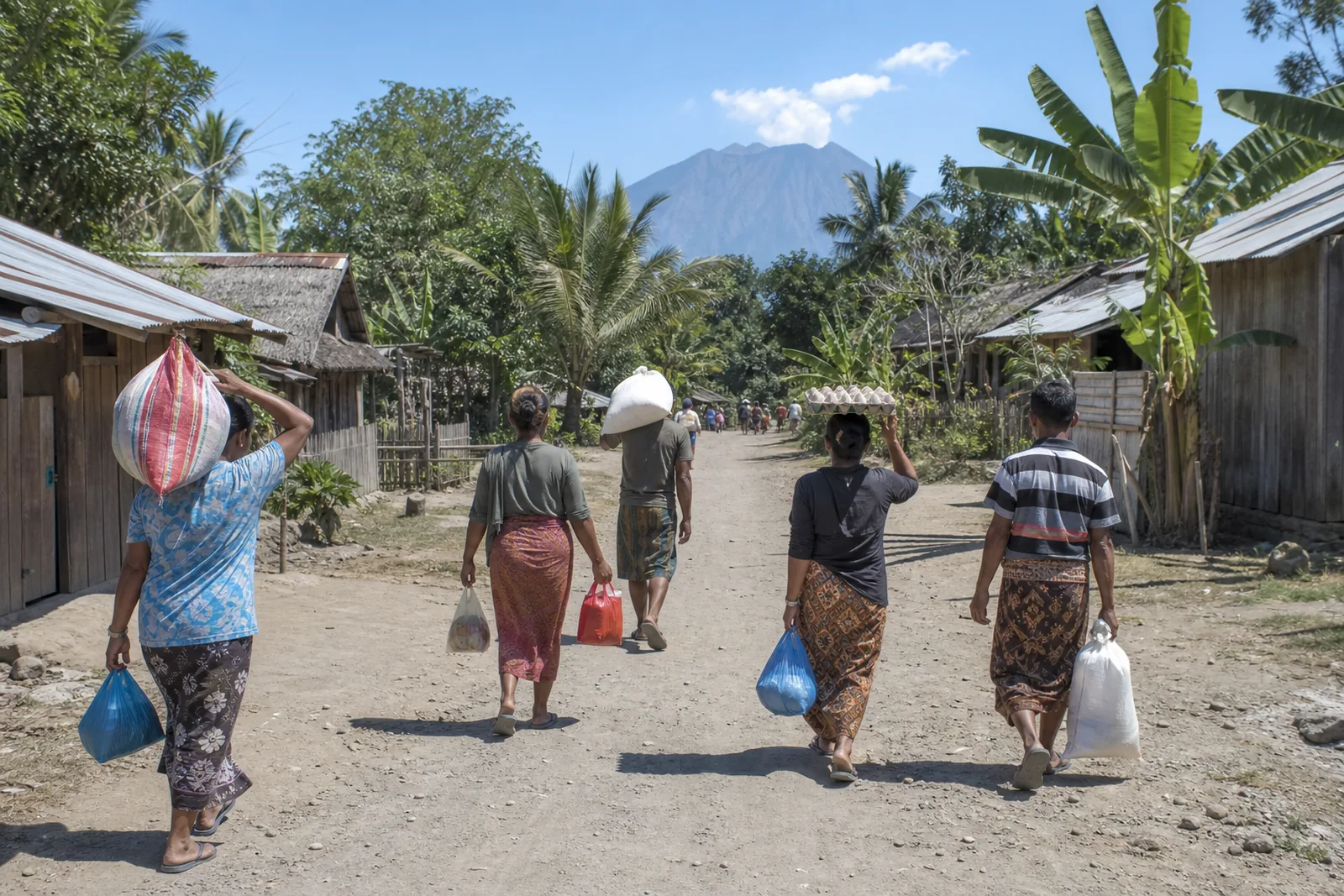
Daily Dispatch: Indonesia Accelerates NTT Earthquake Relief Response
Indonesia has accelerated relief operations after the NTT earthquake. Here is what has been confirmed, and what Lombok investors should monitor.
Quick answer: Indonesia’s government is accelerating emergency relief for communities affected by the magnitude 7.7 earthquake in East Nusa Tenggara, deploying supplies, tents, emergency kitchens and support teams. For Lombok investors, the immediate implication is informational discipline: distinguish confirmed NTT response measures from any unverified assumptions about local property, tourism or infrastructure effects.
Indonesia’s disaster response is moving from warning to ground operations. The Ministry of Social Affairs says it is working with national agencies, security forces and local governments to support families affected by the East Nusa Tenggara, or NTT, earthquake, while officials remain in the affected areas to assess needs and coordinate assistance.
This is a live humanitarian emergency first, not a property-market story. Yet investors with Indonesian exposure should follow verified operational updates closely, resist extrapolating from incomplete information, and keep legal, insurance and asset-management records orderly while the official response develops.
The Context
A magnitude 7.7 earthquake struck NTT on Saturday morning, August 15, according to Antara’s report. Indonesia’s Meteorology, Climatology and Geophysics Agency, known as BMKG, issued a tsunami warning following the quake and later lifted it.
The confirmed human cost is severe. Indonesia’s National Disaster Mitigation Agency, BNPB, reported that the death toll had reached 53 as of 4:00 p.m. Western Indonesia Time (WIB) on Sunday. In a fast-moving emergency, that figure should be treated as an official point-in-time report, not as a final assessment.
The source describes a co-ordinated central-government response. Social Affairs Minister Saifullah Yusuf said the Ministry of Social Affairs was acting as part of a team directly instructed by President Prabowo to assist affected families in East Nusa Tenggara. Ministry personnel had been working in affected areas for the past two days, alongside a team co-ordinated by the Coordinating Ministry for Human Development and Cultural Affairs.
The operational priorities are familiar in form but significant in execution: evacuation, practical supplies, food, temporary shelter, family support and the early preparation of longer-term recovery measures. The Ministry of Social Affairs has also deployed its Disaster Preparedness Volunteers, Tagana, for ground operations.
The immediate official focus is evacuation, logistics, ready-to-eat meals, compensation for the next of kin of deceased victims, and post-disaster community empowerment programmes.
For readers assessing the situation from abroad, this distinction matters. Confirmed facts currently concern the earthquake in NTT and the government’s relief effort there. The supplied report does not make claims about effects on Lombok’s visitor flows, property operations, land values, construction activity or transport links. Those subjects should not be inferred from the existence of a regional emergency alone.
The Relief Operation
The Ministry of Social Affairs says it is distributing logistical supplies, setting up tents and emergency kitchens, and supporting affected families. It is also co-ordinating relief with BNPB, the Indonesian National Armed Forces, known as TNI, the National Police, known as Polri, local governments and other relevant stakeholders.
That breadth of co-ordination is material because emergency response is not a single institution’s task. Evacuation needs people and access; temporary shelter and kitchens need supplies and local organisation; family assistance requires administrative processes; and community recovery requires attention after the immediate phase has passed. The report indicates that officials have remained in affected areas to help ensure that the response reflects residents’ needs.
| Confirmed element | What Antara reports | |---|---| | Earthquake | Magnitude 7.7 in NTT on Saturday morning, August 15 | | Warning status | BMKG issued, then lifted, a tsunami warning | | Official toll update | 53 deaths as of 4:00 p.m. WIB on Sunday | | Lead relief measures | Logistics, tents, emergency kitchens and family support | | Ground co-ordination | Ministry of Social Affairs, BNPB, TNI, Polri, local governments and others |
There is also a necessary caution for investors accustomed to quick dashboards and instant conclusions. Disaster reporting develops in stages: rescue and evacuation, the registration of affected families, the delivery of supplies, and eventually the work of restoring livelihoods. Each stage can produce new information. A responsible reading of a live dispatch therefore separates what has been officially reported from what remains unknown.
In this case, the official account provides a clear description of the response architecture, but not a complete picture of every downstream effect. It confirms teams on the ground, supplies and temporary support being mobilised, and a government effort spanning social affairs, disaster mitigation, security institutions and local authorities. It does not provide a basis for estimating commercial disruption beyond the affected areas, nor does it provide a timetable for recovery.
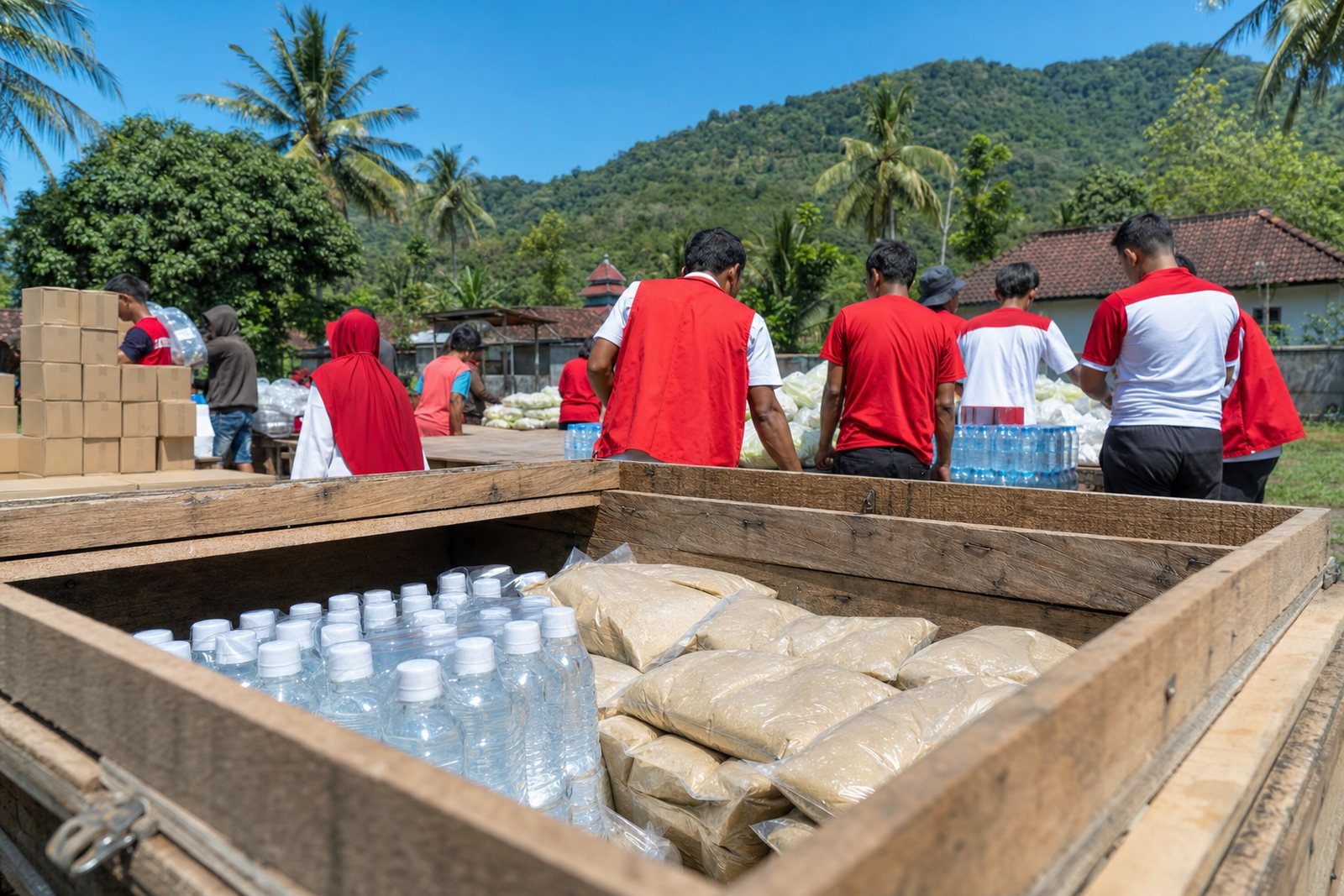 Daily Dispatch · Illustration: HubLombok (AI-generated)
What Investors Can Reliably Use Now
The most useful investor response is measured preparation, not dramatic interpretation. Owners, prospective buyers and operators with interests in Indonesia can use this moment to review the documents and relationships that make a portfolio more resilient during any period of disruption. That is sensible operational governance; it is not a claim that a specific Lombok asset has been affected.
A practical review can include:
- current insurance documentation and the correct contacts for claims or emergency assistance;
- contact details for local property managers, contractors and advisers;
- copies of title, lease, company and tax records held securely and accessibly;
- booking, guest-communications and staffing procedures where an asset is operating;
- a clear internal process for recording verified updates before communicating with partners or guests.
Foreign buyers should also remember that Indonesian property ownership requires proper legal structure and formal documentation. Foreigners cannot hold freehold, or Hak Milik/SHM; citizens only can do so. Available routes include leasehold, Hak Sewa, typically 25-30 years with extensions; Hak Pakai for eligible residents; and a PT PMA holding Hak Guna Bangunan, or HGB, for 30 years with extension options.
Nominee arrangements, in which an Indonesian citizen is said to hold freehold on a foreign buyer’s behalf, are illegal and void in court. In ordinary circumstances, a deed should be executed through a licensed PPAT notary, with the deed of sale known as an AJB and the land agency as BPN. Those are enduring due-diligence considerations, not a substitute for emergency information.
TerraNusa Advisory, HubLombok’s independent licensed-notary and legal advisory partner for foreign buyers in Lombok, supports due diligence on certificates, ownership history, zoning and encumbrances, as well as PT PMA setup, taxes and deed and title transfer at BPN. Its role is distinct from a developer’s: legal preparation should be independent, documented and appropriate to the specific transaction.
The wider investment lesson is straightforward. Natural-disaster news can create pressure for immediate conclusions, particularly among overseas investors managing property at a distance. But the right questions are narrower: What has an official agency confirmed? Which location is covered by the report? Which operational facts are still unreported? And which actions are prudent regardless of whether a specific asset is involved?
For now, the answer to the first question is clear: official agencies are accelerating humanitarian support in NTT. The answer to the second is equally important: this dispatch concerns East Nusa Tenggara, and the supplied report does not establish a direct impact on Lombok investments.
What This Means for Investors
The immediate priority is the welfare of affected communities in NTT. For investors, the appropriate posture is to follow official information, maintain accurate records, and avoid treating a regional disaster report as proof of an impact on a particular market or holding.
That restraint is especially valuable in cross-border property. Decisions about a villa, land purchase, lease or operating business should rest on verified site-specific information: the condition of the asset, communications from responsible local parties, documentation, and formal advice where legal questions arise. It should not rest on assumptions drawn from social media, promotional commentary or incomplete early reports.
There may be later updates from BNPB, the Ministry of Social Affairs, BMKG or local authorities that add operational detail. Until then, investors should keep humanitarian concern and investment analysis in their proper order. The government’s stated effort is centred on evacuation, supplies, food, temporary shelter, compensation for bereaved families and preparation for community empowerment after the disaster.
The prudent conclusion is neither complacency nor alarm. It is a commitment to evidence: monitor official developments, keep local contacts current, and wait for verified, location-specific facts before making any judgement about Lombok property, tourism or infrastructure.
Stay informed, subscribe to the free Lombok Briefing for market intelligence like this, published twice a month.
What has Indonesia confirmed after the NTT earthquake?
Indonesia confirmed that a magnitude 7.7 earthquake struck NTT on Saturday morning, August 15. BMKG issued and later lifted a tsunami warning. BNPB reported 53 deaths as of 4:00 p.m. WIB on Sunday, while relief operations continue.
What relief is being provided to NTT earthquake victims?
The Ministry of Social Affairs says it is distributing logistical supplies, establishing tents and emergency kitchens, supporting families, assisting evacuation and providing ready-to-eat meals. It is co-ordinating with BNPB, TNI, Polri, local governments and other stakeholders.
Does this report confirm an impact on Lombok property investments?
No. The supplied Antara report concerns the NTT earthquake and relief response. It does not confirm effects on Lombok property, tourism, infrastructure, construction or individual investments. Investors should rely on verified, site-specific information before drawing conclusions.

The Lombok Buyer's Field Guide
Legal structures ranked by risk, the honest ROI math line by line, all six zones ranked, and the 24-point due-diligence checklist. The whole book, free in your inbox.
See what's inside