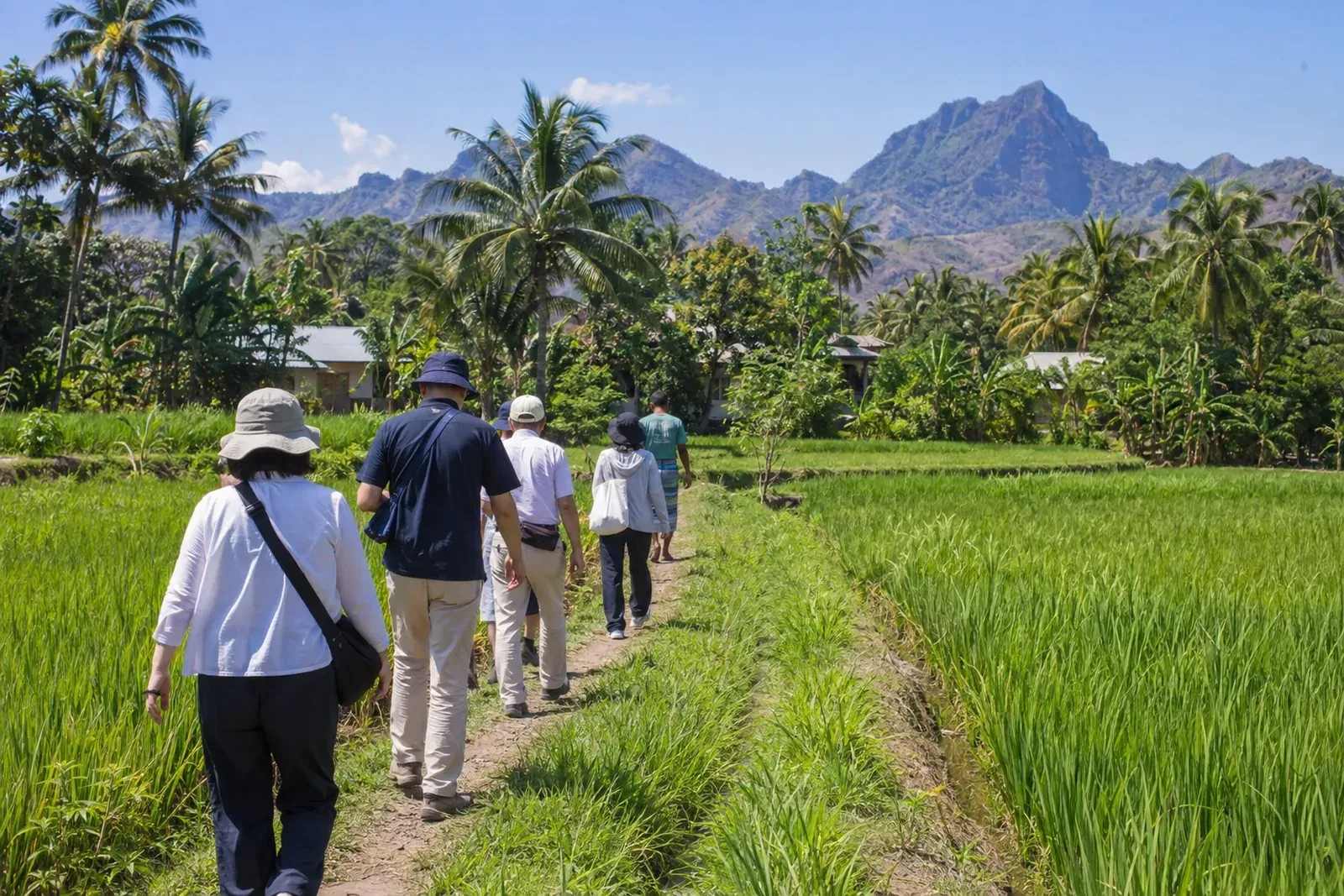
Ichinoseki Delegation Set for Bima Visit as Labour Cooperation Advances
A Japanese delegation is scheduled to visit Bima as a labour-cooperation initiative moves into its next phase.
A delegation from Ichinoseki, Japan, is scheduled to visit Bima City from 5 to 7 October 2026, marking a further step in an existing labour-cooperation initiative between the two municipalities.
The visit is notable less for a finished transaction than for its purpose: it is described by Suara NTB as follow-up work on cooperation that has already opened opportunities. For investors watching eastern Indonesia, that distinction matters. Institutional relationships are often built through successive practical engagements, rather than a single announcement.
A scheduled municipal and business visit
According to Suara NTB, the Ichinoseki delegation will comprise 17 people, including government officials and Japanese business representatives. The composition suggests that the visit is intended to bring public-sector coordination and commercial perspective into the same discussion.
Key data: A 17-person delegation of Japanese government officials and business representatives is scheduled to visit Bima City from 5 to 7 October 2026.
The source describes the programme as a continuation of labour cooperation between Bima City and Ichinoseki. It does not specify the industries involved, the number of employment opportunities, any signed agreement, or the financial terms of potential arrangements. Those details should therefore not be assumed.
For investors, that restraint is important. Cross-border labour initiatives can encompass many forms of cooperation, from information exchange and skills development to recruitment pathways. The scheduled visit alone should be read as evidence of continuing engagement, not as proof that any particular commercial outcome has been completed.
Why follow-through is the relevant signal
Municipal partnerships become economically meaningful when an initial understanding is followed by practical work. A visit involving both officials and business representatives can provide a setting to assess how earlier discussions may be taken forward, while allowing each side to clarify requirements and responsibilities.
Suara NTB characterises the visit as a follow-up to prior cooperation that created opportunities. That wording points to continuity. It does not establish the scale, timing or durability of those opportunities, but it does indicate that the relationship remains active enough to warrant an organised delegation.
This is the sort of development investors should place in the category of institutional progress rather than immediate market movement. It may be relevant to businesses assessing workforce links, training, services or local partnerships. It is less directly relevant to an investment case that depends on near-term revenue, asset pricing or a specific project pipeline.
What remains unconfirmed
The available report is brief, and its limits should shape any interpretation. It gives a planned timetable, a delegation size and a broad description of the participants. It does not provide a published agenda, identify commercial participants, set out labour-market terms, or state whether new agreements will be signed during the visit.
That leaves several questions open:
- Which sectors, if any, will be prioritised during the meetings.
- Whether the visit will result in a formal agreement or a further work programme.
- How any employment opportunities would be structured or administered.
- Whether businesses beyond the visiting delegation will take part.
None of those gaps makes the visit insignificant. They simply mean that investors should separate the reported facts from possible future developments. In cross-border economic engagement, execution is often the decisive stage.
A measured lens for international investors
For European, Australian and American investors interested in Indonesia, the Bima visit offers a useful reminder that local economic relationships may develop through city-level diplomacy as well as national policy. Yet such developments require careful reading.
The immediate fact is a scheduled visit connected to labour cooperation. The broader inference is modest: Bima City and Ichinoseki are continuing a relationship that both sides have considered worth advancing. It would be premature to draw conclusions about labour availability, costs, migration outcomes, local business demand or investment returns from the report alone.
A disciplined approach is to monitor what follows the visit. Investors should look for official statements that define the practical scope of the cooperation, distinguish intentions from binding arrangements, and explain any role for participating businesses. Such documentation would provide a firmer basis for assessing whether the initiative has implications beyond municipal engagement.
What this means for investors
The development is best viewed as an early institutional signal rather than an investable event in itself.
- Positive context: the planned visit shows that labour cooperation remains active enough to receive a delegation from Japan.
- Limited evidence: the source does not disclose deal terms, sectors, investment commitments or measurable employment outcomes.
- Prudent next step: follow post-visit announcements for confirmed arrangements and practical implementation details.
- Investment implication: do not translate a municipal visit into assumptions about asset values, operating costs or business performance.
The October visit may clarify whether this continuing relationship develops into more concrete labour cooperation. Until then, its principal value is as a sign of ongoing dialogue between Bima City and Ichinoseki.
Stay informed: subscribe to our free Lombok Briefing, published twice a month (the 1st and 15th), for analysis like this.
When is the Ichinoseki delegation scheduled to visit Bima City?
According to Suara NTB, the delegation from Ichinoseki, Japan, is scheduled to visit Bima City from 5 to 7 October 2026. The visit is described as follow-up work on an existing labour-cooperation initiative between the two municipalities.
Who will be included in the visiting Japanese delegation?
Suara NTB reports that the visiting delegation will include 17 people. It will comprise Japanese government officials and business representatives, bringing public-sector and commercial participants into the scheduled visit to Bima City.
Does the report confirm a new investment or employment agreement?
No. The report confirms a scheduled visit linked to continuing labour cooperation, but it does not state that a new agreement, investment commitment, employment target or commercial transaction has been concluded. Investors should await confirmed post-visit details.

The Lombok Buyer's Field Guide
Legal structures ranked by risk, the honest ROI math line by line, all six zones ranked, and the 24-point due-diligence checklist. The whole book, free in your inbox.
See what's inside