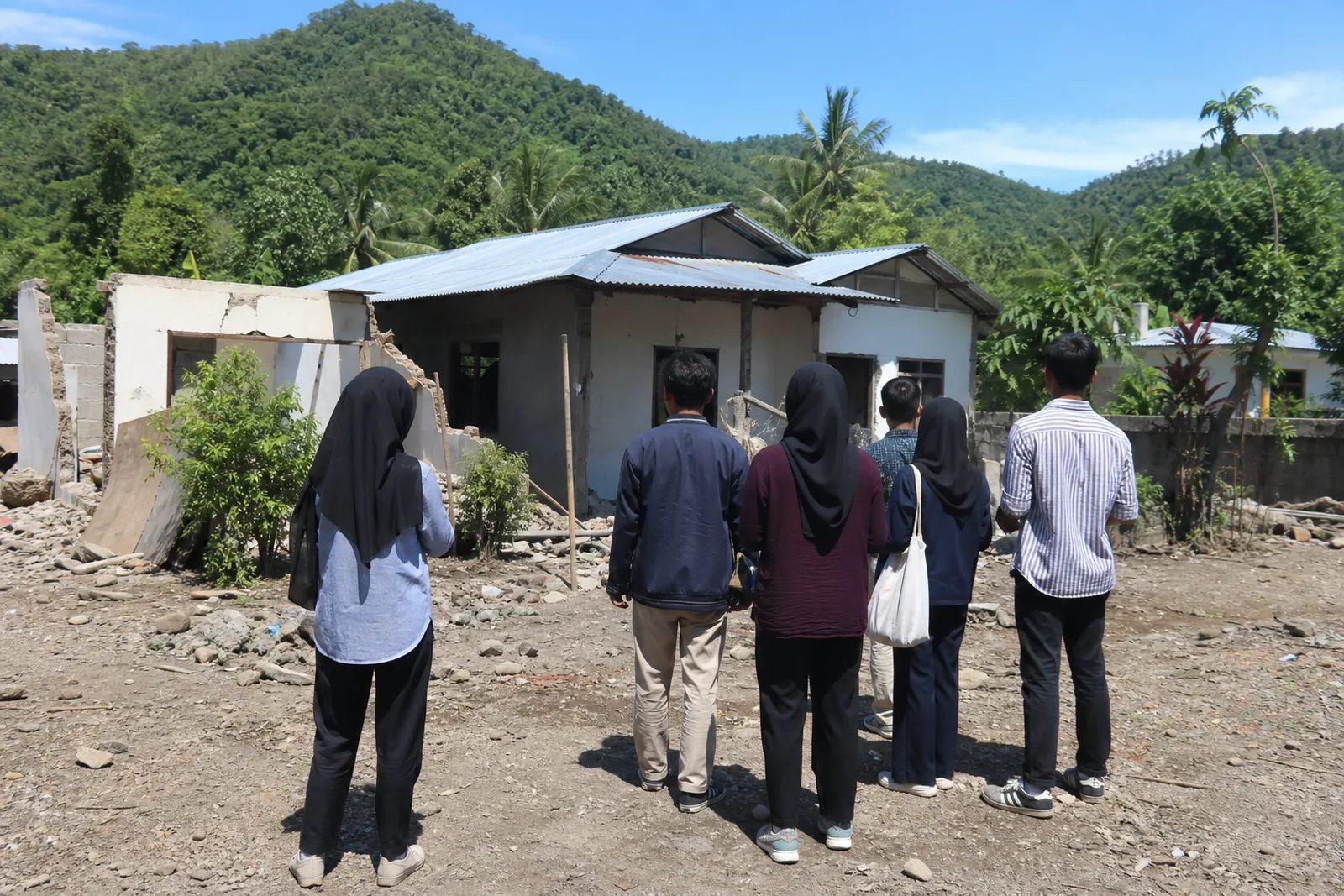
Gibran Visits East Nusa Tenggara to Oversee Quake Recovery
Indonesia’s Vice President Gibran Rakabuming Raka visited quake-hit East Nusa Tenggara to review relief needs and encourage student-led trauma support.
Gibran Visits East Nusa Tenggara to Oversee Quake Recovery
Vice President Gibran Rakabuming Raka has travelled to East Nusa Tenggara Province to review disaster response and recovery efforts following the earthquake. Accompanied by psychology students from the University of Indonesia, he placed trauma recovery and community needs alongside the immediate emergency response.
A visit focused on conditions on the ground
According to a statement cited by Antara, the working visit is intended to assess conditions among affected communities and ensure that residents’ needs are being met during the emergency phase. The stated purpose is practical as much as symbolic: a clearer view of local conditions is meant to help the government tailor recovery measures to the circumstances and requirements of those affected.
Gibran is scheduled to inspect disaster-hit sites and basic public-service facilities in the districts of Sikka, Manggarai and East Manggarai. The visit reflects the government’s position that protecting residents’ safety is a responsibility of the state, while meeting the needs of disaster victims remains a priority.
The stated objective is to align recovery measures with the actual conditions and needs of affected residents.
For a disaster-affected region, that distinction matters. Emergency support addresses immediate needs; recovery requires an understanding of how communities are functioning, where essential services have been disrupted and what forms of assistance remain necessary. Antara’s report does not set out a timetable for the recovery process or detail specific measures to be adopted. It does, however, make clear that the visit is intended to inform the response directly.
Students asked to support trauma recovery
A notable feature of the visit is the involvement of University of Indonesia psychology students. Gibran invited them to help provide trauma recovery support to victims in affected areas, according to the statement.
The emphasis acknowledges that disaster recovery is not limited to physical damage and material assistance. The report does not describe a formal programme, the number of students involved or the duration of their work. It does state that the Vice President sees student participation as an expression of gotong royong, Indonesia’s principle of mutual cooperation.
Gibran said the enthusiasm and concern of young people should be supported and directed towards concrete action that benefits disaster-affected communities. In his framing, the government’s role extends beyond meeting residents’ immediate needs: it should also enable young people to contribute through their respective skills and expertise.
This is an important distinction in the public response described by Antara. Students are not presented merely as visitors or observers. Their potential contribution is linked specifically to psychology and trauma support, while the government remains responsible for the broader emergency and recovery effort.
Recovery as a shared responsibility
The report places cooperation at the centre of the recovery effort. Government institutions, local communities, students and other groups are expected to work together to accelerate recovery.
That is a broad objective rather than a quantified target. No completion date, funding allocation for this visit or reconstruction forecast is provided in the report. Investors and readers should therefore resist treating the visit itself as evidence of completed recovery or a definitive indicator of the condition of public infrastructure in the affected districts.
Instead, the significance lies in the priorities articulated by the Vice President:
- meeting the immediate needs of affected residents;
- checking conditions directly in disaster-hit areas;
- inspecting basic public-service facilities;
- incorporating trauma recovery into the response; and
- encouraging young people to offer practical support through their expertise.
Cooperation among government, communities, students and other groups is expected to help accelerate recovery.
The approach is consistent with the report’s central message: recovery should be responsive to residents rather than designed in abstraction from their circumstances. The available account does not provide an assessment of damage, a list of individual facilities to be inspected or a detailed reconstruction plan. Its focus is on oversight, emergency needs and the mobilisation of support.
What this means for investors
For investors following Indonesia, the immediate lesson is one of discipline. Disaster news can generate strong headlines, but sound interpretation depends on distinguishing verified facts from assumptions about economic or property-market effects.
The verified facts in this report establish that the Vice President is overseeing disaster response and recovery in parts of East Nusa Tenggara, and that basic public-service facilities will be inspected in Sikka, Manggarai and East Manggarai. They also establish that psychology students have been invited to assist with trauma recovery support.
They do not establish the financial cost of damage, the scale of repairs, the condition of individual assets, the duration of disruption or the effect on investment returns. None of those conclusions should be inferred from the visit alone.
For readers with interests in Indonesia’s tourism, infrastructure or real-estate landscape, the more useful indicator will be the substance of subsequent recovery measures: verified information on service restoration, housing support, public infrastructure and the implementation of relief. Until then, this is principally a story about public oversight and community support, rather than a basis for investment projections.
The Vice President’s visit nevertheless signals that the government is seeking direct visibility of the needs of affected residents while drawing on student expertise for trauma recovery. The next meaningful developments will be the measures that follow that assessment and how effectively they respond to communities in Sikka, Manggarai and East Manggarai.
Stay informed, subscribe to the free Lombok Briefing for analysis like this, published twice a month.
Why did Vice President Gibran visit East Nusa Tenggara?
Vice President Gibran Rakabuming Raka travelled to East Nusa Tenggara to oversee disaster response and recovery, assess conditions among affected communities and help ensure emergency needs are being met. He is also due to inspect disaster-hit sites and basic public-service facilities.
Which areas will be inspected during Gibran’s working visit?
According to Antara, Gibran will inspect several disaster-hit sites and basic public-service facilities in Sikka, Manggarai and East Manggarai Districts in East Nusa Tenggara Province. The report does not identify individual facilities or provide a recovery timetable.
What role are University of Indonesia students expected to play?
University of Indonesia psychology students accompanying Gibran were invited to help provide trauma recovery support for disaster victims. The Vice President said young people’s concern should be channelled into concrete actions that benefit affected communities through their skills and expertise.

The Lombok Buyer's Field Guide
Legal structures ranked by risk, the honest ROI math line by line, all six zones ranked, and the 24-point due-diligence checklist. The whole book, free in your inbox.
See what's inside