Indonesia Activates Nine Health Operations Centres After East Nusa Tenggara Quake
Indonesia’s Health Ministry has activated nine emergency operations centres to restore hospital capacity after the East Nusa Tenggara earthquake.
Indonesia’s Ministry of Health has activated nine emergency operations centres across East Nusa Tenggara after a major earthquake, with restoring hospital services placed at the centre of the response.
For investors following Indonesia, the immediate significance is humanitarian rather than commercial: the authorities’ stated priority is ensuring that essential healthcare capacity is available across the affected region.
Hospital services are the immediate priority
Health Minister Budi Gunadi Sadikin said authorities are working to return hospitals in affected municipalities to full operational status within one week. The ministry expects healthcare facilities to face a potential increase in demand and is prioritising the services most critical in an emergency.
Those services include:
- trauma surgery;
- maternal and paediatric care; and
- hemodialysis.
“The main priority is ensuring all hospitals in affected districts and cities can return to optimal function to anticipate a potential surge in patients,” Sadikin said.
This emphasis matters because disaster response is not confined to treating immediate injuries. Hospitals must also maintain care for patients whose treatment cannot simply pause, while preparing for additional admissions as damage assessments and relief operations continue.
Response network reaches eight affected areas
Situation reports cited by the ministry say the earthquake affected eight districts and municipalities in East Nusa Tenggara. These are Sikka, Ende, Nagekeo, Ngada, East Flores, and the three Manggarai regencies: West Manggarai, Central Manggarai and East Manggarai.
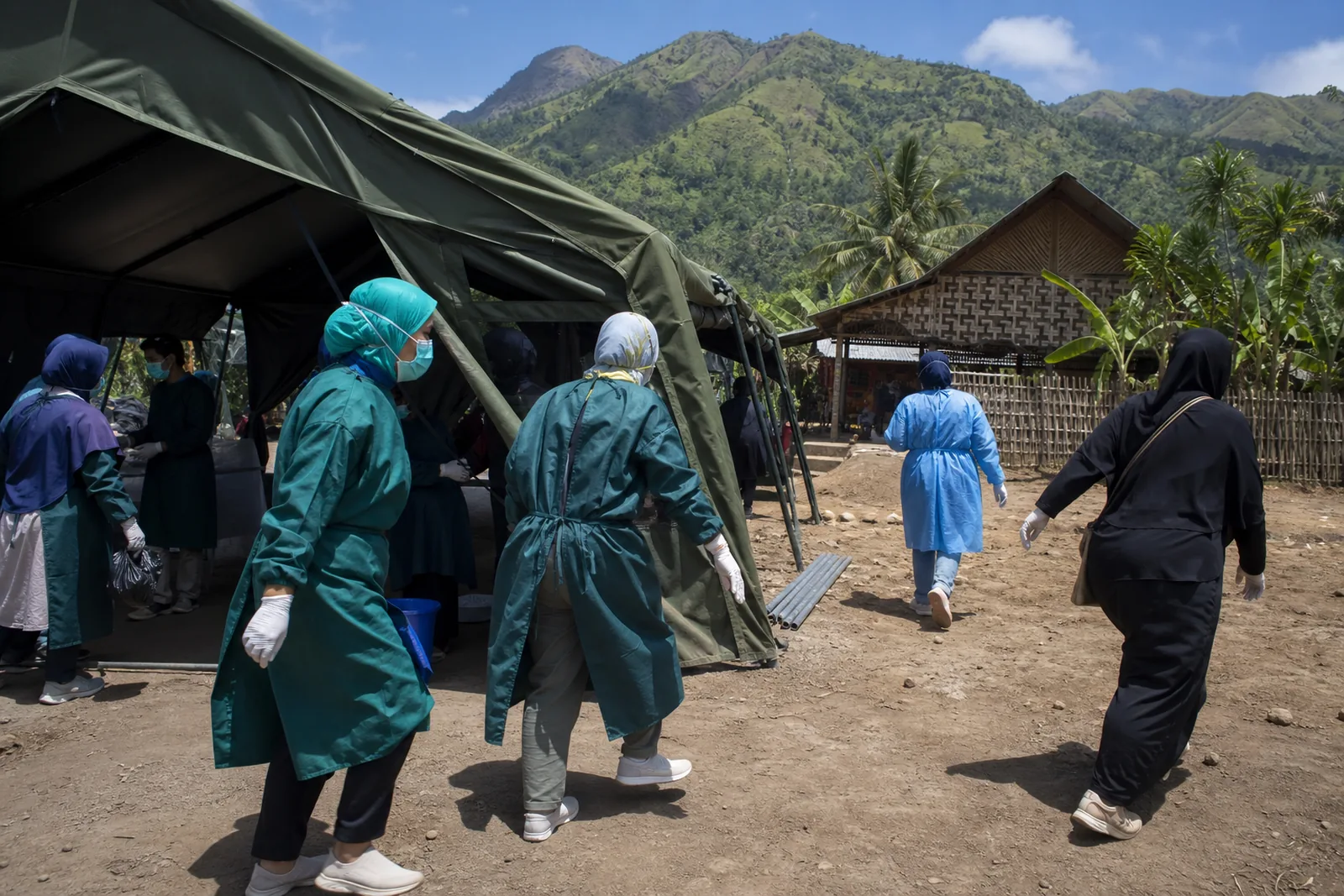
The ministry has deployed crisis-management teams and Emergency Medical Teams, known as EMTs, alongside field hospitals and emergency supplies to Sikka and Ende districts. The objective is twofold: sustain medical staffing while facilities are repaired, and reinforce local services where normal capacity may be under pressure.
The response also involves coordination with the National Disaster Mitigation Agency, BNPB, and the National Search and Rescue Agency, Basarnas. According to Sadikin, that coordination is intended to maintain healthcare staffing, accelerate repairs to facilities and stabilise the regional health network.
Supplies and field capacity are being mobilised
Initial relief shipments arrived on Sunday with basic medicine packages, emergency surgical kits, 10 oxygen concentrators, two health-post tents, and tens of thousands of protective gloves and masks.
A further eight field tents are on standby for immediate dispatch. The combination of supplies, temporary facilities and specialist teams indicates a response designed to support both hospital-based treatment and health services closer to affected communities.
Key response measures: nine emergency operations centres have been activated; field hospitals and EMTs have been deployed; and emergency supplies have been sent to Sikka and Ende.
The ministry has not presented this as a completed recovery. Its one-week hospital-restoration target is an operational goal, with the focus remaining on getting affected facilities back to optimal function while preparing for further patient needs.
What this means for investors
For internationally minded investors, the appropriate reading of this development is one of disciplined monitoring rather than speculation. The report concerns East Nusa Tenggara’s public-health response, and it does not provide a basis for drawing conclusions about property values, tourism demand or investment performance elsewhere in Indonesia.
A sensible approach is to distinguish clearly between confirmed facts and assumptions:
- The confirmed facts are that the Health Ministry has activated nine operations centres, identified eight affected districts and municipalities, and deployed teams, field hospitals and supplies.
- The ministry’s stated operational aim is to restore hospitals in affected municipalities to full function within one week.
- The source does not quantify physical damage, economic losses, disruption to travel, or any effect on Lombok’s property market.
That distinction is especially important in frontier and hospitality-linked markets, where headline events can encourage overconfident narratives. Responsible investors should rely on official updates and transaction-specific due diligence, rather than extrapolating from an emergency report beyond what it establishes.
The immediate test is the resilience of healthcare delivery in the affected areas: whether facilities can resume essential services, whether staffing can be sustained and whether temporary medical capacity can bridge the gap during repairs. The ministry has set out its priorities publicly; progress against them will be the more meaningful indicator to watch.
Indonesia’s response will now be judged by the restoration of care where it is most urgently needed, while investors should keep their attention on verified developments rather than premature market conclusions.
Stay informed, subscribe to the free Lombok Briefing for analysis like this, published twice a month.
What has Indonesia done after the East Nusa Tenggara earthquake?
Indonesia’s Ministry of Health has activated nine emergency operations centres across East Nusa Tenggara. It has also deployed crisis-management teams, Emergency Medical Teams, field hospitals and emergency supplies, with hospital restoration and essential medical care identified as the central priorities.
Which areas were affected by the East Nusa Tenggara earthquake?
Situation reports cited by the Health Ministry identify eight affected districts and municipalities: Sikka, Ende, Nagekeo, Ngada, East Flores, West Manggarai, Central Manggarai and East Manggarai. The ministry has sent teams, field hospitals and supplies to Sikka and Ende.
Does this report show an impact on Lombok property or tourism?
No. The report describes the public-health response in East Nusa Tenggara and does not provide figures for property values, tourism demand, travel disruption, physical damage or investment performance in Lombok. Investors should avoid drawing market conclusions beyond the confirmed emergency-response facts.

The Lombok Buyer's Field Guide
Legal structures ranked by risk, the honest ROI math line by line, all six zones ranked, and the 24-point due-diligence checklist. The whole book, free in your inbox.
See what's inside