
Cultural Fatigue in Bali Opens Doors for Lombok's Authentic Appeal
As a Bali tourism village skips Galungan, the island's saturation becomes clear. Lombok investors benefit from the alternative: 40-50% growth, 12-22% yields, authentic tourism without the crowds.
Bali is buzzing with Galungan preparations, the beloved festival celebrating good over evil, but a striking announcement signals a deeper shift: one of the island's most popular tourism villages will skip celebrations altogether this year. It's a sign that even Bali's tourism engine is hitting a ceiling, and for Lombok investors, it's a reminder of the compelling alternative taking shape just across the Lombok Strait.
When Tourism Outpaces Culture
Galungan is woven into the fabric of Balinese life, celebrated with vibrant penjor bamboo poles lining streets and months of community preparation. The decision by a major tourism hub to forgo the festival doesn't emerge from indifference, it emerges from a painful calculus: infrastructure constraints, overcrowding, and a quiet anxiety that commercialism is eroding the very authenticity tourists come to experience.
This isn't new tension in Bali. For over two decades, the island has grappled with its role as Asia's premier tourism destination: 4 million-plus arrivals annually, saturation in popular beach zones, and rising concerns about community preservation. Hotels multiply faster than local infrastructure can absorb them. Cultural ceremonies become photo opportunities. The experience that once drew visitors, authentic Balinese spirituality and community, increasingly competes with logistics, crowds, and Instagram optics.
Lombok's Emerging Position
Enter Lombok, an island experiencing tourism growth without the baggage. While Bali contends with saturation, Lombok is logging 40-50% year-on-year tourism growth, attracting a different demographic: travellers seeking substance over spectacle, investors drawn to sustainable fundamentals rather than speculative bubbles.
The island's property market reflects this shift. Rental yields remain robust at 12-22% annually, with occupancy rates holding steady at 55-75%, healthy for a market still in growth phase rather than maturity. Entry points remain accessible (€95-350K for quality villas), and the velocity of growth suggests investors positioned now will benefit from the next wave.
Lombok's cultural calendar, including its own significant Muslim and Hindu observances, remains embedded in community life rather than co-opted by tourism. When the MotoGP World Championship came to the island in 2021, it didn't disrupt local culture; it accelerated infrastructure investment (roads, airport expansion) that now serves all visitors equally.
The Bali-Overflow Thesis in Action
The Galungan cancellation is a small but emblematic data point in a larger trend: quality-conscious travellers are redirecting toward Lombok. The island's international airport capacity expansion (targeting near-doubling of throughput) is timed perfectly to catch overflow from a saturated Bali market.
Consider the infrastructure momentum: Lombok Praya Airport expands with direct flight routes from Australia, Malaysia, and Singapore increasing steadily; the Bali-Lombok ferry is being upgraded; roads to coastal zones are expanding. Tourism operators report booking shifts, visibly, though not catastrophically, toward beachfront properties in South Lombok and central zones where villa clusters offer privacy and genuine village proximity.
The real estate consequence is immediate: South Lombok properties, once overlooked, are seeing strong demand from operators who understand that Bali's next decade will be about managing decline in popularity, not celebrating growth. Lombok, by contrast, is in the ascendant phase.
What This Means for Investors
The Galungan story is a canary in the coal mine, not for Lombok, but for anyone still chasing Bali-saturated markets. As Bali confronts hard choices about cultural preservation and tourism density, Lombok investors occupy a more enviable position: growing demand, strong fundamentals, and cultural experiences that haven't yet been commodified.
For portfolios seeking exposure to Indonesian tourism and real estate, the allocation case is clear. Properties in Lombok's emerging zones benefit from:
- Authentic tourist demand, driven by overflow from Bali and rising eco-conscious travel trends
- Infrastructure momentum, with airport and road upgrades creating accessibility without over-saturation
- Sustainable yields, with 12-22% gross returns reflecting genuine occupancy and pricing power
- Runway for growth, with tourism still in early innings compared to Bali
The investors who moved to Lombok five years ago, when the island was still a footnote in regional tourism, have seen valuations and rental income compound meaningfully. The next cohort has an even clearer advantage: Bali's challenges are now visible, Lombok's opportunity is documented, and the infrastructure is being laid in real time.
Stay informed, subscribe to the free Lombok Briefing for analysis like this, published twice a month.
Will Galungan cancellations in Bali affect Lombok tourism?
Not directly. But Bali's over-commercialisation signals a broader shift: conscious travellers seek authentic alternatives. Lombok's 40-50% YoY growth and preserved cultural experiences position the island to capture diverted demand without saturation risks.
Could Lombok eventually become as saturated as Bali?
Unlikely soon. Lombok's development is slower and more regulated; airport and road infrastructure is expanding methodically. With 55-75% villa occupancy and strong fundamentals, the island has substantial runway before facing comparable saturation pressures.
How resilient are Lombok property yields if tourism slows?
Very. Yields of 12-22% reflect genuine occupancy and pricing, not speculation. As Bali's sustainable alternative, plus strong domestic Indonesian travel growth, Lombok maintains resilience most beach destinations lack if global travel softens.
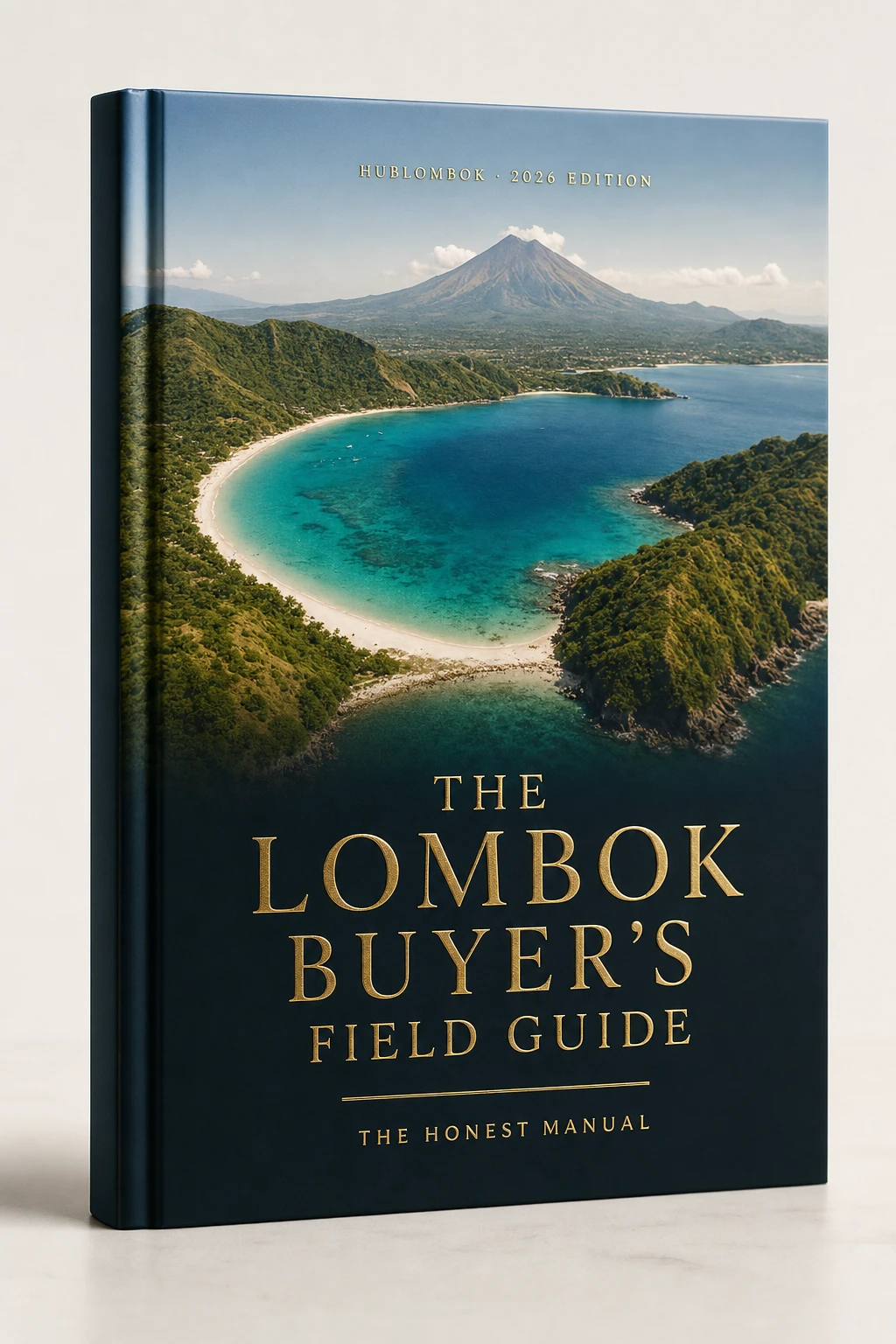
The Lombok Buyer's Field Guide
Legal structures ranked by risk, the honest ROI math line by line, all six zones ranked, and the 24-point due-diligence checklist. The whole book, free in your inbox.
See what's inside