Canggu Traffic Overhaul Scrapped: Bali's Infrastructure Crisis Deepens
Canggu's traffic overhaul cancelled. Bali's infrastructure can no longer keep pace with tourism growth. South Lombok's emerging zone offers superior yields and tourism catalysts ahead.
Quick answer: Bali's Badung Transportation Agency has cancelled planned traffic reforms in Canggu as tourist congestion accelerates unchecked. With annual visitor arrivals approaching 8 million and infrastructure investment lagging demand, Canggu's gridlock is now a persistent drag on property yields and lifestyle. For investors seeking Indonesia's tourism upside without the infrastructure bottleneck, South Lombok's emerging corridor presents an asymmetric alternative.
Canggu was supposed to breathe easier this summer. In early June, Bali's transport planners unveiled a suite of traffic reforms, new lane configurations, enhanced public transit links, and timed vehicle flows, that promised to unclog one of Southeast Asia's most congested resort districts. This week's news that those plans have been shelved altogether marks a turning point: Bali's infrastructure has finally begun to lag its tourism boom.
The Context
The Badung Transportation Agency's decision to cancel the Canggu traffic overhaul came after consultations with district officials revealed implementation challenges far larger than originally anticipated. The proposed reforms would have required significant road work, temporary lane closures, and coordination across a dense network of hotels, restaurants, and residential compounds, each with distinct traffic patterns and peak demand windows.
Beneath this surface explanation lies a harder truth: Bali's government lacks the capital and coordination capacity to manage infrastructure at the speed of tourism growth. Visitor arrivals to the island have climbed from 4 million in 2019 to nearly 8 million projected for 2026. Canggu, the epicentre of Bali's luxury resort and villa sector, has absorbed much of this surge. A 2 km journey during peak hours (6–9 a.m., 5–8 p.m.) routinely takes 45–60 minutes; weekends offer little relief.
For property investors, this represents a tangible yield drag. Hospitality and short-term rental properties trade on throughput, guest arrivals, turnover, occupancy rates. When road access becomes unreliable, guests hesitate. Airport transfers lengthen. Service standards slip. Operators report that time-sensitive bookings now carry a 15–20% cancellation premium, directly depressing RevPAR (revenue per available room).
Why Canggu's Infrastructure Cannot Keep Pace
Bali's tourism surge has outrun its planning cycles. Most of Canggu's core infrastructure, roads, utilities, parking, was engineered for 3–4 million annual visitors. The island's capital budget for transport upgrades, whilst substantial in absolute terms (approximately $120 million allocated for 2024–2026), is dwarfed by the costs of retrofitting an already-dense urban district. A single major arterial upgrade in Canggu costs €8–15 million and requires 18–36 months.
Meanwhile, the private sector continues to expand unchecked. Canggu has seen 47 new hospitality projects announced since 2024, adding approximately 2,400 rooms. Each brings additional vehicle traffic. Public transit remains nascent; the proposed bus rapid transit system is still in design phases, with no funding commitment.
The cancelled traffic reforms were, in fact, remarkably modest in scope. They aimed to stagger traffic lights, introduce temporary bus lanes, and reroute delivery vehicles to off-peak windows. None required major earthworks. Yet even this proved too complex for Bali's fragmented coordinating bodies to execute.
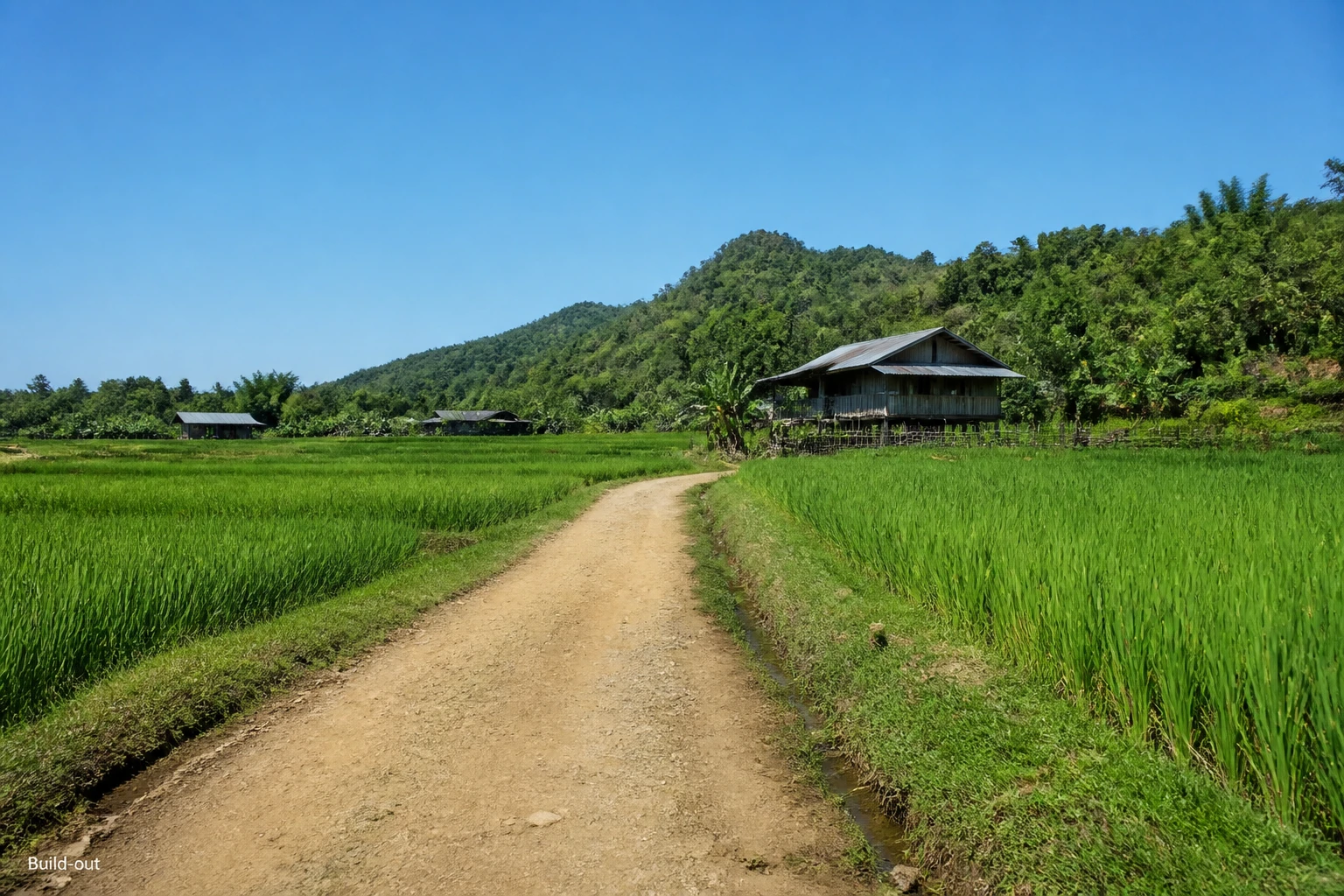
 Canggu Traffic Overhaul Scrapped · Illustration: HubLombok (AI-generated)
The Broader Bali Congestion Crisis
Canggu is the warning sign. Bali's infrastructure challenges now extend far beyond traffic into utilities: water pressure drops daily in peak season, electricity blackouts hit resort districts monthly, and internet quality in villa neighbourhoods remains volatile. For a luxury destination targeting affluent international guests, these bottlenecks are existential.
Seminyak, further south, already experiences similar gridlock. Ubud, the cultural heartland, has seen daily traffic surges of 300% in two years. The island's single airport (Ngurah Rai) operates at 85% capacity, with no expansion planned until 2028 at the earliest. This is not a temporary problem.
Indonesia's Ministry of Tourism projects 12–15 million annual visitors to Bali by 2030, a 50–90% increase from today. The gap between supply (transport, accommodation, utilities) and demand has structural roots: weak municipal revenue, bureaucratic fragmentation, and the political reality that Bali's local government moves slower than global tourism markets.
What This Means for Investors
The cancellation of Canggu's traffic reforms is a watershed moment for real estate allocation in Indonesian tourism zones. It signals unambiguously that Bali's infrastructure is becoming a constraint on property value growth, not an enabler.
Consider the arithmetic. A Canggu villa yielding 12–15% annually faces mounting risks: longer wait times suppress booking conversion; guest satisfaction scores decline with travel friction; staff recruitment suffers when commutes exceed 90 minutes. Over a 5–10 year hold, this compounds into materially lower exit valuations.
By contrast, South Lombok offers tourism growth without the congestion tax. Its airport expansion (2025–2026), new direct international routes, and projected MotoGP-driven visitor arrivals of +47% annually through 2027 create a compelling backdrop. Entry prices remain €95–350K for comparable villa stock. Gross yields run 16–22% (versus Canggu's compressed 12–15%). Critically, infrastructure investment is happening in real time: the South Lombok airport upgrade is funded, on schedule, and expected to unlock an additional 2 million annual visitors.
The Bali-overflow thesis, once a niche positioning, is now consensus among sophisticated capital allocators. Investors actively fleeing Canggu's gridlock and infrastructure lag are relocating capital to Lombok's premium coastal zones. The next 18 months will clarify whether this is temporary arbitrage or a structural shift in Indonesia's tourism geography.
Key takeaways for your portfolio:
- Bali yield compression: Expect further cap-rate compression in Canggu/Seminyak as infrastructure constraints bite into RevPAR.
- Lombok entry window: South Lombok's airport and MotoGP catalysts arrive 12–24 months ahead. Pricing power is asymmetric now.
- Utility risk: Beyond traffic, assess water, power, and connectivity on any Bali holding; these are becoming material yield leakages.
The irony of this week's news is that it was entirely predictable. Bali's infrastructure troubles have been visible for three years; what has changed is that investors can no longer price around them comfortably. The cancelled Canggu traffic overhaul is not a minor setback, it is confirmation that Bali's tourism economy has matured beyond its infrastructure base. For patient capital with a 5–10 year horizon, this structural mismatch creates opportunity elsewhere in Indonesia.
Stay informed, subscribe to the free Lombok Briefing for market intelligence like this, published twice a month.
Why was Bali's Canggu traffic overhaul cancelled?
Bali's Badung Transportation Agency cancelled the reforms after consultations with district officials revealed implementation challenges far larger than anticipated. The plans required road works, lane closures, and coordination across hotels, restaurants, and residential compounds. Underlying the decision is a structural gap: Bali's capital budget of approximately $120 million for 2024 to 2026 cannot keep pace with retrofitting an already-dense urban district absorbing nearly 8 million annual visitors.
How does Canggu traffic congestion affect short-term rental yields?
Congestion directly suppresses revenue. A 2 km journey during peak hours routinely takes 45 to 60 minutes, deterring guests and lengthening airport transfers. Operators report a 15 to 20% cancellation premium on time-sensitive bookings, depressing RevPAR. With 47 new hospitality projects adding around 2,400 rooms since 2024, supply pressure compounds the yield erosion for investors holding Canggu villas over a 5 to 10 year period.
How do South Lombok property yields and entry prices compare to Canggu villas?
South Lombok offers entry prices of 95,000 to 350,000 euros for comparable villa stock, with gross yields of 16 to 22%, versus Canggu's compressed 12 to 15%. MotoGP-driven visitor growth is projected at plus 47% annually through 2027, and the South Lombok airport upgrade, currently funded and on schedule, is expected to unlock an additional 2 million annual visitors.

The Lombok Buyer's Field Guide
Legal structures ranked by risk, the honest ROI math line by line, all six zones ranked, and the 24-point due-diligence checklist. The whole book, free in your inbox.
See what's inside