Central Bank Tightens: What Lombok Property Investors Need to Know
Bank Indonesia raises rates to 5.75%, boosting financing costs but sharpening Lombok's yield advantage. A deep-dive for foreign investors navigating currency risk and returns.
Quick answer: Bank Indonesia raised its benchmark rate to 5.75% (a 25 bps increase) to stabilise the rupiah amid global pressures. For Lombok property investors, this increases IDR-denominated financing costs but reinforces the archipelago's yield advantage (7–12% net, compared to developed-market alternatives), potentially strengthening foreign investor demand amid monetary tightening worldwide.
Indonesia's central bank has tightened policy to defend its currency as global risk appetites shift. The question for property investors is not whether this matters, it does, but how to recalibrate expectations. For those eyeing Lombok's real estate opportunity, rate movements are as material to returns as occupancy rates or seasonal demand swings.
The Context
Bank Indonesia's decision to raise its benchmark rate by 25 basis points to 5.75 per cent reflects a familiar challenge facing emerging-market policymakers: balancing domestic growth with currency stability in a volatile global environment. The rupiah, like other emerging-market currencies, has faced depreciation pressure as international investors re-evaluate exposure to riskier assets.
The mechanics are straightforward. Higher rates attract foreign portfolio capital seeking yield on short-term instruments and reassure currency traders that the central bank is willing to defend the IDR. It is a credible signal: rate hikes are politically costly (they cool growth and increase public and corporate debt servicing costs), so hiking means BI is serious.
For Indonesia, this tightening comes as tourism recovery and infrastructure investment have driven economic optimism. Yet global tensions, geopolitical risk, US monetary policy spillovers, Chinese demand uncertainty, have reminded investors that emerging-market stability is never guaranteed. BI is taking out insurance.
Currency Risk and Financing for Foreign Buyers
Here is where property investors must pay close attention. Most Lombok villas are priced in USD or EUR (especially by developers and international brokers), but Indonesian domestic financing is denominated in IDR. This creates a currency mismatch that rate policy directly influences.
Consider a EUR 200,000 villa purchase. A foreign buyer might secure financing in rupiah at rates that are now higher. Before the hike: perhaps 4.5–5% on a mortgage. After: banks will likely reset pricing upwards (most Indonesian mortgages track the BI rate or price spreads above it). A 25 bps increase might translate to 30–50 bps on your effective mortgage rate, depending on the lender and your profile.
Simultaneously, a stronger rupiah (the goal of the rate hike) makes that villa nominally cheaper in EUR or USD terms, a one-off gain. But the trade-off is real: if you finance in IDR, you are now paying more per month even if the purchase price has not changed.
Foreign buyers have two levers:
- Finance in IDR (now costlier, but you are betting the rupiah strengthens further, reducing real debt burden over time).
- Finance offshore (in USD, EUR, or GBP via home-country banks), avoiding IDR rate exposure but taking full currency risk on repayment.
The rate hike tilts the calculus towards the second option for many buyers, but offshore financing is harder to arrange for emerging-market real estate and often requires proof of residence or asset declarations that deter some investors.
 Central Bank Tightens · Illustration: HubLombok (AI-generated)
Yield in a Tightening Cycle
Here is the paradox of rising rates in an emerging-market context. As Indonesia tightens, international investors face a widening yield gap: BI rates at 5.75%, but German Bunds or UK gilts at 4% or less. Lombok real estate at 7–12% net yield starts looking even more attractive on a pure spread basis, especially for European investors suffering through sub-3% returns on home property.
Moreover, rising rates in Indonesia (whilst the US and Europe hold steady) may narrow the USD/EUR-IDR interest-rate differential, reducing the incentive for arbitrage traders to borrow cheap in dollars and invest locally. This is bearish for short-term IDR strength but bullish for long-duration foreigners. If you are investing in Lombok property with a 20–30 year horizon, currency swings matter less than rental yields.
The tourism recovery story (foreign arrivals up 40–50% year-on-year, MotoGP effect in Mandalika lifting the entire South Lombok zone to +38–47% annual capital appreciation) is independent of monetary policy. If anything, higher rates cool domestic credit cycles, which can reduce new supply and support property valuations.
What This Means for Investors
For would-be villa buyers, the message is: move quickly if you are serious. Financing will become more expensive each quarter if BI continues hiking. A property with 7–12% net yield starts to matter more in a 5.75% rate environment than a 4.5% one, the spread is real. Developers' off-plan prices are unlikely to fall; if anything, supply constraints (especially in early-cycle zones like Are Guling, where Samudra Villas operates) mean competition for inventory will intensify.
For yield investors, the BI tightening is a gift. It validates the entire Lombok thesis. European pension funds and family offices that have been hesitant about emerging-market exposure are now facing a fork: chase 2% returns at home, or accept the volatility (and regulatory burden) of a 7–12% Lombok rental yield. Rising rates make that choice easier.
For speculators, currency risk is real. If you are betting on rupiah depreciation, a rate-hike cycle is headwind. But if you are betting on rupiah stability and tourism growth, the actual thesis, the tightening is supportive.
For financing: lock in rates sooner rather than later. Even if you are not buying this month, a rate quote is valid for 30–60 days. Get quotes from Bank Mandiri, BNI, or CIMB Niaga. Ask your developer or broker for referrals.
Currency hedging: if you finance in IDR, consider a forward contract to lock in the USD/EUR-IDR rate for your principal repayment. It costs 1–2% upfront but eliminates depreciation surprise. If you finance offshore, you have already hedged by accepting IDR exposure on rental income.
Central bank rate moves are not glamorous. But they shape real returns. BI's 25 bps hike signals determination to manage the rupiah, which is necessary for long-term investor confidence. For Lombok, the lesson is clear: rising rates in Indonesia make your property yield, already 7–12% net compared to 2–4% in developed markets, more compelling, not less.
Stay informed, subscribe to the free Lombok Briefing for market intelligence like this, published twice a month.
How does BI's rate hike affect my mortgage costs?
If you finance in IDR, expect mortgage rates to rise 30–50 bps shortly; lenders track BI rates or price spreads above them. Offshore financing (USD/EUR) avoids rate exposure but accepts full currency risk on repayment.
Is Lombok real estate still attractive after the rate hike?
Yes. The 7–12% net rental yield is now more compelling relative to European alternatives (2–4%). Rising rates actually strengthen Lombok's yield advantage and may attract yield-hungry foreign investors.
Will higher rates slow Lombok property prices?
Unlikely near-term. Tourism is up 40–50% year-on-year, Mandalika appreciation continues (+38–47%), and supply is tight. Domestic credit may cool, but foreign demand, the primary driver, should remain robust.
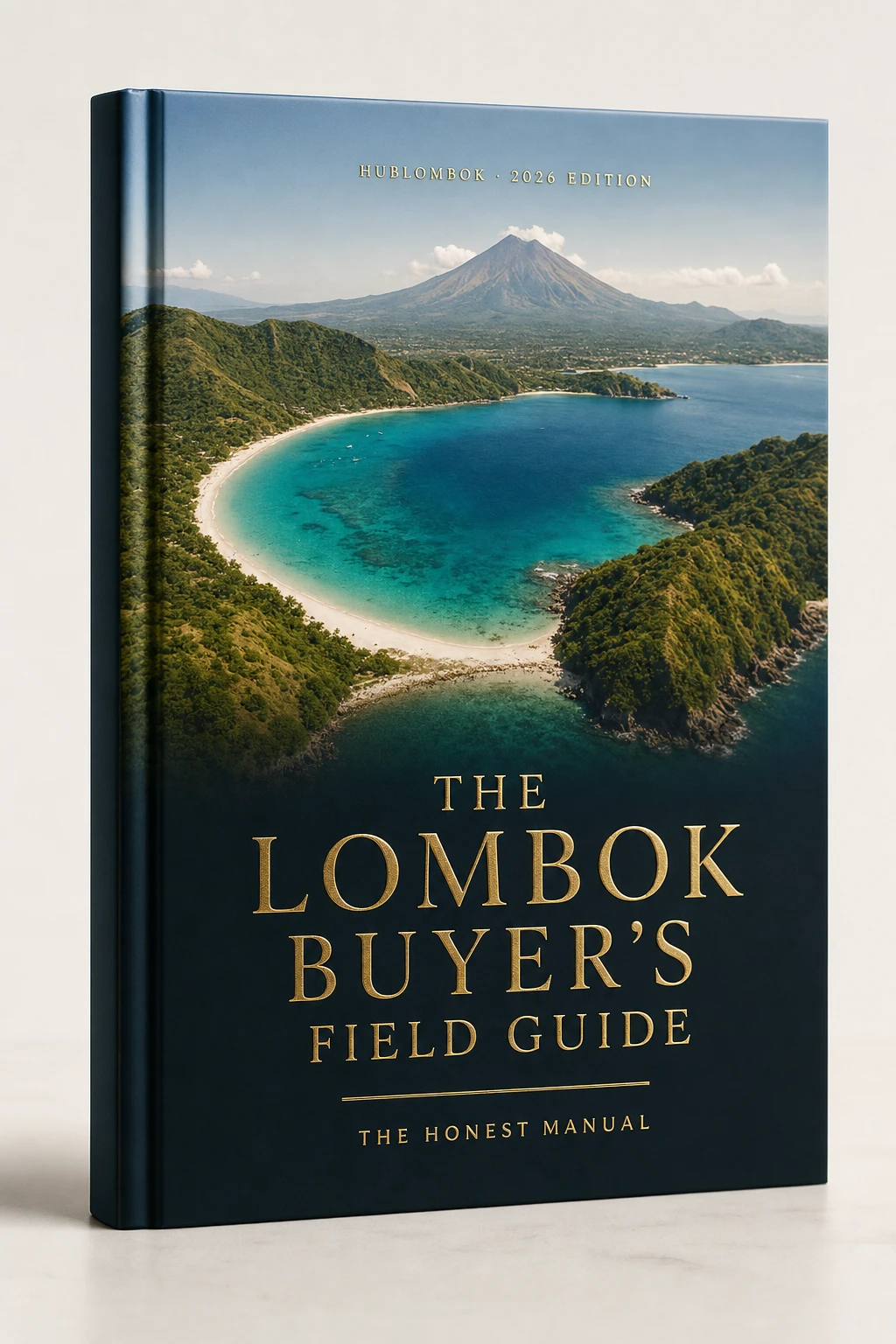
The Lombok Buyer's Field Guide
Legal structures ranked by risk, the honest ROI math line by line, all six zones ranked, and the 24-point due-diligence checklist. The whole book, free in your inbox.
See what's inside