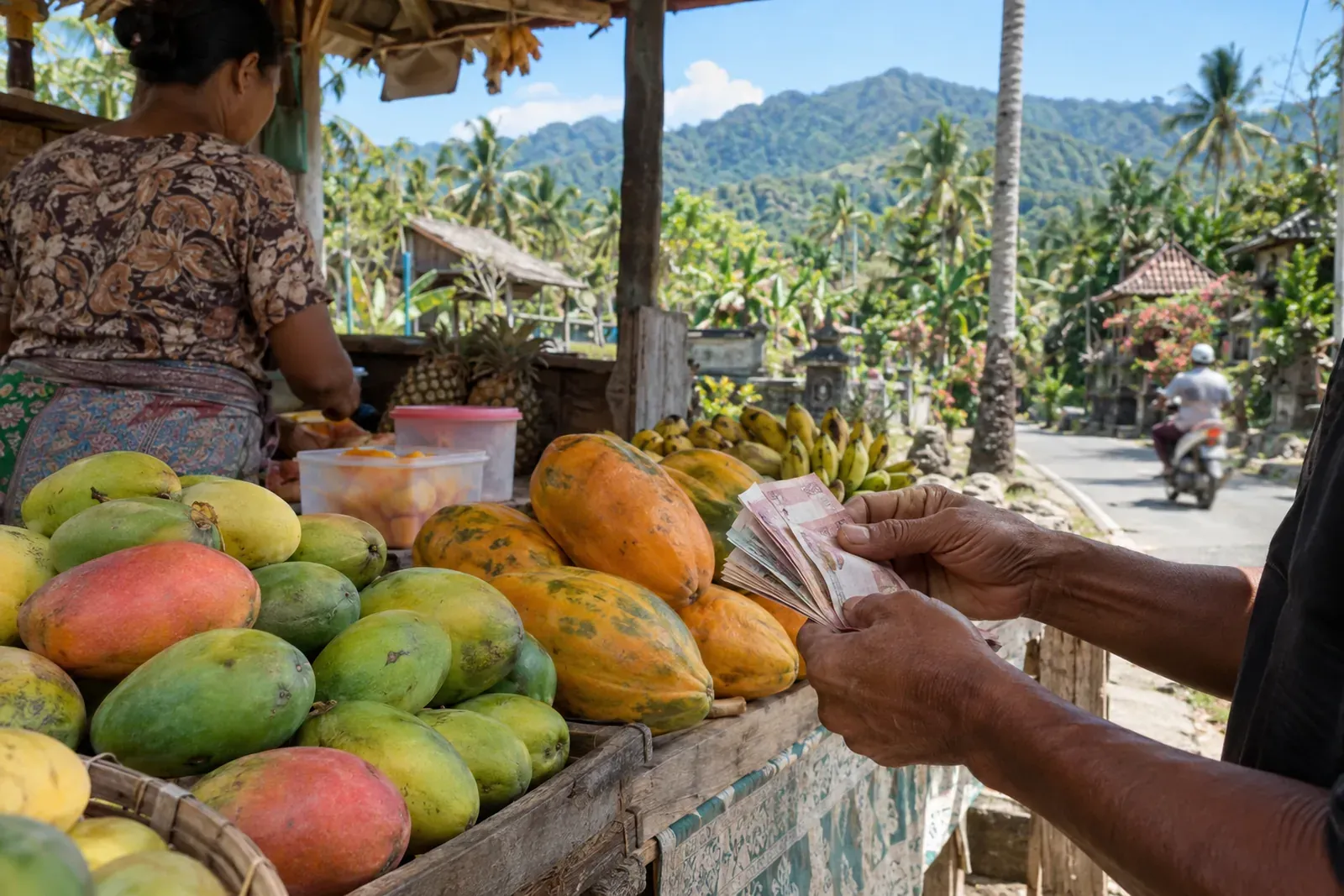
Bank Indonesia Urges MSMEs to Cluster: What It Signals for Lombok
Bank Indonesia's deputy governor wants MSMEs to cluster, upskill and borrow more easily. The speech was about Lampung, but the logic reaches Lombok's local supply base.
Quick answer: Bank Indonesia's Deputy Governor said the central bank is steering micro, small and medium enterprises (MSMEs) towards business clusters, stronger capabilities and easier financing, backed by digitalisation. The speech was about Lampung, not Lombok, so treat it as a policy signal for local suppliers, not a property catalyst.
Bank Indonesia wants small businesses to stop working alone. Speaking in Bandarlampung, Lampung, on Friday, its Deputy Governor set out three strategies to make MSMEs more productive and competitive, as reported by Antara Business. The remarks concern one province, but the direction matters for anyone whose returns rest on the health of Indonesia's regional economies, South Lombok included.
The Context
The central bank's message, as reported, is that MSMEs should grow inside business ecosystems rather than individually. The stated aim is sustainable economic growth, and the tools are three: business clustering, capacity building and expanded access to financing. The table below summarises what the source attributes to the Deputy Governor.
| Strategy | What the source says | |---|---| | Business clustering | MSMEs move away from operating individually, form clusters, expand market reach and integrate into broader value chains | | Capacity building | Continuous improvement in product and service quality, managerial skills and market readiness, including for global markets | | Financing access | Closer synergy with the financial sector so MSMEs can access funding tailored to their operational needs and growth |
The policy is being implemented at both national and regional level. In Lampung, that runs through the Bank Indonesia Lampung Representative Office, which is focusing on key regional commodities and flagship products: bananas, coffee and textiles.
The Deputy Governor also tied MSME development to digitalisation. According to the report, technology should make MSME operations more efficient, widen their market reach and connect them to broader economic ecosystems.
What Bank Indonesia Is Actually Proposing
The most consequential idea is clustering. The pitch is that a small producer that sells alone stays small, while one that sits inside a cluster and a value chain can reach further. The Deputy Governor described this as expanding market reach, forming clusters and integrating into broader value chains. That is a structural change in how small firms are expected to operate, not a subsidy.
Capacity building is the second pillar, and the source gives it in the Deputy Governor's own words: "Through capacity building, Bank Indonesia is encouraging MSMEs to continuously improve product and service quality, managerial skills, and market readiness to reach broader markets, including global markets," he said. Note the emphasis on managerial skills and market readiness. The message is that access to markets is not only a question of demand, it is a question of whether a small business can meet a buyer's standards.
The third pillar is financing. Bank Indonesia says it will continue to strengthen synergy with the financial sector so that MSMEs can obtain funding matched to their operational needs and growth. The wording describes coordination with lenders, not a new lending programme, and the report gives no detail on instruments.
There is an important limit to state plainly. The Antara report contains no funding amounts, targets, timelines or list of provinces beyond Lampung. That is the difference between a stated direction and an investable programme.
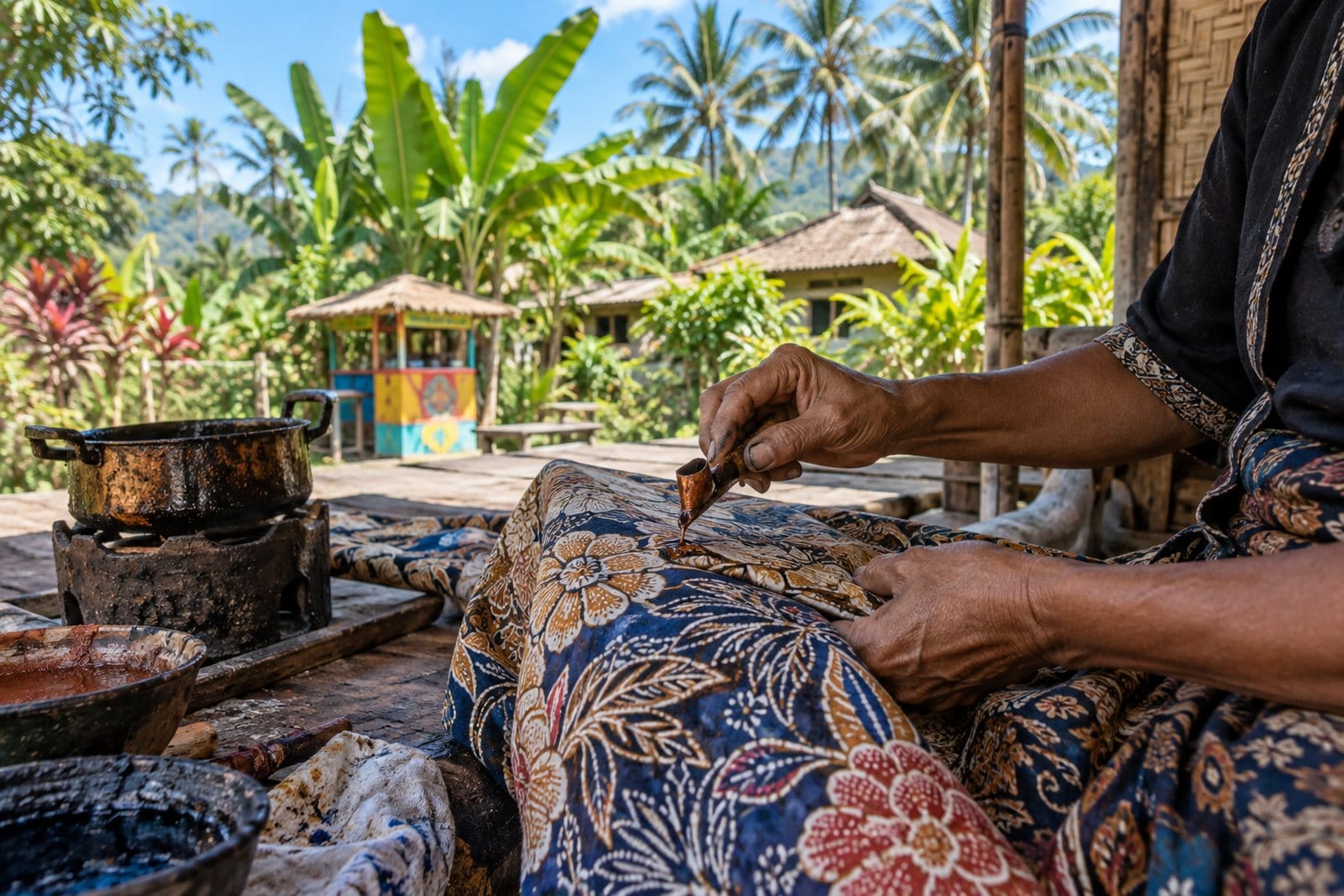 Bank Indonesia Urges MSMEs to Cluster · Illustration: HubLombok (AI-generated)
Lampung Is Not Lombok, but the Logic Travels
The source does not mention Lombok or West Nusa Tenggara. It says Lampung has strengths ranging from agriculture to creative products, and it frames the challenge this way: "Our challenge is to transform these strengths into value-added products, strengthen production chains, and unlock new business opportunities," the Deputy Governor said.
The interpretation that follows is ours, not the source's. The question of how a region turns raw strengths into higher-value goods is one any regional economy can be asked, including Lombok's. A South Lombok villa is an asset, but it is also an operating business. Guests buy food, transport, laundry, crafts and maintenance, and those services are typically supplied by small local businesses. If small suppliers become better organised, better trained and better financed, the operating environment around a property tends to become more reliable. That is a reasonable expectation, not a measured result, and the report offers no evidence of it for Lombok.
The demand side is already moving. Our verified market figures put the foreign-arrivals trend at +40-50% year on year, reflecting the tourism recovery and the MotoGP effect. Rising arrivals raise a practical question: who supplies them? The depth of the local supplier base is one of the less glamorous variables in a villa's economics.
On costs, the honest numbers are unchanged. Management fees run at 18-22% of gross rental revenue and online booking commissions at 15-20%. Better local supply chains could matter at the margin for operating costs, but nothing in this speech quantifies that link, so we do not assign it a number.
What This Means for Investors
The practical reading is modest and disciplined.
- Do not price it in. Nothing in the report changes land prices, rental yields or legal structures. The honest net rental yield remains 7-12% after management fees and realistic occupancy. The developer-quoted 12-22% gross range excludes those costs, and the two should never be confused.
- Watch for regional replication. Bank Indonesia's Lampung office is concentrating on bananas, coffee and textiles. The source does not say whether a similar commodity-and-cluster approach will be applied in Lombok. That would be the signal worth waiting for.
- Ask operators about local sourcing. In due diligence, ask how a villa's operator sources services on the island, and how dependent the property is on booking platforms, where commissions run at 15-20%.
- Keep legal structure separate. Foreign ownership routes are unchanged: leasehold (Hak Sewa), Hak Pakai, or a PT PMA holding HGB. MSME policy does not alter any of them.
Watch item: whether Bank Indonesia extends its cluster-and-financing approach beyond Lampung. The report says nothing on this yet.
The broader point is that Indonesian policy is leaning towards connected, better-financed small businesses and towards digitalisation as the means of connecting them. For an investor in South Lombok, that is a background condition to monitor, not a return driver to underwrite. A patient buyer can note the direction, keep the yield maths on the honest 7-12% net range, and wait for evidence that the policy reaches the island.
HubLombok is the editorial arm of Samudra Villas, an active developer in South Lombok. That relationship is disclosed here because it shapes what we cover, not what we conclude.
Stay informed: subscribe to the free Lombok Briefing, published twice a month (the 1st and 15th), for market intelligence like this.
What did Bank Indonesia announce for MSMEs?
Bank Indonesia's Deputy Governor said the central bank promotes MSMEs through three strategies: business clustering, capacity building and expanded access to financing. He also linked MSME development to digitalisation. The report gives no funding amounts, targets or timelines.
Does this Bank Indonesia policy affect Lombok property prices?
There is no evidence of that. The speech was delivered in Lampung and does not mention Lombok. Any effect would be indirect, through local suppliers and service businesses. Investors should keep underwriting on the honest 7-12% net yield range rather than on this policy.
What should Lombok villa investors watch next?
Watch whether Bank Indonesia applies its cluster-and-financing approach to Lombok, as its Lampung office is doing for bananas, coffee and textiles. Also ask villa operators how they source local services. Neither point is confirmed by the source, so treat both as things to monitor.
The Lombok Buyer's Field Guide
Legal structures ranked by risk, the honest ROI math line by line, all six zones ranked, and the 24-point due-diligence checklist. The whole book, free in your inbox.
See what's inside