Bank of Indonesia Shields Bali from Fuel Shock: Lombok Investors Should Take Note
Central bank assures Bali tourism will weather fuel costs. For Lombok investors, this strengthens the overflow thesis, cheaper villas at EUR 95–350K become more attractive than ever.
Quick answer: Bank of Indonesia has assured investors that rising fuel costs will not materially impact Bali tourism demand, removing a key headwind. For Lombok investors, this stabilises the "Bali-overflow" thesis and reinforces demand for cheaper South Lombok villas (EUR 95–350K entry) as Bali prices climb above USD 400,000.
Indonesia's central bank has stepped in to reassure the tourism sector that rising fuel costs will not derail the recovery in visitor arrivals. With the rupiah under pressure and fuel subsidies winding down, many feared Bali's tourism machine would stall. But the Bank of Indonesia's explicit guidance, that domestic cost pressures will be managed, signals a commitment to protecting what remains the region's highest-profile destination. For investors in South Lombok, the message is equally important: if Bali's demand floor is protected, Lombok's cheaper entry price and earlier development cycle become even more compelling.
The Context
The backdrop is straightforward: Indonesia has faced significant currency weakness and the end of fuel subsidies, which typically flow through to higher costs for domestic flights, transport, and resort operations. Bali, which hosts over 4 million foreign arrivals annually (up 40–50% year-on-year), depends heavily on price-sensitive and schedule-dependent tourists. Any hint of rising travel costs or operational overheads could dampen bookings or squeeze margins.
The Bank of Indonesia's explicit assurance, that it will manage fuel-price pass-through and sustain tourism competitiveness, is far more than rhetorical. It is a vote of confidence in Bali's demand resilience and a signal that Jakarta sees tourism as critical to rupiah stability and foreign-exchange earnings. For investors, it removes a material risk factor that could have been priced into yields and occupancy forecasts, and it suggests policymakers are committed to keeping Indonesia's tourism sector globally competitive.
The timing matters. Lombok, which has been riding a 40–50% year-on-year tourism growth wave (largely driven by infrastructure investment and the MotoGP effect in nearby Mandalika), benefits enormously from clarity on regional demand. If Bali's demand is protected, and BoI seems confident it is, then Lombok's position as the "next play" for overflow and earlier-cycle growth becomes even more crystallised.
Why This Matters for Lombok
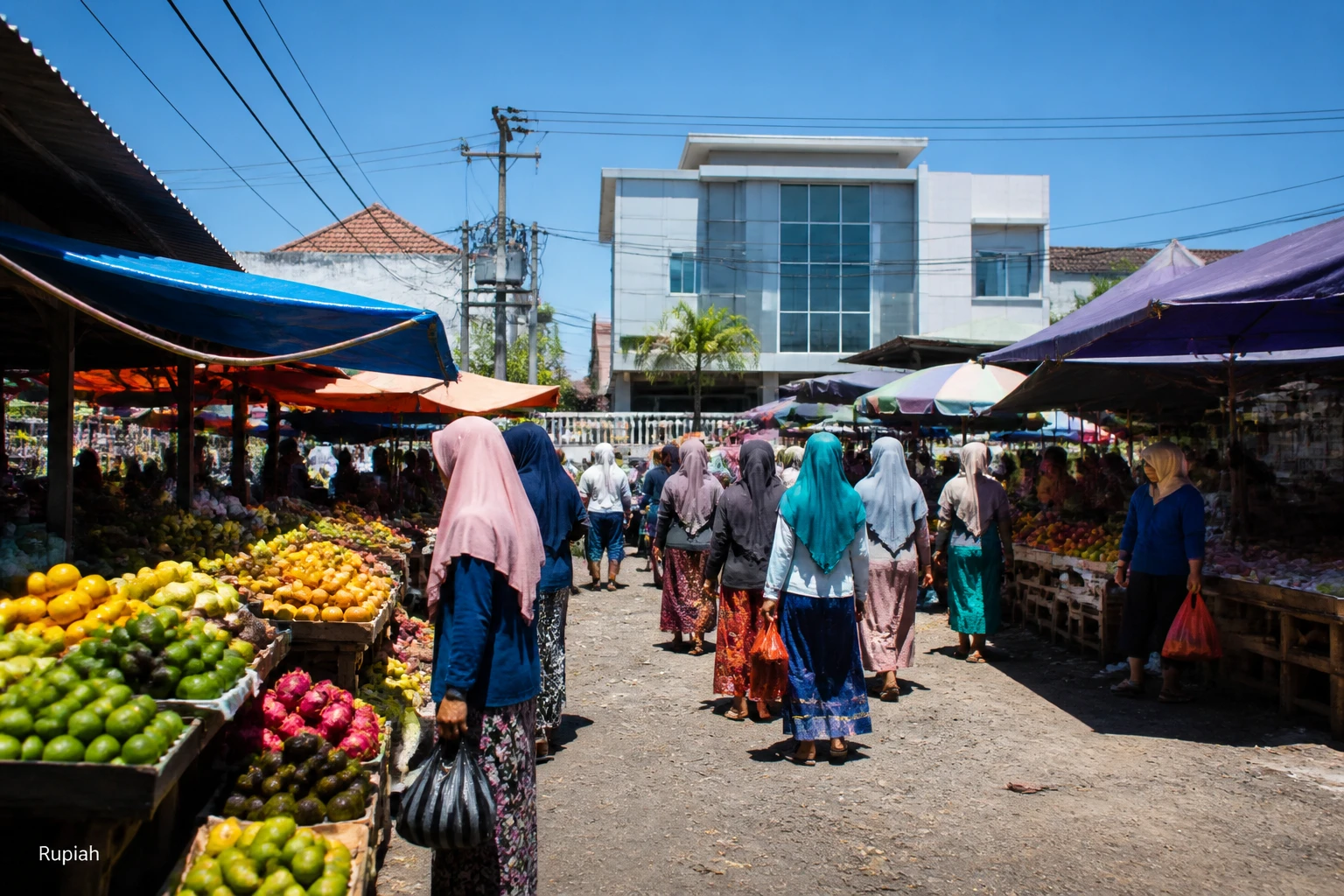
 Bank of Indonesia Shields Bali from Fuel Shock, Lombok Investors Should Take Note · Illustration: HubLombok (AI-generated)
The key insight is market positioning: Bali has long been the anchor destination for foreign visitors to Indonesia. Lombok, sitting 40 minutes by ferry or 50 minutes by air from Bali, has been the secondary play, the "Bali alternative" for investors seeking lower entry costs and higher occupancy yields. But as Bali villa entry prices climb above USD 400,000 and occupancy pressures mount, Lombok has shifted from alternative to adjacent market.
BoI's assurance that Bali's cost base will remain stable actually strengthens Lombok's competitive hand. Here's the mechanism: if tourists continue flooding into Bali (and BoI seems confident they will, given the 40–50% annual growth in foreign arrivals), but find room rates and villa acquisition costs rising, the natural overflow is to South Lombok. There, turnkey investment-grade villas still cost EUR 95,000–350,000, roughly 50–75% less than Bali, often with higher development potential. At those price points and with net yields of 7–12% after management fees and realistic occupancy assumptions, the arbitrage between the two islands becomes even starker.
The occupancy story is crucial. Lombok's stabilised occupancy sits at 55–70% (compared to Bali's 70–85%), which means there is clear upside if demand accelerates. If Bali demand remains protected and grows, and Bali's room supply remains constrained by rising acquisition costs and environmental concerns, occupancy in Lombok's cheaper villas should inch toward 65–75%. That 5–10 point bump in occupancy, all else equal, could lift realised net returns by 10–15% relative to current conservative models.
Currency and Occupancy Dynamics
The rupiah's weakness against the US dollar cuts both ways, a crucial insight for investor positioning. For Bali resorts and villas earning IDR from bookings but facing USD-denominated costs (imported labour, materials, supplies, debt servicing), currency headwinds compress operational margins. A weaker rupiah means that imported goods cost more, and that any USD-denominated debt becomes more expensive to service.
For foreign-owned Lombok villas with USD-denominated mortgage or leverage, the same rupiah depreciation actually widens margins, a significant asymmetry. If you earn rental income in IDR (via OTAs, which still price in IDR and settle locally), those IDR rents are now worth more in USD terms. In other words, a 10% rupiah depreciation translates to a 10% improvement in your USD-denominated yield if you carry USD debt. This is a classic currency-yield arbitrage that favours dollar-denominated investors who took on IDR-earning assets with USD leverage.
Occupancy, the true yield multiplier, is where BoI's statement matters most strategically. At Lombok's current 55–70% stabilised occupancy and 7–12% net yields, the sensitivity to occupancy is acute. A single percentage point of occupancy gain translates to 8–14% upside in net yield (depending on cost structure). If Bali's demand is protected and grows, and Lombok continues positioning itself as a contiguous experience, then Lombok's occupancy should drift toward the higher end of that range. BoI's commitment is a tailwind for that thesis.
What This Means for Investors
The practical takeaway breaks into four clear investment implications:
- Demand remains intact. BoI's assurance removes a material downside-demand risk that could have eroded occupancy, rates, and yields across the region.
- Bali's scarcity dynamic strengthens. Fewer affordable villas in Bali (especially in hotspots like Kuta Mandalika and Uluwatu) means more overflow to Lombok, supporting both occupancy and capital appreciation.
- Currency tailwinds for dollar-denominated investors. Rupiah weakness helps investors with USD-denominated leverage or operating costs; it is a structural advantage if you financed a Lombok villa in dollars.
- Entry window remains open, but not forever. Lombok's entry price of EUR 95,000–350,000 is not expected to move lower (demand is rising), and is rising fastest in hotspots like Are Guling (+47% YoY) and Kuta Mandalika (+38% YoY). Early-stage investors benefit from capital appreciation as the island matures.
For investors seeking a Bali-adjacent position with lower basis, earlier-cycle growth potential, and higher carry (via net yields of 7–12%), the fuel-cost clarification from Jakarta is a green light. It removes a tail risk and reinforces the structural "Bali overflow" thesis that has driven Lombok's tourism and property recovery. The broader Indonesian tourism machine remains robust, and by extension, so does Lombok's position as the overflow valve and value play.
Stay informed, subscribe to the free Lombok Briefing for market intelligence like this, published twice a month.
Does BoI's fuel assurance directly improve Lombok yields?
Not directly. But it removes downside demand risk and reinforces Bali-overflow. If Bali demand stays strong and supply tight, Lombok occupancy and ancillary yields improve, indirectly boosting net returns.
How much cheaper is Lombok than Bali right now?
Bali: USD 400,000–800,000. Lombok: EUR 95,000–350,000 (~USD 100–375K). That is 50–75% cheaper. Gap widens in hotspots like Are Guling, where development costs stay below Bali's.
Will rupiah weakness hurt my returns if I own a Lombok villa?
No. Rupiah weakness actually helps dollar-denominated investors. If you earn rental IDR but hold USD leverage, currency depreciation widens margin. Occupancy and operational efficiency are the true yield drivers.

The Lombok Buyer's Field Guide
Legal structures ranked by risk, the honest ROI math line by line, all six zones ranked, and the 24-point due-diligence checklist. The whole book, free in your inbox.
See what's inside