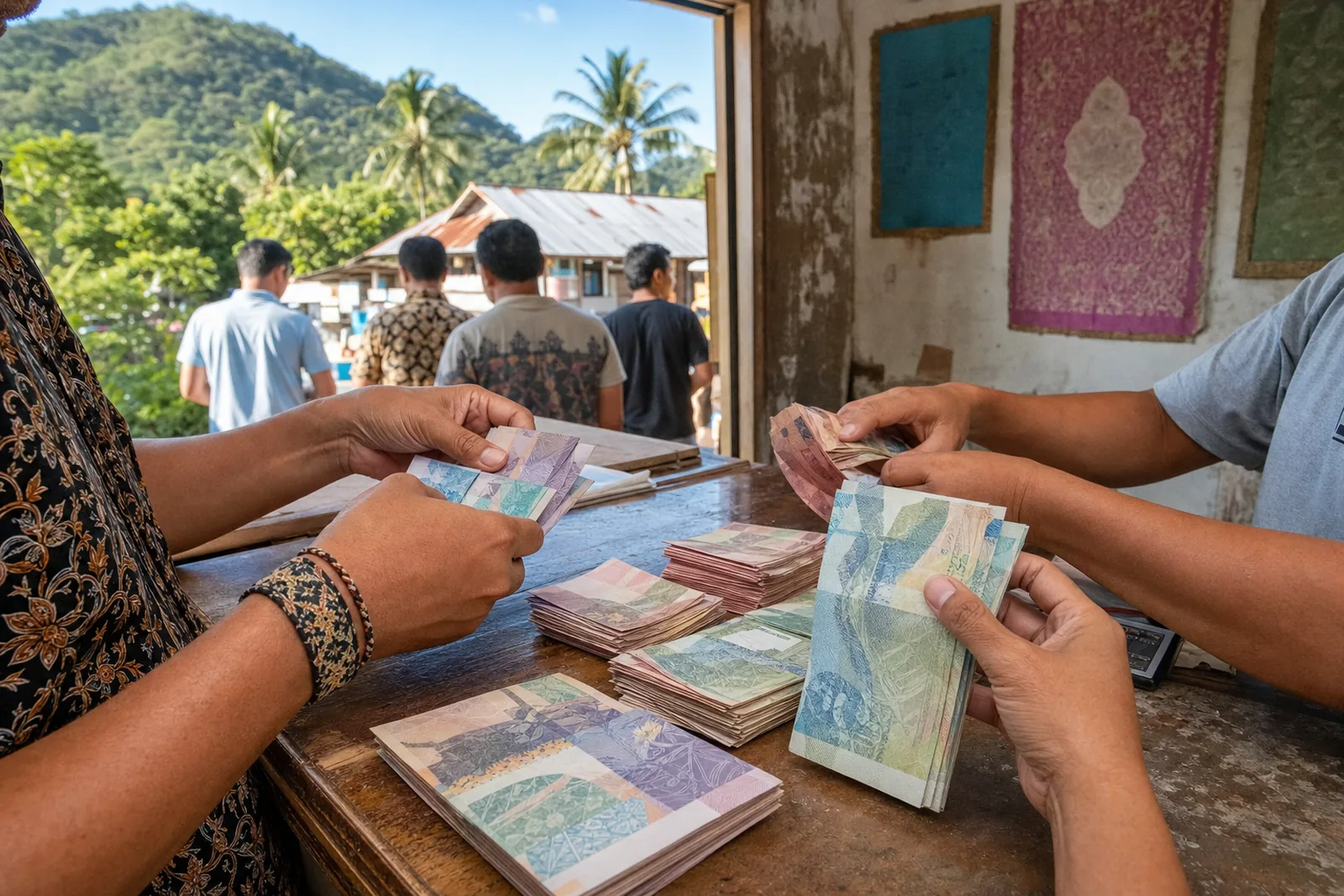
Daily Dispatch: Bank Indonesia Urges Ecosystem-Led MSME Finance
Bank Indonesia is calling for an ecosystem-based approach to MSME development and financing. For Lombok investors, the signal is to assess the wider operating network behind any opportunity.
Quick answer: Bank Indonesia has called for an ecosystem-based approach to developing and financing micro, small and medium enterprises. For Lombok investors, the immediate implication is not a new property rule or market figure, but a sharper reminder that investable local growth depends on connected businesses, finance, skills and execution rather than a single asset alone.
Bank Indonesia’s intervention arrives as a concise but consequential policy signal. The central bank is placing the development and financing of micro, small and medium enterprises, often abbreviated as MSMEs, inside a broader ecosystem, rather than treating access to funding as an isolated solution.
For investors looking at Lombok, that distinction deserves attention. A destination’s appeal may begin with land, tourism or a well-designed villa, but the durability of investment activity is shaped by the businesses and services that allow a local economy to function around those assets.
The Context
According to Antara Business, Bank Indonesia has emphasised the need for an ecosystem-based approach in the development and financing of MSMEs. The supplied report does not set out a new financing programme, a timetable, or any local allocation for Lombok. Its significance therefore lies in the direction of policy thinking rather than in a quantifiable intervention.
An ecosystem approach starts from a practical observation: finance is necessary, but it is rarely sufficient on its own. Small businesses require routes to customers, dependable suppliers, capable operators, appropriate payment and financial arrangements, and an environment in which they can grow without becoming detached from the local economy they serve.
That is especially relevant to investor conversations around emerging destinations. An asset can be straightforward to describe; the surrounding commercial system is harder to assess. Yet the second question is often the more important one. Who provides the service? How are local operators connected to demand? What support exists beyond the initial transaction? These are not abstract development questions. They are questions about resilience.
Bank Indonesia’s emphasis is on development and financing together, within an ecosystem rather than as separate exercises.
The report should not be read as a guarantee of commercial outcomes, nor as evidence that any specific business will receive funding. It is, however, a useful official marker: MSME development is being framed as a connected economic task.
Why the Ecosystem Matters
For a place such as South Lombok, the ecosystem lens offers a more demanding way to consider opportunity. It moves the investor beyond the headline proposition and towards the operating conditions that support it.
A tourism-facing investment, for example, may depend on a chain of smaller enterprises: local maintenance providers, transport operators, food and hospitality suppliers, professional services and other businesses serving visitors and residents. The value of that chain is not that it can be reduced to a single promotional claim. Its value is that it helps determine whether an investment can operate consistently over time.
The approach also encourages a distinction between visibility and investability. A destination may attract attention, but attention alone does not create an enduring commercial base. Investors should look for evidence of linkages, between local demand, suppliers, operators and available finance, rather than assuming that the presence of one attractive asset proves the maturity of the wider market.
This is a useful discipline because emerging-market narratives can compress several different realities into a single story. Infrastructure, visitor interest, local enterprise, legal processes and access to capital all matter, but they do not necessarily develop at the same pace. An ecosystem-based frame resists that simplification.
| Investor question | Ecosystem perspective | |---|---| | What is being financed? | Consider the business activity and its role in the wider local economy. | | Who delivers the service? | Examine the operating partners and local enterprise network. | | What supports continuity? | Look beyond the asset to suppliers, customers and practical execution. |
For Lombok investors, this is not an argument to substitute policy language for due diligence. It is an argument to make due diligence broader. Financial projections, legal rights and physical specifications remain important, but they should sit alongside a clear view of the commercial environment in which an asset or business must operate.
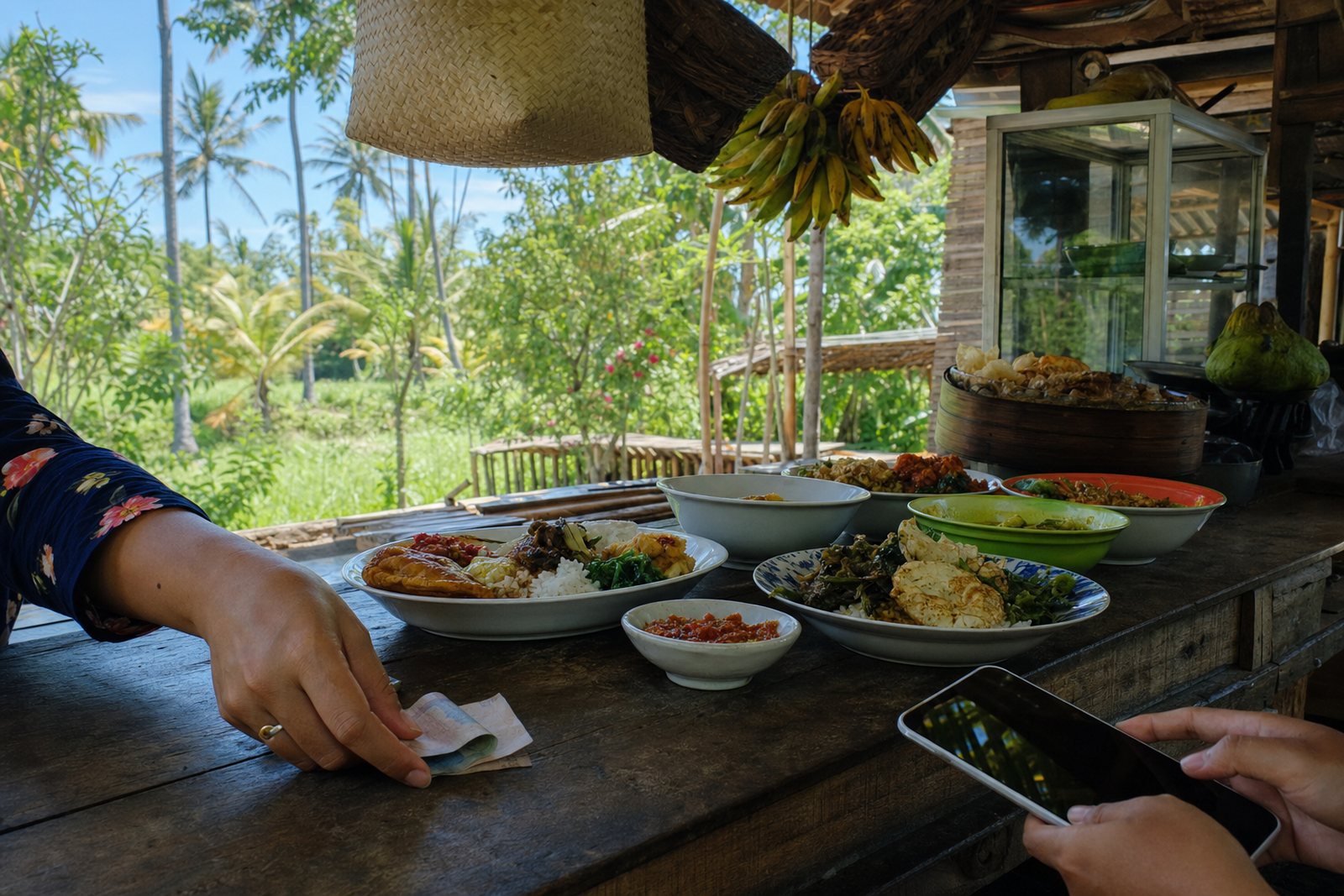 Daily Dispatch · Illustration: HubLombok (AI-generated)
Reading the Signal Carefully
The Antara Business report is narrow in scope, and it is important to preserve that precision. Bank Indonesia has called for an ecosystem-based approach to MSME development and financing. The supplied source does not establish a new Lombok-specific measure, a sector-specific incentive, or a change to foreign ownership rules.
That caution matters because policy headlines can quickly become over-interpreted in investment marketing. A call for a broader approach is not a promise of immediate returns. It does not remove operational risk, guarantee demand, or replace independent legal, financial and commercial advice.
Instead, the news provides a useful framework for asking better questions. Investors considering an operating business, a hospitality asset, or an investment linked to local visitor activity can test the proposition against the same principle: does the opportunity participate in a functioning ecosystem, or is it dependent on a fragile set of assumptions?
A disciplined review might include:
- The business’s relationship with local suppliers and service providers.
- The clarity of its operating responsibilities and management arrangements.
- The connection between the customer proposition and the practical delivery of that proposition.
- The availability of appropriate professional, legal and financial support.
- The difference between an attractive narrative and evidence that the underlying activity can be sustained.
None of those points requires an investor to predict policy outcomes. They simply recognise that development and financing are interdependent. Capital is more effective when it meets capable businesses, workable systems and identifiable demand; businesses are more durable when finance is matched by the conditions needed to use it well.
What This Means for Investors
The immediate message for investors is straightforward: treat the Bank Indonesia statement as a prompt to widen the investment lens. In Lombok, assess not only the asset or enterprise being presented, but also the network of businesses, services and financing conditions that surround it.
For direct investors, that means asking managers and counterparties how the operation works in practice. For those considering property linked to tourism, it means understanding the local operating chain rather than relying solely on design, location language or headline expectations. For investors considering participation in a business, it means examining how that business reaches customers, secures inputs and manages delivery.
The relevant judgement is qualitative as much as financial. A strong proposition should be able to explain its place in the local economy with specificity: who does what, how the operation is supported, and where the practical dependencies sit. Vague assurances should invite further questions, not substitute for answers.
This perspective also aligns with prudent risk management. A portfolio decision should not depend on a presumed policy benefit that has not been announced. The more defensible approach is to regard the central bank’s message as confirmation that sustainable MSME development involves more than the provision of money. That is a principle investors can apply now, regardless of whether later policy detail emerges.
For HubLombok readers, the live takeaway is measured rather than dramatic. Bank Indonesia’s call does not change the need for careful due diligence. It reinforces the value of it. In a market where local enterprise and visitor-facing activity matter to the investment case, the quality of the ecosystem is part of the quality of the opportunity.
Stay informed, subscribe to the free Lombok Briefing for market intelligence like this, published twice a month.
What did Bank Indonesia say about MSME financing?
Bank Indonesia emphasised the need for an ecosystem-based approach to the development and financing of micro, small and medium enterprises. The supplied report frames development and finance as connected issues, rather than presenting finance as a stand-alone solution.
Does this announcement create a new Lombok investment programme?
The supplied Antara Business report does not identify a new Lombok-specific programme, allocation, timetable or incentive. Investors should treat the statement as a policy-direction signal and avoid assuming that it guarantees financing, returns or changes to investment rules.
How should Lombok investors respond to this news?
Investors should widen due diligence beyond the individual asset or business. Assess the local operating network: suppliers, service providers, customer access, management responsibilities and the practical conditions that allow a business to operate consistently over time.

The Lombok Buyer's Field Guide
Legal structures ranked by risk, the honest ROI math line by line, all six zones ranked, and the 24-point due-diligence checklist. The whole book, free in your inbox.
See what's inside