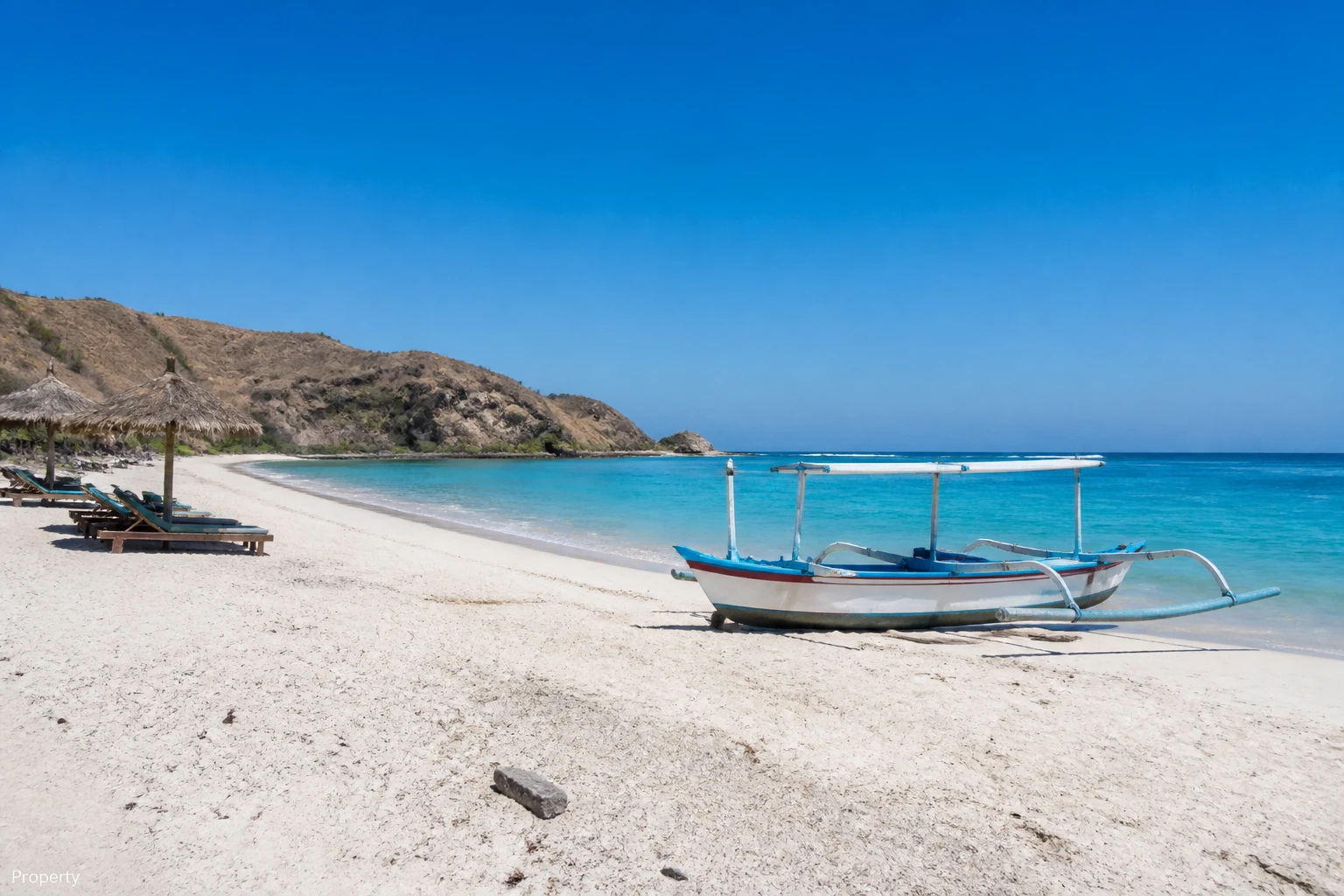
Bali's Tourism Momentum Is Still Spilling Into Lombok
A new tourist-experience award for Bali underlines a broader regional story: premium leisure demand remains strong, and Lombok is still capturing the overflow.
Bali keeps attracting the headlines, but the real investment story is what happens next. As the island’s tourism brand strengthens, price pressure, congestion and maturing inventory continue to push attention eastward toward Lombok, where entry costs remain lower and the cycle still looks earlier.
A regional tourism signal, not just a Bali story
A recent international award for a popular Bali museum is a reminder that the wider Indonesia leisure market still has global appeal. For investors, that matters because Lombok does not compete with Bali on brand alone; it competes on value, space and timing.
The central thesis is simple: when a destination as established as Bali continues to draw premium demand, some of that demand leaks into nearby markets with better pricing and less saturation. Lombok has been one of the clearest beneficiaries of this "Bali-overflow" dynamic.
Key market markers in South Lombok today include entry prices of EUR 95,000-350,000, honest net yields of 7-12%, and realistic stabilised occupancy of 55-70% in the first three years.
That combination is notable because it places Lombok in a different category from Bali. Bali remains the benchmark for scale, but Lombok offers a more accessible way into Indonesian leisure real estate for investors willing to accept an earlier-stage market.
Why Lombok is still catching the spillover
Lombok’s appeal is not built on a single catalyst. It is the result of several reinforcing factors that have been building for years:
- Tourism recovery continues to support demand.
- MotoGP has added visibility and visitor flow.
- Airport upgrades have improved accessibility.
- Bali’s pricing and congestion continue to make nearby alternatives more attractive.
The result is visible in the market figures. Foreign arrivals are running 40-50% YoY higher, and Kuta/Mandalika villa rates are up about 38% YoY. In the frontier zone of Are Guling, momentum is even stronger at about 47% YoY, making it the highest-growth area among the six tracked zones.
That matters because price growth is only one part of the picture. The more important question is whether the demand can support rentals. On that front, Lombok still looks constructive: net rental yields are generally 7-12% after management fees and realistic occupancy, while top-performing assets can reach about 15% net.
The numbers behind the investment case
South Lombok is not a low-cost market in the sense of bargain hunting. It is a market where relative value still exists compared with Bali, especially when measured against build quality and future demand.
Market comparison at a glance:
- Turnkey investment-grade villa entry price: EUR 95,000-350,000
- Comparable spec in Bali: USD 400,000-800,000
- Prime tourist-zone land in South Lombok: Rp 150–400 million per are
- Bali equivalent: USD 200–500/m²
This pricing gap is the heart of the opportunity. Investors are not buying Lombok because it is the cheapest place in Indonesia. They are buying because, relative to Bali, it remains materially cheaper while offering a tourism narrative that is still developing.
At the same time, diligence matters. Developer-quoted gross yields of 12-22% are common, but those figures exclude the full cost stack. Management fees typically run 18-22% of gross rental revenue, while OTA and booking commissions add another 15-20%. That is why the honest net yield range of 7-12% is the more useful benchmark.
What makes the market investable rather than speculative
A good tourism market is not just one with rising arrivals. It is one where the operating assumptions are credible.
In South Lombok, stabilised occupancy of 55-70% in years one to three is realistic. That is lower than Bali’s 70-85%, but it reflects the different stage of the market rather than a structural weakness. For a buyer entering now, the implication is straightforward: returns should be underwritten conservatively, not extrapolated from marketing material.
The zone-by-zone picture also helps investors separate headline growth from long-term positioning:
- Kuta Mandalika: 14-22% gross yield range, land at Rp 300–400 million per are, typical entry USD 194,000-344,000, momentum about +38%. This is the liquidity and demand leader.
- Selong Belanak: 13-19% gross yield range, land at Rp 150–250 million per are, typical entry USD 151,000-301,000, momentum about +22%. Family-tourism and capital-growth appeal.
- Tanjung Aan: 15-21% gross yield range, land priced parcel by parcel, typical entry USD 172,000-323,000, momentum about +29%. Trophy beachfront character.
- Are Guling: 17-25% gross yield range, land at Rp 120–180 million per are, typical entry USD 150,000-255,000, momentum about +47%. Early-cycle frontier; where Samudra Villas operates.
- Senggigi: 9-14% gross yield range, land at USD 980/m², typical entry USD 118,000-247,000, momentum about +6%. Mature market, lower yield.
- Gili Trawangan: 11-16% gross yield range, land priced parcel by parcel, typical entry USD 237,000-484,000, momentum about +8%. High occupancy, but more mature and cost-heavy.
The message is not that every zone is equal. It is that Lombok offers a spectrum of risk and return, from liquidity-led Kuta Mandalika to frontier-style Are Guling. For investors, that range is a strength: it allows strategy to match appetite.
Legal structure matters as much as location
Tourism demand may drive the headlines, but legal structuring determines whether an investment is actually sound. Foreigners cannot hold freehold, or Hak Milik, in Indonesia; that is reserved for citizens.
The available routes are the standard ones:
- Leasehold (Hak Sewa), typically 25-30 years with extensions
- Hak Pakai, a right-to-use structure for personal ownership, tied to residency via KITAS/KITAP
- PT PMA, a foreign-owned company that can hold Hak Guna Bangunan (HGB), generally 30 years extendable
What investors should not do is equally important. Nominee structures, where an Indonesian holds freehold on a foreign buyer’s behalf, are illegal and void in court. That is not a grey area; it is a structural risk.
Standard transaction costs also apply. Buyer transfer duty, or BPHTB, is about 5% of assessed value, while land-and-building tax, or PBB, is modest. Deeds should be executed by a licensed PPAT notary, with the land agency known as BPN.
What this means for investors
For investors tracking Indonesia’s leisure market, the Bali museum award is less important for its subject than for what it represents: Bali remains globally compelling. That keeps the broader tourism ecosystem healthy, but it also reinforces the case for Lombok as the next-rung market for capital seeking value.
The investment logic is strongest for buyers who want:
- Lower entry pricing than Bali
- Exposure to an expanding tourism corridor
- A project with credible rental assumptions
- Legal structuring that is properly documented from day one
The risks are just as clear. Net returns should be judged on realistic occupancy, not promotional gross yield. Location quality matters more than brand hype. And legal compliance is not optional.
For those reasons, developments like Samudra Villas in Are Guling, South Lombok, belong in the conversation as examples of how the market is being packaged for international buyers. But the wider point is larger than any single project: Lombok is still in the stage where selective capital can buy ahead of fuller maturity.
As Bali’s tourism machine keeps performing, Lombok’s opportunity is to remain the better-priced neighbour with room to run.
Stay informed, subscribe to the free Lombok Briefing for analysis like this, published twice a month.
Why does a Bali tourism award matter for Lombok investors?
It signals that Bali’s regional appeal remains strong, which helps sustain wider Indonesia leisure demand. For Lombok, the key effect is spillover: investors and visitors increasingly look east for better value, earlier-cycle growth and lower entry pricing.
Are Lombok rental yields really comparable with Bali?
Lombok can offer strong net returns, but investors should distinguish gross from net. Honest net yields in South Lombok are generally 7-12% after management fees and realistic occupancy, while developer-quoted gross yields can look higher before costs.
Which South Lombok areas look most compelling right now?
Kuta Mandalika leads on demand and liquidity, while Are Guling stands out as the early-cycle frontier with the strongest momentum. Tanjung Aan and Selong Belanak also offer attractive zone-specific positioning depending on whether the priority is yield, capital growth or beachfront appeal.

The Lombok Buyer's Field Guide
Legal structures ranked by risk, the honest ROI math line by line, all six zones ranked, and the 24-point due-diligence checklist. The whole book, free in your inbox.
See what's inside